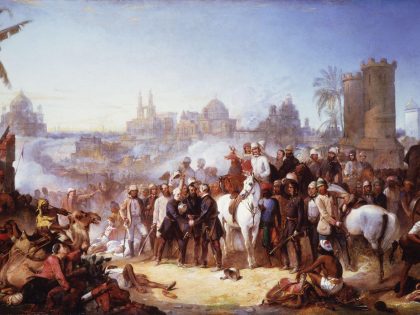
A Solution for Kashmir
What would justice for those suffering under Indian occupation in Kashmir look like?

Our hopes for a socialist United States are constrained as much by US empire as they are by domestic capitalists. But democratic socialist candidates like Bernie Sanders can combat militarism in the service of workers across the world.

The FBI has historically served as a political police force, tasked not just with monitoring dissent but actively destroying it. Nowhere is that clearer than in their infiltration of the Left in the 1960s and ’70s.

The financial crash didn’t kill off neoliberalism — it actually embedded its logic ever deeper in our lives. Marxist geographer David Harvey says the only way to end this system for good is to change how we fight it.

Throughout history, anti-communism has aided the forces of tyranny and reaction — not democracy and freedom.

The claim that capitalism goes naturally with liberal democracy has never been more discredited. Today, capitalism’s liberal form is increasingly challenged by a statist authoritarian model — and in many places it’s buckling under the strain.
The United States hasn’t just ignored the threat of climate change at home; it has used its military and financial might to accelerate environmental destruction around the world. In an interview with Jacobin, geographer Matt Huber explains how US imperialism stokes the fires of a burning planet.

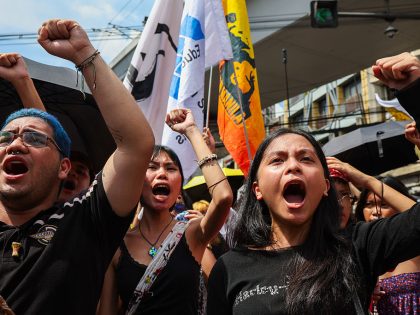
Filipinos have been protesting against the theft of public funds for flood defenses by corrupt politicians. The protesters face a political class whose leading figures, President Bongbong Marcos and Vice President Sara Duterte, are now bitter enemies.

Scholar Kevin B. Anderson discusses Marx’s surprising conclusions on race and national oppression.

The insatiable demands of the military industrial complex are a barrier to human flourishing on a livable planet.

What looks like Trump-era economic nationalism has deeper roots. German nationalists of the 1800s and fascist leaders of the 1930s imagined power through autarky — national self-sufficiency — with consequences that stretched from tariffs to conquest.
Will the West’s record tariffs on Chinese-made electric vehicles support clean jobs or undermine the global green transition?

US hegemony across the world seems to be waning. We can either sink deeper into violent, reactionary madness, or build a political alternative in which the United States plays a more constructive role among a community of nations.
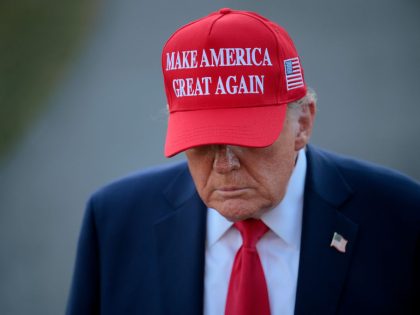
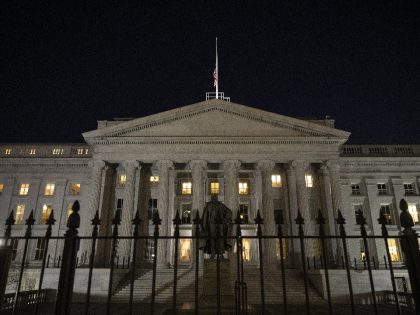
Donald Trump has at times pitched himself as a supporter of a weaker dollar. But he is too wedded to economic interests like Wall Street and tech that benefit from a system of dollar dominance that does little good for the average American.

Michael Hardt and Antonio Negri’s Empire became a campus sensation because it offered a master theory for globalization at a moment when old Marxist categories seemed exhausted. But the capitalist internationalism they saw as permanent has now crashed and burned.

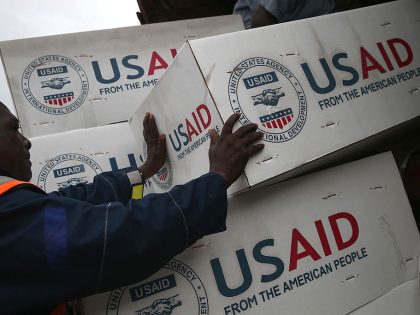
In an era when power is increasingly defined by digital infrastructure and platform dominance, USAID was already losing relevance to the high-tech actors shaping US foreign influence, even before the recent attacks by the Trump administration.

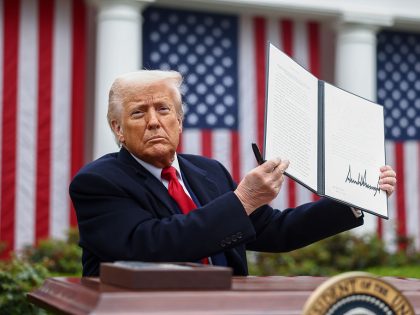
Yesterday Donald Trump announced sweeping tariffs on all of America’s trading partners, with the explicit aim of “liberating” the US from unfair trade. Not only are these efforts confused, they will lock America in a cycle of stagnation and inflation.

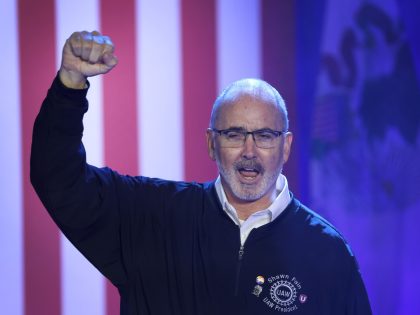
In an interview, United Auto Workers president Shawn Fain argues that the era of “free-trade” deals like NAFTA has been a disaster for the US working class and that smart tariffs can help bring back good auto jobs.

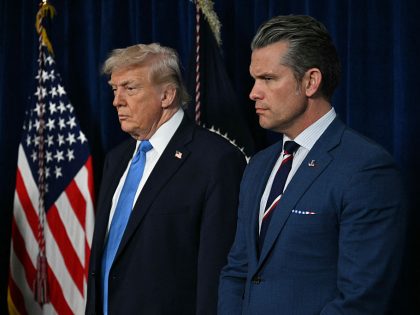
One hundred days into Donald Trump’s presidency, the primary victim of America’s war against the world is America.