The Key to Climate Action Is Building Working-Class Power
We can’t address climate change without the working class. Matt Huber argues that an explicit political or rhetorical focus on the climate crisis itself may not be helpful in that effort.
Matt Huber is a professor of geography at Syracuse University. His latest book is Climate Change as Class War: Building Socialism on a Warming Planet.

We can’t address climate change without the working class. Matt Huber argues that an explicit political or rhetorical focus on the climate crisis itself may not be helpful in that effort.

As Donald Trump launches a dangerous war on Iran, understanding what really drives US imperial aggression is more urgent than ever. The 2003 invasion of Iraq, which many critics wrongly claim was about oil, offers an illuminating case study.

Jean-Baptiste Fressoz’s dizzying history of energy consumption argues that no energy transition has ever occurred: each generation consumes more of past fuels. Not only are his claims ahistorical but they justify an unwarranted pessimism about the future.

Today liberals lead the call for abundance. But if they really want to deliver plenty for all, they’ll need to confront the entrenched power of the capitalist class.

Venezuela’s heavy crude is expensive to extract, it will take years of sustained investment to meaningfully lift output, and it may not even be profitable at current prices. The current aggression is more about power than economics.

Nuclear energy is still regarded with skepticism. But nuclear power’s critics wildly overstate its dangers, and preserving and expanding this energy source is essential to a just green transition.

Abundance is the precondition of socialism, but socialism is also the precondition of abundance.

It seems increasingly likely that artificial intelligence will mean major changes to the economy and daily life. We need a public jobs program for displaced workers, and we should regulate AI as a public utility.

By many estimates, the increasing use of artificial intelligence is set to produce significant job losses. The prospect of serious disruption demands that we start formulating egalitarian policy solutions right now.

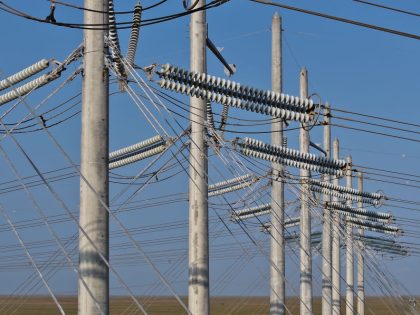
The US electricity system has long been dominated by corporate interests. A truly democratic energy system will require public control and large-scale state planning, with especially significant input from the workers who know how to make that system run.

Solving our global ecological crises today requires understanding how capitalism has transformed humanity’s relationship to the land. Karl Marx’s thought gives us the tools to do just that.

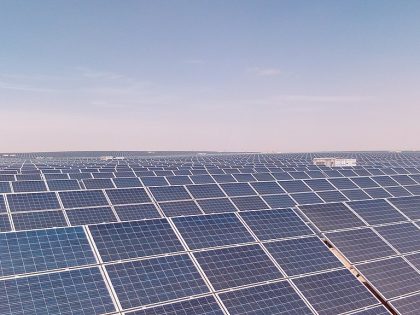
Despite the plummeting costs of solar and wind power, renewables have not been profitable enough to attract adequate private investment. To decarbonize, public investment in clean power and reclaiming electricity as a public utility are essential.

Kohei Saito’s degrowth rewrite of Marxist theory is not only incorrect — if taken seriously, it would lead to political disaster for both the socialist left and the environmental movement.

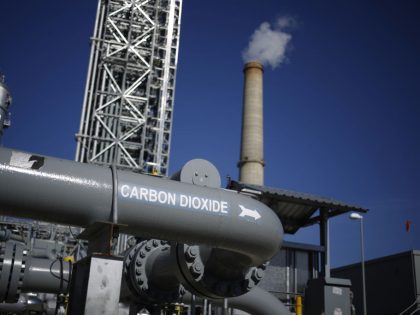
The Biden administration recently announced badly needed investments in carbon capture. But it shouldn’t be handing out money to fossil fuel companies — carbon capture technology needs to be a state-run public service.

We need radical change to address climate change. But degrowth needlessly shackles its vision of a socialist future to a program of aggregate reduction.

The latest UN climate report was just released, and it’s brought the usual doom loop of grave headlines as emissions keep rising. The way out isn’t getting people to “believe the science” but building a pro-worker climate politics that can win power.

Sections of the environmental movement bemoaned the birth of the world’s eight-billionth person, but the Left should have no part in this cynical misanthropy. The cause of food insecurity and climate change is the irrationality of capitalism — not rising populations.

Policymakers who have belatedly recognized the peril of climate change now promote incremental, market-based solutions to the crisis. But there’s no way we can prevent ecological disaster without tackling the vested interests at the heart of global capitalism.

Spreading knowledge and awareness of the climate crisis isn’t enough. There’s no hope for the planet without climate policies that address the material interests of workers.

The Tennessee Valley Authority was one of the greatest achievements of FDR’s New Deal. But a new generation of liberals and leftists are turning against the dream of “big public power” in America.