American Factory Stops Short of Class Conflict
'American Factory' gives us some glimpses of a union-busting campaign in real time. But it shortchanges this story of class conflict for an apolitical one about a “clash of cultures.”
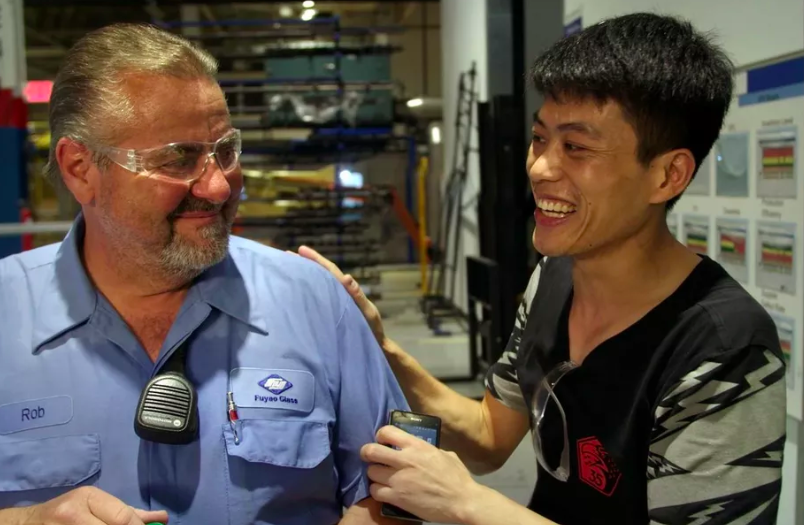
A still from American Factory. Netflix
American Factory premiered on August 21 on Netflix, and it arrived just-in-time for viewing during the long Labor Day weekend. It proved to be a popular recommendation for trade unionists and labor activists. The documentary made by veteran filmmakers Julia Reichert and Steven Bognar tells the story of the reopening of a former GM Assembly Plant by Fuyao Glass in Moraine, Ohio, and the failed campaign by the United Auto Workers to organize it.
The heart of the film is an old and familiar tale of union-busting replete with Fuyao firing UAW activists and the hiring of a union-busting law firm. But the most effective weapon in the company’s arsenal proved to be the threat to close the plant if the union won in this economically distressed region. Reichert and Bognar told the back story to the GM plant closing in an earlier 2009 short documentary The Last Truck: the Closing of a GM Plant.
American Factory is probably the best advertisement streaming right now for Bernie Sanders’ Workplace Democracy Act, which would shift the legal terrain toward unions. However, union-busting is not the primary concern of the film’s distributors, former president Barack Obama and his partner, best-selling author Michelle. The film takes a quick pivot towards a discussion of automation, and its possible impact on worldwide employment in the near future.