Crises Have a Way of Accelerating History
Crises like the one we're in upend the social order, reveal long-festering conflicts, and throw open the doors to futures both bleak and transformative. We can emerge from this crisis a more just society.

Crises like the one we're in upend the social order, reveal long-festering conflicts, and throw open the doors to futures both bleak and transformative. We can emerge from this crisis a more just society.

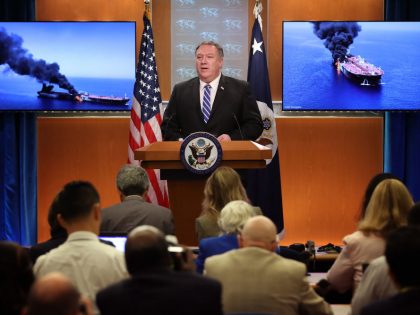
Even before the coronavirus, the United States' sanctions against Iran were unconscionable. But now, with one person dying of coronavirus every ten minutes in Iran, the sanctions are killing untold numbers of people. They must end now.

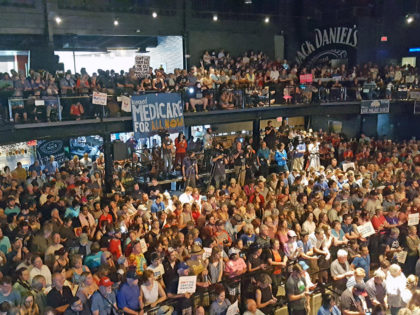
The ranks of the uninsured are growing, and people are already dying from a lack of coverage. Yet Joe Biden says coronavirus has nothing to do with Medicare for All. He’s wrong: its time has come.

Last month’s revelations of the Spanish monarchy’s illicit financial dealings embarrassed official claims that “we’re all in this together.” Faced with COVID-19, citizens are forced to build their own collective response — replacing the empty rhetoric of “national unity” with the real practice of social solidarity.

Our global crisis of democracy is real, but its solution isn't rebuilding political norms. It's rebuilding working-class power.

Brazil’s fragile health care system and densely populated cities threaten to turn the COVID-19 outbreak into a full-scale social collapse. President Jair Bolsonaro’s dismissal of the pandemic as a “little flu” is feeding dissent even among his allies — threatening to hasten the far-right leader’s downfall.

Mainstream media coverage of Mexico’s leftist president Andrés Manuel López Obrador and his response to the coronavirus crisis has been terrible. While world health authorities have commended Mexico’s approach, the media — blindly parroting AMLO’s right-wing opposition — have panned it.

The US’s federalist system undermines even the most basic attempts to carry out effective national action. In pandemics, that’s a recipe for death and disaster.

Low testing rates and the undersupply of masks for hospital staff highlight the weakness of the French government’s reaction to COVID-19. As Danièle Obono MP tells Jacobin, Emmanuel Macron’s administration has based its response on the resources left after years of cuts — not on what the health system actually needs.

We pay tribute to Michael Sorkin, the architect and writer who died last week after contracting COVID-19. Sorkin spent his life both interpreting and changing cities in the interest of economic justice.

The devastation brought by the coronavirus has been hugely magnified by an irrational system that measures human life in terms of profits and loss. Faced with collapse, states have already had to intervene in the markets — now, we need them to plan to rebuild our societies for the future.

We must not choose between staving off economic catastrophe or a public health disaster. We can do both — if we immediately expand Medicare to cover everyone while safely and simultaneously rebuilding our healthcare infrastructure."

Anwar Shaikh is one of the world’s leading radical economists, whose work has challenged the way we think about capitalism. In an interview with Jacobin, Shaikh gives a concise overview of the ideas set out in his landmark book Capitalism: Competition, Conflict, Crises.

As the coronavirus sweeps the entire globe, democracy is becoming just another casualty.

The United States’ COVID-19 response has paled in many respects to Argentina’s. But it’s not just Argentina’s public health response that the United States should learn from — it’s also the country’s history of popular resistance that will be crucial to fighting unequal and undemocratic responses to the pandemic.

The G20 has announced it will allow 76 poor countries additional time to pay back their loans. But it’s not an act of benevolence — it’s a desperate maneuver to maintain the global debt peonage that undergirds neoliberal capitalism.

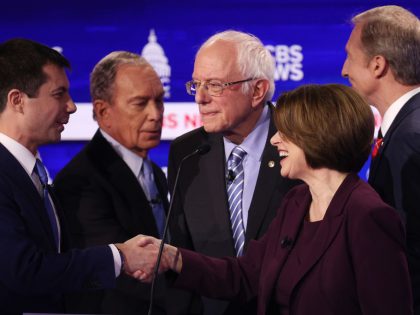
Democratic Party liberals got what they wanted in a Joe Biden nomination for president — and yet they’ve never been more contemptuous of Bernie Sanders supporters.

European Commission president Ursula von der Leyen has apologized to Italy for the EU’s underwhelming response to coronavirus. But faced with economic meltdown, battle lines are hardening between the German-led bloc and the states of the Southern periphery — and the splits are about to become even more irreconcilable.

One in six New York City police officers is out sick. Those who are still working have refused to perform emergency duties, like assisting overstressed mortuary workers, while continuing to make unnecessary arrests. It’s time to send New York cops home.

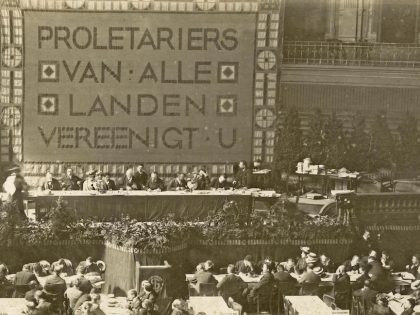
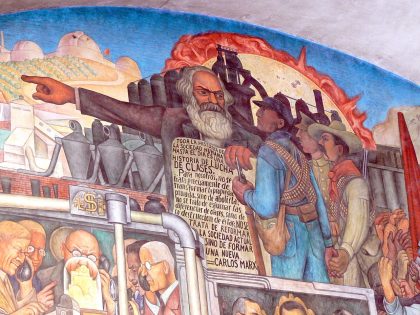
The crisis triggered by the COVID-19 pandemic is an opportunity for us to think again about Marx’s idea of human freedom. As David Harvey writes in Jacobin, emergency steps to get through the crisis also show us how we could build a different society that’s not beholden to capital.