Bolivia’s Socialist VP Candidate: “The Coup Against Evo Morales Was Driven by Multinationals and the Organization of American States”
Bolivia is finally set to hold repeat presidential elections next month, with polls suggesting MAS candidate Luis Arce is set to restore the socialist government ousted in last November’s coup. His running mate David Choquehuanca told Jacobin about the repression MAS has faced and how the party intends to make sure that Bolivians’ democratic choice is upheld.
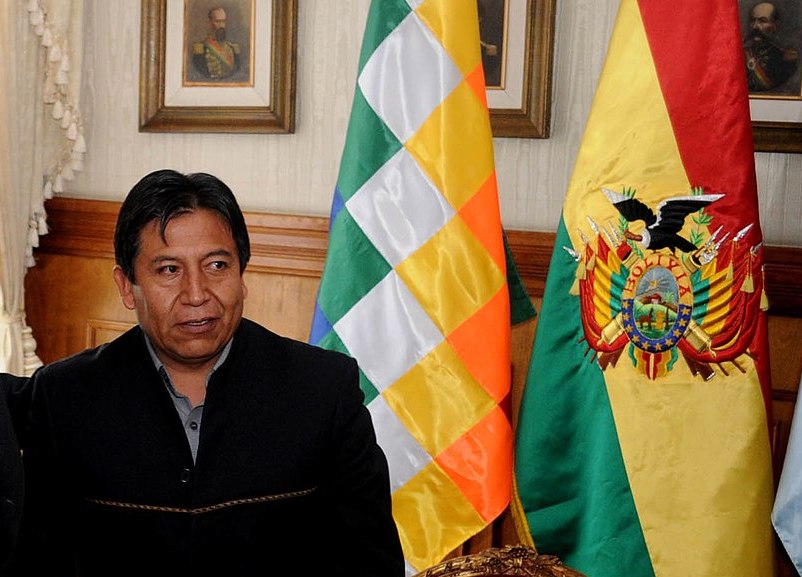
David Choquehuanca was Bolivian foreign minister from 2006 to 2017 and is vice-presidential candidate for the Movement Toward Socialism (MAS). (Wikimedia Commons)
With barely three weeks left until Bolivia’s rerun general election, the campaigns of both the Movement Toward Socialism (MAS) and its right-wing opponents are entering full stride. So far, the campaigns of the two main right-wing presidential candidates, Carlos Mesa and Luis Fernando Camacho, have largely focused on staking out ground as the main challenger to MAS, boasting of the role they played in toppling Evo Morales’s government in last November’s coup d’état. But while they have pursued a smear campaign against MAS in the run-up to the October 18 vote — and even denounced mismanagement by postcoup president Jeanine Áñez — they are yet to present any concrete proposals on how to bring Bolivia back from the brink of socioeconomic collapse.
On September 17, Áñez announced that she was dropping out of the presidential race, in a move widely seen as driven by polls showing the lead that MAS enjoys over the divided pro-coup forces. Indeed, a recent poll for right-wing newspaper Página Siete shows that MAS’s presidential candidate Luis “Lucho” Arce is currently set to win the election outright in the first round, with 40.3 percent support; he is followed by Carlos Mesa on 26.2 percent and Fernando Camacho on 14.4 percent. These scores echo the results of a study conducted by the think tank CELAG in June; decisively, a ten-point lead would allow Arce to avoid a runoff, so long as the top candidate takes at least 40 percent of the popular vote.
The ramifications of Áñez’s withdrawal are still unknown. The support she currently holds is likely to be transferred to either Camacho or Mesa — boosting the latter’s chances of preventing a MAS victory in the first round. Yet any endorsement she or her ministers give also carries the political deadweight of almost a year of economic mismanagement, immense corruption, and state terrorism against the country’s social movements.