Egypt’s Gamal Abdel Nasser Was a Towering Figure Who Left an Ambiguous Legacy
Fifty years after his death, the Egyptian leader Gamal Abdel Nasser still casts a long shadow over Arab politics. A symbol of defiance in the age of decolonization, Nasser transformed his country but never gave its people control of the system that ruled them.
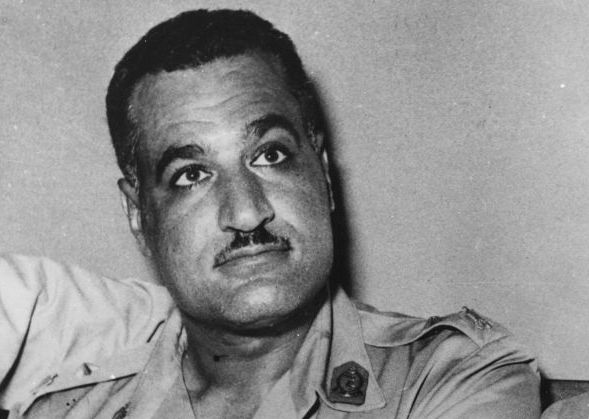
President Gamal Abdul Nasser in Cairo. (Keystone / Getty Images)
Gamal Abdel Nasser, president of Egypt (1954–70) and champion of Arab nationalism, Arab Socialism, and anti-imperialism in the era of global decolonization, died fifty years ago today.
Nasser was the first indigenous ruler of Egypt since Cleopatra. He believed that he spoke for — and viscerally understood — the interests of its people. Addressing them in unembellished semi-colloquial language, the Egyptian leader urged them, “Irfa‘ ra’sak ya khuya” (“lift up your head my brother”).
The balance among consent, acquiescence, and coercion in the making of Nasser’s project was uncertain and shifted over time. Some — like his successor, Anwar al-Sadat (1970–81), and the renowned liberal litterateur Tawfiq al-Hakim — supported him in power yet denounced him as a dictator in death. Marxists labeled Nasser as a fascist in the early 1950s but acclaimed him in the 1960s and even after he had died.