The Baku Congress of 1920 Sounded the Call for the End of Empire
A century ago this month, the new Soviet government summoned anti-colonial revolutionaries from across Asia to a gathering in Baku. The Baku Congress proved to be a watershed in the fight against European colonial domination and the rise of the Global South.
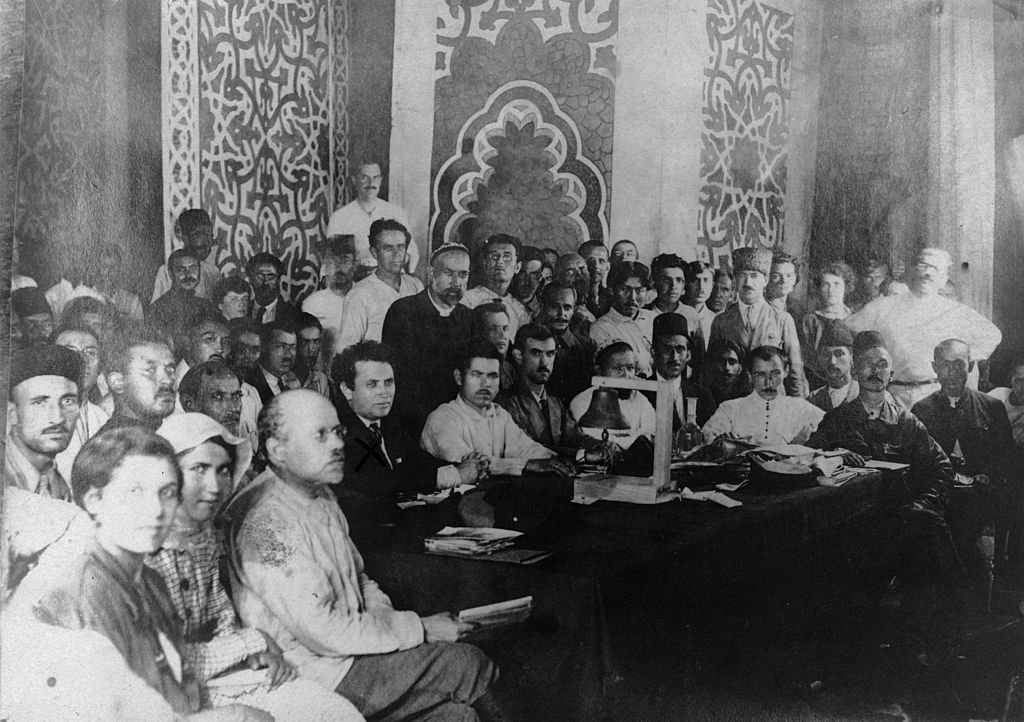
The Baku Congress, Azerbaijan, 1920. (Hulton Archive / Getty Images)
In Baku, Azerbaijan, one hundred years ago this month, an unprecedented assembly of anti-colonial activists proclaimed the advent of a global struggle for colonial freedom. About 2,050 participants, drawn from thirty-seven mostly Asian and Muslim peoples, approved the call for a “holy war” for the liberation of peoples of the East in September 1920.
Even today, decades after most colonies achieved at least formal sovereignty, the call of Baku resonates in a world shaken by rising struggles against racism and white supremacy.
Calling in the East
The Baku Congress was convened by the Communist International, or Comintern, a year after its formation, just as the political balance in Europe was beginning to shift against the Comintern’s supporters. In the words of historian E. H. Carr, the Baku event signified “calling in the East to redress the balance of the West.” And indeed, the most enduring historical impact of Communism during the last century is the impulse it gave to anti-colonial liberation movements.