The London Royals
Working as a delivery driver showed me who London belongs to: the elite.
Working as a delivery driver showed me who London belongs to: the elite.

In Norway’s recent election, the radical Red Party doubled its vote share, helping the Labour Party toss the Conservatives from power. Two of Rødt’s new MPs speak to Jacobin about socialist strategy in Norway and building a workers’ party from the ground up.

While streaming on Amazon is a little on the nose, the Fallout television series admirably embraces the anti-capitalist critique of the original video game franchise. Its apocalyptic alternate America feels less far-fetched every day.
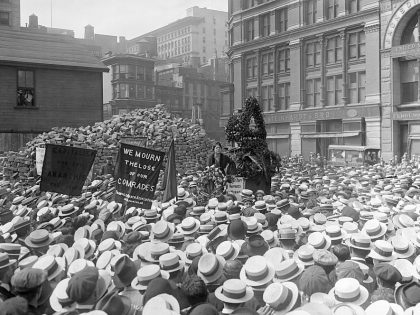
Once an arm of the radical labor movement, the ACLU now defends free speech as a neutral principle — including the anti-union speech of bosses and the political speech of corporations. The story of the ACLU’s evolution is the story of liberalism itself.
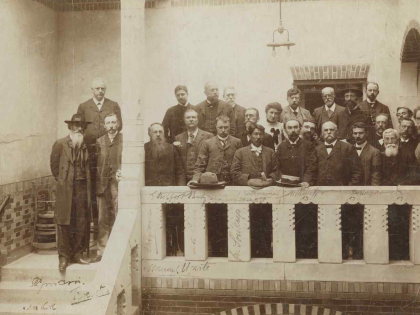
Lenin remained true to the tactical guidelines of Karl Kautsky after the latter had abandoned them.
The Rio Olympics are taking to the extreme the overblown promises and neoliberal development now typical of the games.
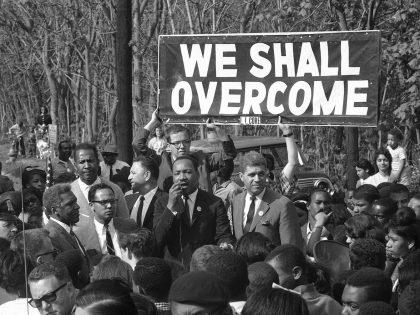
The Left struggles to speak with the kind of moral clarity Martin Luther King exemplified — but that shouldn't stop us from trying.
The almost complete destruction of Democrats’ agenda in the reconciliation bill suggests that, despite some rhetoric to the contrary, the party is still intent on fulfilling Joe Biden’s promise to donors that “nothing would fundamentally change.”

Sixty years after its publication, it’s time to lay Richard Hofstadter’s “The Paranoid Style in American Politics” to rest. Then as now, the classic essay has almost nothing to say about why conspiracies arise and prosper.
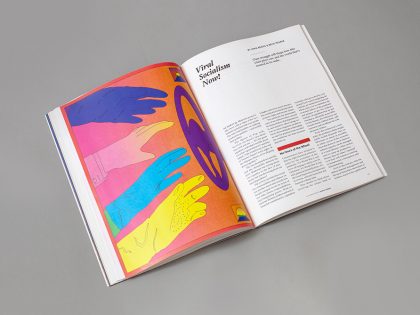
Class struggle will shape how this crisis plays out, and the world that’s created in its wake.
Zionist leaders have been downplaying antisemitic attacks in the US in order to cozy up to Donald Trump.
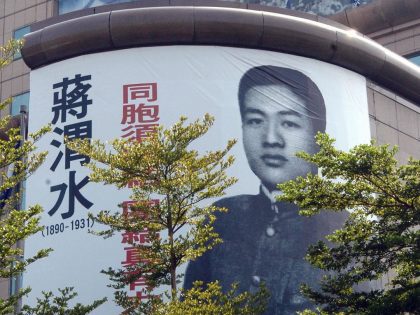
In the 1920s, Taiwan had a radical anti-colonial movement similar to those in other parts of the colonized world — and central to it was a powerful organized labor movement. Today, with a weak and divided left, that memory needs to be recovered.
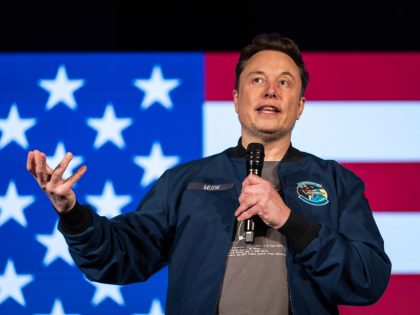
Elon Musk sells us sovereignty through technology in an age of crisis. Muskism resembles past futurisms, but with an important difference: this time, the question of who owns the machines is paramount.

In Brazil, an absurd and deeply politicized “anti-corruption” campaign was carried out to block Lula da Silva from the presidency — delivering it instead to far-right leader Jair Bolsonaro, who oversaw the world’s worst COVID-19 response. We have ex-judge Sergio Moro to thank for it.
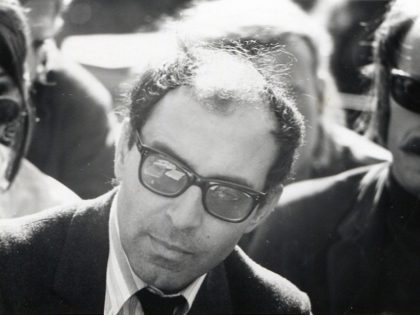
I grew up in a suffocatingly conservative environment. Jean-Luc Godard’s films helped show me that my own conception of who I am and what kind of life I could lead could look radically different.
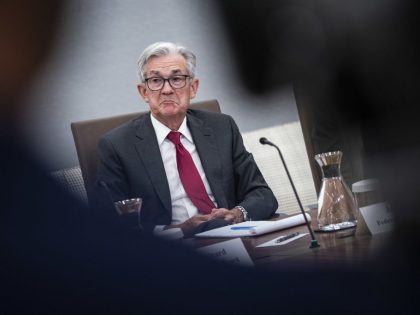
The Federal Reserve has signaled that it will further raise interest rates this month, increasing the chances of a recession that will hurt average people. In response, most of the Democratic Party establishment are twiddling their thumbs.

The Criterion Channel’s excellent new “Office Romances” retrospective shows how Hollywood’s classic workplace comedies exposed a deep panic about women who dared to be competent.

Artificial intelligence has the potential to seriously harm workers — not because of something inherent to the technology, but because bosses are in control of it.
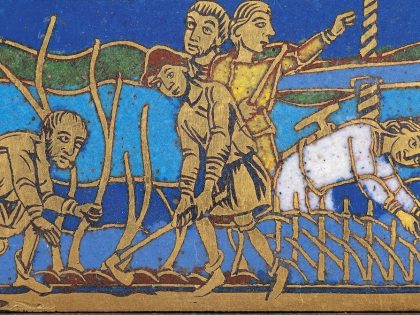
Class societies didn’t begin with capitalism: the ancient and medieval worlds had their own systems of exploitation. Marxist historians have set out to explain how those systems worked — and what their eventual demise tells us about what might lie ahead.
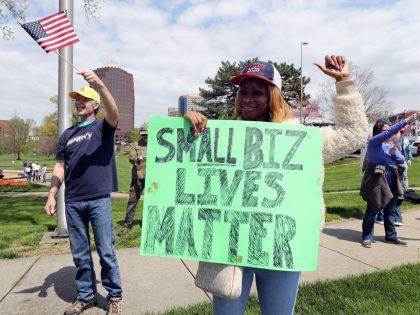
Small business owners, who feature prominently in the anti-shutdown protests, occupy a unique place in capitalism’s class hierarchy — although many share the same kinds of struggles experienced by wage workers, as a class, they’re often drawn to the far right.