Jean-Luc Godard Showed Me New Possibilities of What Life Could Look Like
I grew up in a suffocatingly conservative environment. Jean-Luc Godard’s films helped show me that my own conception of who I am and what kind of life I could lead could look radically different.
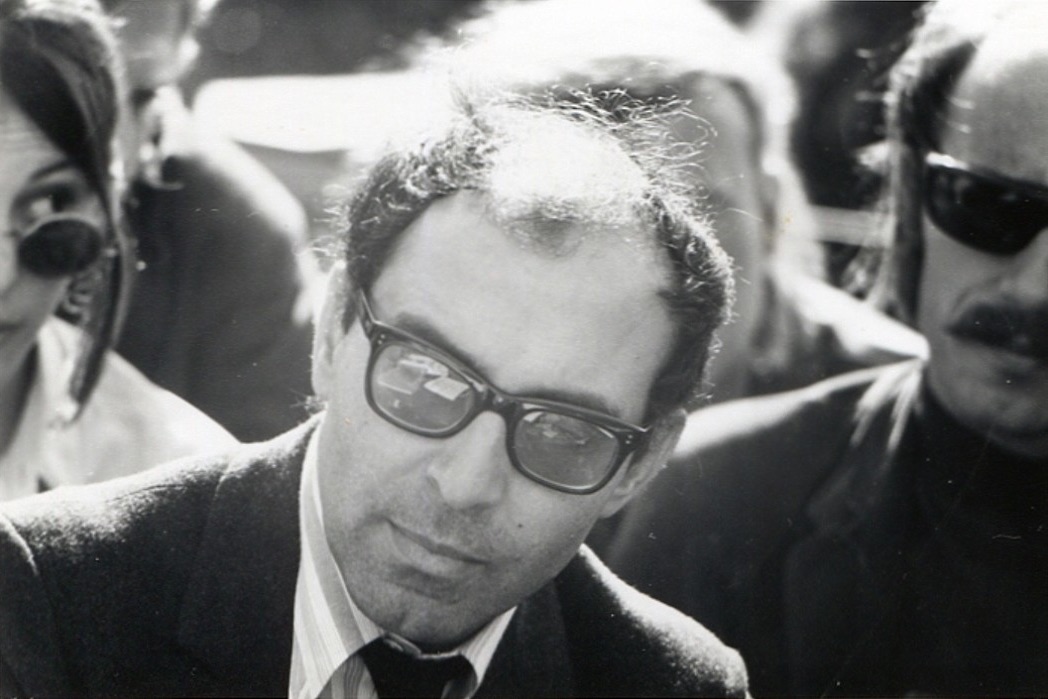
Filmmaker Jean-Luc Godard in Berkeley, California, 1968. (Wikimedia Commons)
What objects of beauty retain their hold on you? What texts refuse to give up their hold on your imagination? What images become so unforgettable that they become the lampposts that light the way through an unforgiving world? What art, to quote an aphorism of Jean-Luc Godard, “reveals our most secret self”? These are the questions I have been asking since reading the news of Godard’s death at his home in Rolle, Switzerland, via a legally assisted suicide.
I’ve been devouring the remembrances, obituaries, reflections, and streams of emotion that have poured out since his death, and thinking about my own touchstones of experience with the artist’s creative output and its influence on my life and work.
When I was a soft-faced freshman at the University of California San Diego and a self-identified eighteen-year-old Reaganite, I saw the bar on campus with a rainbow flag and told people that I wouldn’t go there because being gay was a sin. Six months later, I was coming out to anyone that would give me the time of day, and slowly realizing that my entire life until that point had played out within a tiny ideological bubble, and that an entire world was available to me for the taking if I was willing to rebuild myself from scratch.