The Promised Land Is Still Not Here
The Left struggles to speak with the kind of moral clarity Martin Luther King exemplified — but that shouldn't stop us from trying.
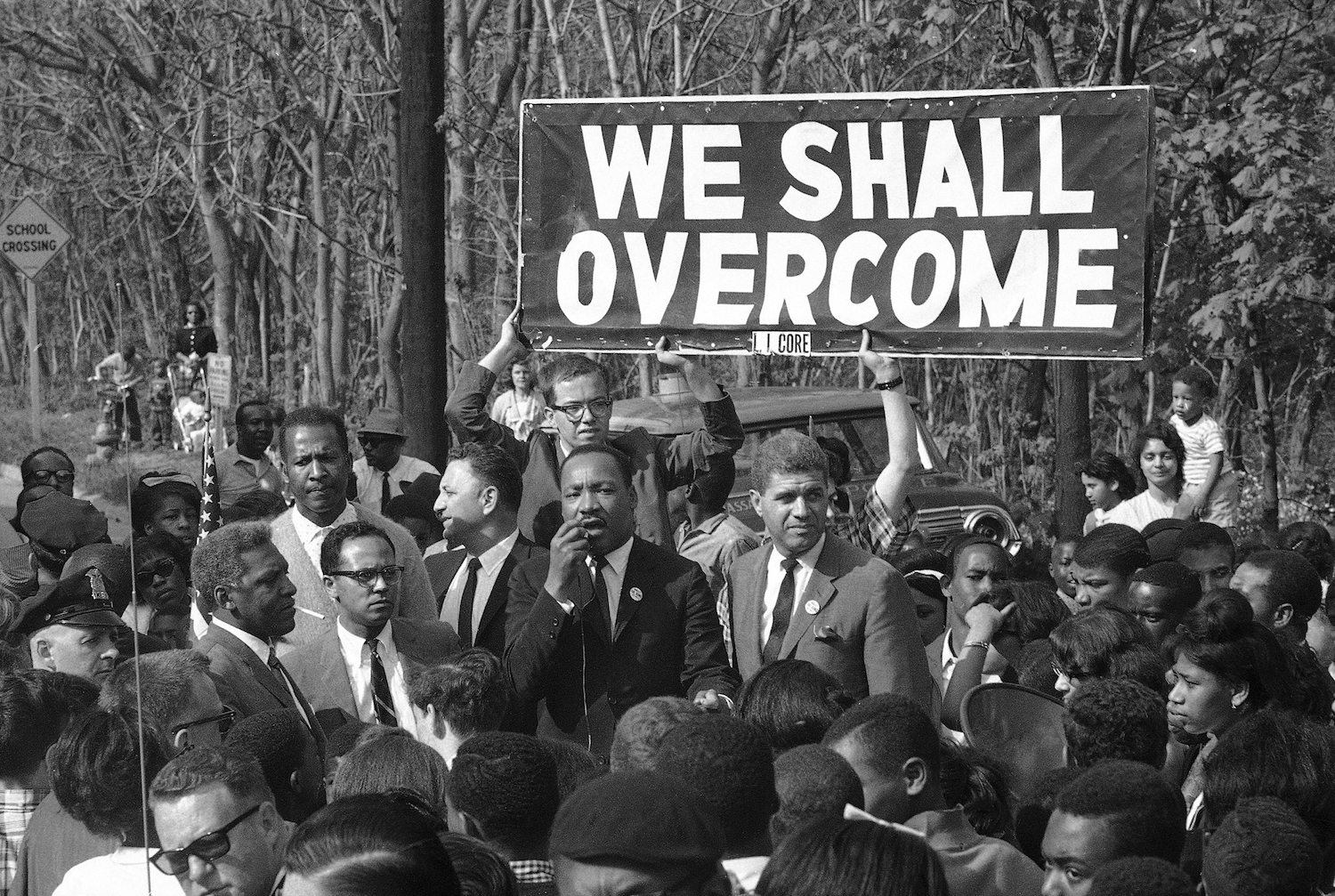
Martin Luther King addresses a crowd on a street in Lakeview, New York, May 12, 1965. Library of Congress
Martin Luther King Jr’s assassination on April 4, 1968 left behind a vacuum on the American left that has never been filled. The moral clarity he brought to debates about war, poverty, and rampant racism in American society has been subsumed for the last fifty years by a revanchist right wing and a timid liberalism that proposes small solutions to big problems.
The triple evils that King warned against — militarism, severe economic inequality, and white supremacy — have, in some ways, become more entrenched in the five decades since his death. No American political leader can say, on April 4, 2018, that the nation has adequately addressed the issues to which King dedicated most of his adult life. Meanwhile, the Left itself struggles to advance the arguments King articulated, or to update them for the twenty-first century. Yet King still matters for leftists — because his causes have been our causes for so long.
The push to create a King holiday in the late 1970s and early 1980s was important for two reasons. First, it forced Americans to acknowledge the role that King and the Civil Rights Movement played in shaping modern American society for the better. After 1968, the rise of Richard Nixon’s Southern strategy and the New Right — both of which propelled Ronald Reagan to the White House in 1980 — threatened to derail the precious progress made by African Americans. Activists and progressive politicians alike argued that a day of commemoration would make Americans think both about the progress that had been made and how much more needed to be done.