The Reconciliation Bill’s Gutting Is What Happens When Your Party Is Addicted to Corporate Money
The almost complete destruction of Democrats’ agenda in the reconciliation bill suggests that, despite some rhetoric to the contrary, the party is still intent on fulfilling Joe Biden’s promise to donors that “nothing would fundamentally change.”
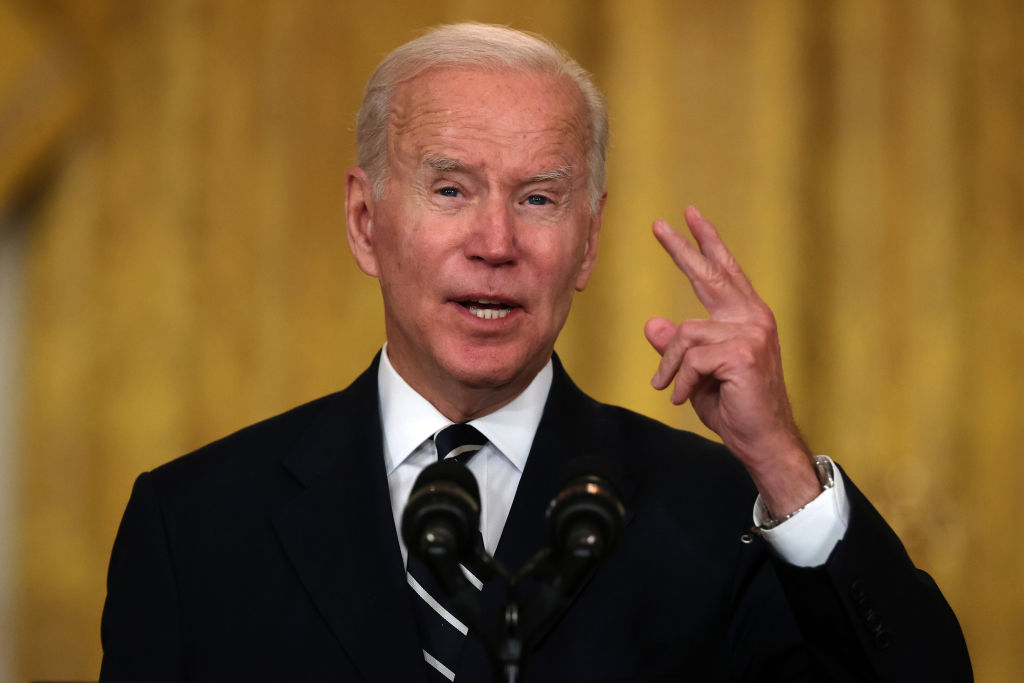
President Joe Biden delivers remarks on his proposed “Build Back Better” social spending bill in the East Room of the White House on October 28, 2021 in Washington, DC. (Chip Somodevilla / Getty Images)
Democratic Party leaders on Thursday united around a plan to halve their economic agenda, which had already been nearly halved a few months ago. The full loaf is really a quarter loaf, but at this point, it’s actually less than that, because they also slashed promised regulatory and tax provisions that might have reduced medicine prices, provided workers some paid leave, and made billionaires start paying taxes.
In the coming days, we will learn more of the granular details in the 1,600-plus-page bill — but the overall agreement amid a flood of industry campaign cash is an illuminating moment: it reveals the outer limits of possibility for corporate politics, and the human costs of those politics.
In general, the reason the Democratic Party always sounds so helplessly incoherent is because its lawmakers are trying to simultaneously appease their corporate donors and look like they are fulfilling their public promises to fix problems created by those corporate donors.