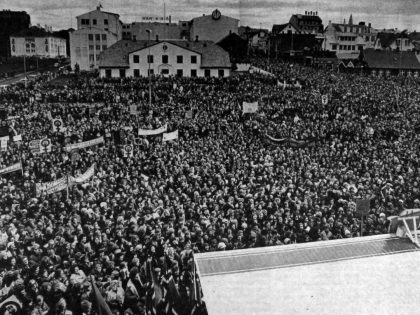
The Day Women Brought Iceland to a Standstill
On October 24, 1975 over 90 percent of Icelandic women refused to work. The aim: to show how much society depended on women’s labor, from farms and factories to the home.
On October 24, 1975 over 90 percent of Icelandic women refused to work. The aim: to show how much society depended on women’s labor, from farms and factories to the home.
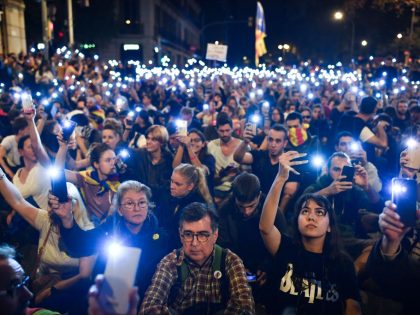
The campaign for Spain’s general election on November 10 has been electrified by massive protests against the jailing of Catalan leaders. For the first time, the pro-independence left has given up its abstentionist stance — and it’s set to bring Catalonia’s revolt into the Spanish Congress itself.
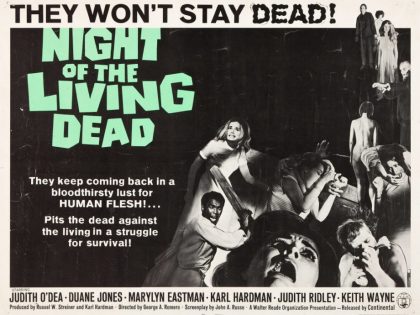
By creating a window into what scares us all, horror movies give us a way of examining society’s dirty underbelly — without it realizing it’s showing us its fleshy parts.
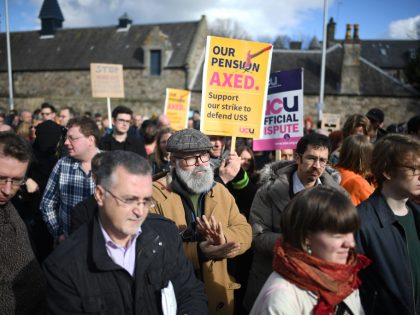
The University and College Union has called an eight-day strike across Britain’s universities starting on November 25. Inspired by teachers in the United States, British educators are fighting to save the education system — and put a stop to privatization.
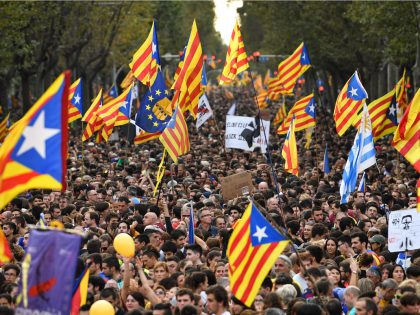
The PSOE-Podemos coalition set to form Spain’s next government will rely on Catalan support in parliament. Yet after an election polarized around national tensions, both parties are ignoring Catalans’ call for self-determination.

The concept of “emotional labor” can help us better understand work and exploitation. But when it’s used to keep score between friends and family rather than examine our relationship as workers, it doesn’t bring us any closer to liberation.

Despite its massive length, Julia Lovell’s Maoism: A Global History doesn’t offer us a clear way to understand Maoism and its legacy.
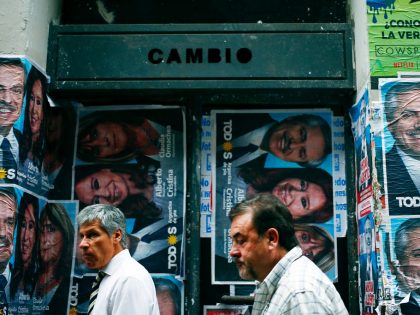
Argentina’s Mauricio Macri officially steps down as president today, having overseen four years of neoliberal mismanagement, inflation, and a new IMF bailout program. The election of the Peronist Alberto Fernández is good news for the Left, but it faces an uphill battle in stabilizing a deeply indebted economy.
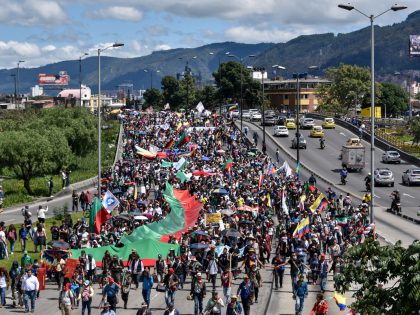
With its recent general strike and continued mobilizations, Colombia has joined the global wave of unrest. If the movement can resist right-wing president Iván Duque’s attempts at co-optation, it could lay the groundwork for the transformation of a society long characterized by inequality and militarized brutality.

James Baldwin was many things: a brilliant writer, a trenchant social critic, a dogged activist. He was also an unapologetic radical.
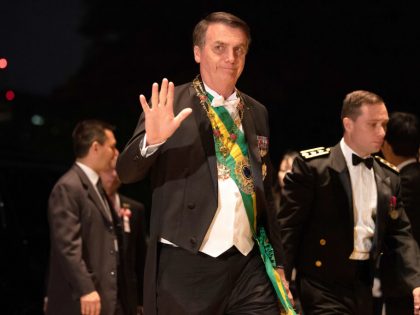
Brazil’s 1988 post-dictatorship constitution enshrined a broad range of social rights and a modest welfare state. Since taking office a year ago, Jair Bolsonaro and his band of paranoid reactionaries have dedicated themselves to attacking and undermining those rights.
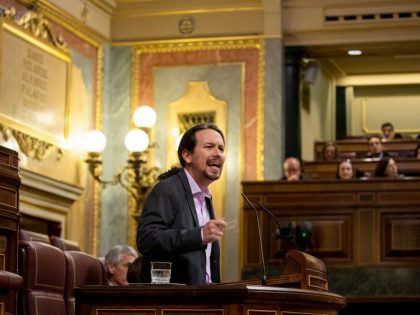
Upon its creation in 2014, Podemos insisted it was nothing like the political parties that had long dominated Spain. Today, Pablo Iglesias’s party looks like an ever-more institutionalized force — yet one whose activists continue to see themselves as belonging to a “social movement” from below.
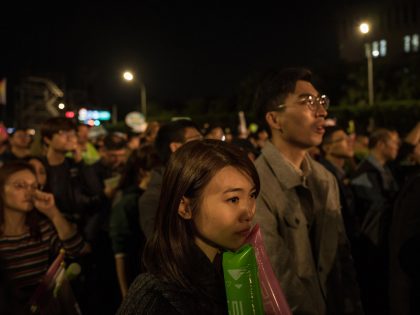
Taiwanese voters are going to the polls tomorrow for presidential elections as protests continue to rage in Hong Kong. But in order to understand Taiwan, we have to understand the power of China — and the looming shadow of US imperialism.

With its starchy girl-power message and Meryl Streepish prestige, Little Women is bound to be a hot contender for critics’ awards, Oscars, and Golden Globes. But don’t be fooled: it’s a bad movie.
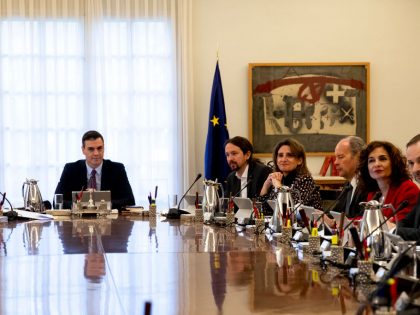
The PSOE-Podemos coalition promises to roll back recent attacks on labor rights and provide a negotiated solution to the Catalan crisis. But the new government’s moderate tone hasn’t placated the business and institutional establishment — and they’re already working to thwart its plans.
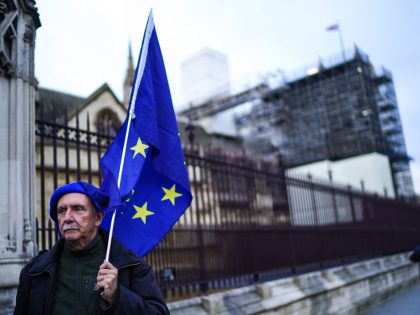
Boris Johnson’s promise to “get Brexit done” allowed him to frame his whole agenda as a matter of implementing the popular will. Die-hard calls to rejoin the European Union are hopelessly out of touch — and risk dividing Labour over a futile culture war.

Pete Buttigieg is this election’s poster child for “progressive neoliberalism” — offering up platitudes about diversity while leaving untouched the very structures that oppress people. It’s time we left this kind of politics in the past.

Finland’s extreme right came a close second at the last election, and they’re baying for power next time around. Increasingly brash in their theatrics and dominating debates, they’re the dark and very real threat to Finland’s celebrated social democracy.

Rival campaigns and hostile journalists are scraping the bottom of the barrel with their latest attacks on Bernie Sanders supporters. Now, apparently, getting owned on Twitter is “harassment,” and when a nurses’ union donates to Bernie, it’s “dark money.”
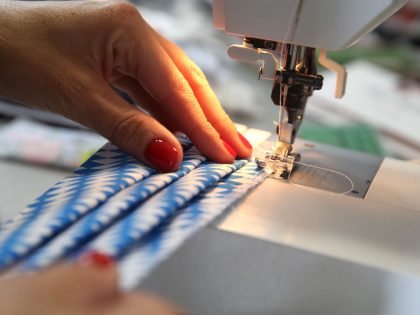
The fast-fashion industry has long been known for its exploitative practices, which have continued during the pandemic, despite the health risk to garment workers. The production of “fashion masks,” which substitute actual protection for mere simulation, shouldn’t surprise us.