The Spanish Constitution Is Strangling Catalonia
The PSOE-Podemos coalition set to form Spain’s next government will rely on Catalan support in parliament. Yet after an election polarized around national tensions, both parties are ignoring Catalans’ call for self-determination.
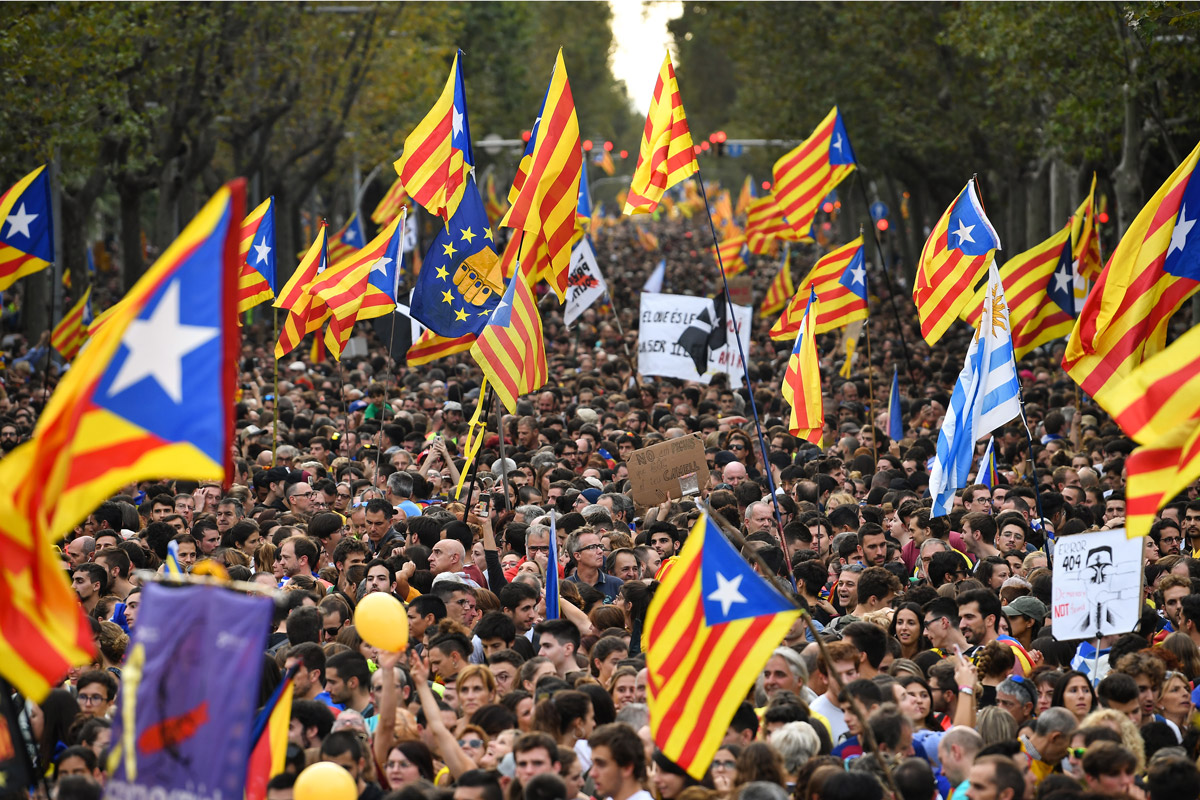
Protesters wave flags in the street as a general strike is called following a week of protests over the jail sentences given to separatist politicians by Spain’s Supreme Court, on October 18, 2019 in Barcelona, Spain. (Jeff J. Mitchell / Getty Images)
It’s been five weeks since the Spanish courts handed down long jail sentences to Catalonia’s pro-independence leaders — and there’s been no letup in the popular protests against the decision. From the mass occupation of El Prat Airport to the clashes in Barcelona city center, Catalan society has seen the largest and most violent disturbances since the return of democracy in the late 1970s.
These protests — and the Spanish nationalist reaction against them — were a key theme of the elections to the Spanish Congress held on November 10. Yet even as national tensions have hardened, and Spain’s far-right Vox party has soared in the polls, the public debate is, if anything, turning against the need for a negotiated solution to the conflict.
Certainly, the ruling Socialist Party (PSOE) has not chosen the path of openness toward Catalan self-determination. In the run-up to the contest it even published a draft program that dropped its call for a federal Spain, as it bid to win back votes from the liberal-nationalist Ciudadanos.