Pete Buttigieg’s Elite-Friendly Politics Won’t Help the Marginalized
Pete Buttigieg is this election’s poster child for “progressive neoliberalism” — offering up platitudes about diversity while leaving untouched the very structures that oppress people. It’s time we left this kind of politics in the past.
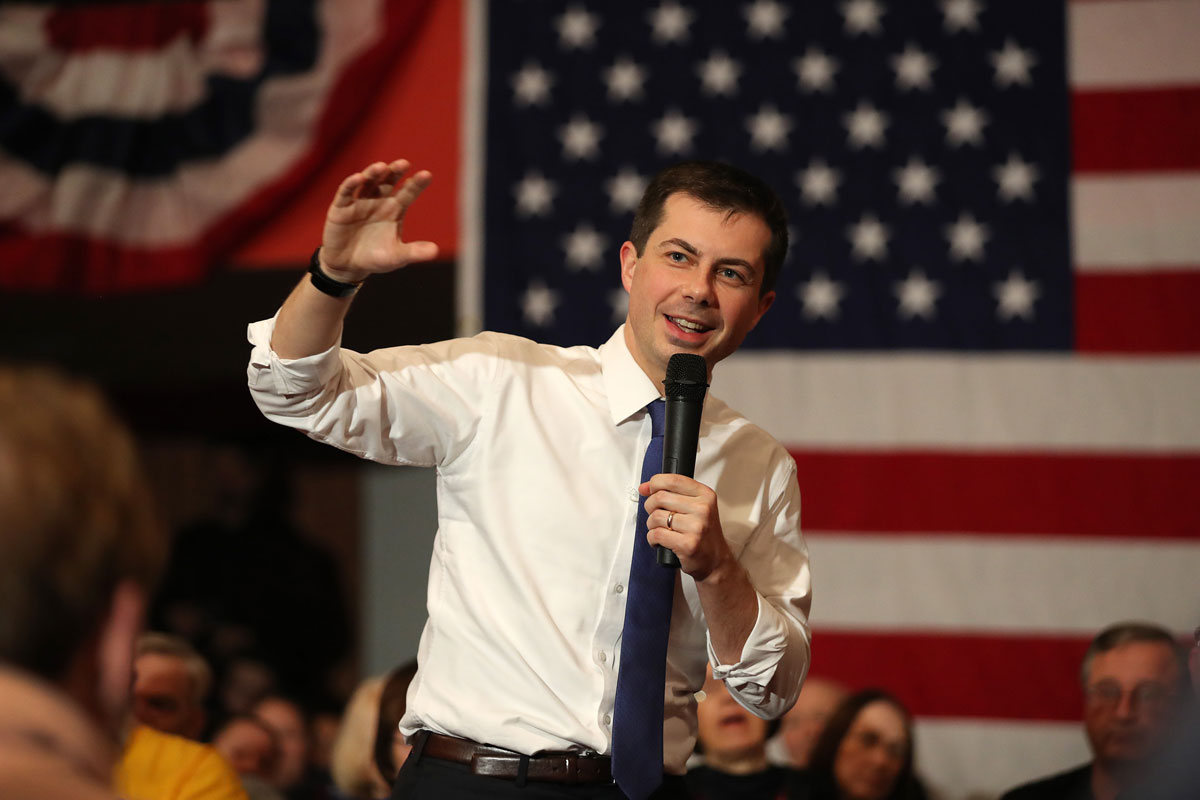
Democratic presidential candidate and former South Bend, Indiana mayor Pete Buttigieg speaks during a campaign event on January 31, 2020 in Clinton, Iowa. (Joe Raedle / Getty Images)
The past decade was a momentous one for the LGBT movement in the United States. Among many other milestones, marriage equality became the law of the land in 2015, and trans students received vital protections under Barack Obama’s administration.
Yet the decade also revealed the shortcomings of mainstream LGBT politics. Not only were many Obama-era actions weak and relatively easy to repeal — Trump has already reversed many of these gains — they also tended to focus on well-off segments of the LGBT community. Radical activists calling for a broader, more ambitious queer politics focused on poor and working-class people — including the LGBT youth who disproportionately experience homelessness and incarceration — were rebuffed in favor of a blinkered politics of inclusion, representation, and accommodation.
Former South Bend mayor Pete Buttigieg’s emergence as a contender for the Democratic presidential nomination serves as a fitting bookend to this decade of elite-centered LGBT politics. By framing himself as a progressive champion while vowing not to alienate voters on either side of the aisle (and hobnobbing with big-money donors), Buttigieg has sought to emulate Barack Obama in both style and substance.