Viewing Taiwan From the Left
Taiwanese voters are going to the polls tomorrow for presidential elections as protests continue to rage in Hong Kong. But in order to understand Taiwan, we have to understand the power of China — and the looming shadow of US imperialism.
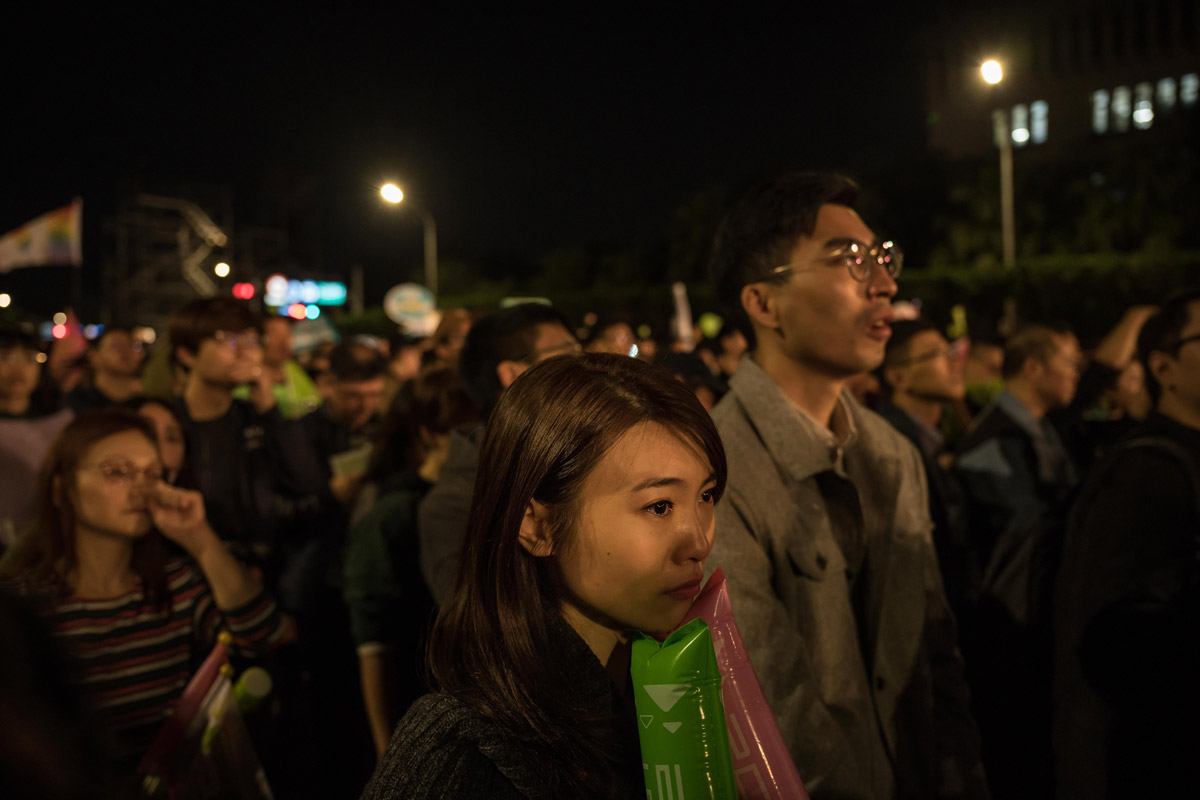
A supporter reacts as Taiwan’s current president and Democratic Progressive Party (DPP) presidential candidate Tsai Ing-wen speaks during a rally ahead of Saturday’s presidential election on January 10, 2020 in Taipei, Taiwan. (Billy H.C. Kwok / Getty Images)
On Saturday, voters in Taiwan will go to the polls to elect the state’s next president. The autonomous territory — officially known as the Republic of China, but unrecognized diplomatically by most countries around the world — has long been cast in the shadow of China and subsumed under Washington-Beijing relations.
In tomorrow’s contest, China is again a major dividing issue between the two main parties, the conservative, pro-unification Nationalist Party (KMT) and the left-leaning, pro-independence Democratic Progressive Party (DPP, the party of the current president, Tsai Ing-wen). The election is also playing out against the backdrop of the Hong Kong protest movement, with Taiwan watching nervously at how China rules Hong Kong under “One Country, Two Systems,” the same arrangement that has been promised to Taiwan should it unify with China.
To get a sense of the state of play in Taiwan, we spoke to Brian Hioe, a founding editor of New Bloom, an online magazine that covers political change and social movements in Taiwan, Hong Kong, and Mainland China. We talked about Taiwanese history and politics, the strengths and weaknesses of left-leaning social forces in Taiwan, Taiwan’s relations with China and US imperialism, and much more.