Maoism and Its Complicated Legacy
Despite its massive length, Julia Lovell’s Maoism: A Global History doesn’t offer us a clear way to understand Maoism and its legacy.
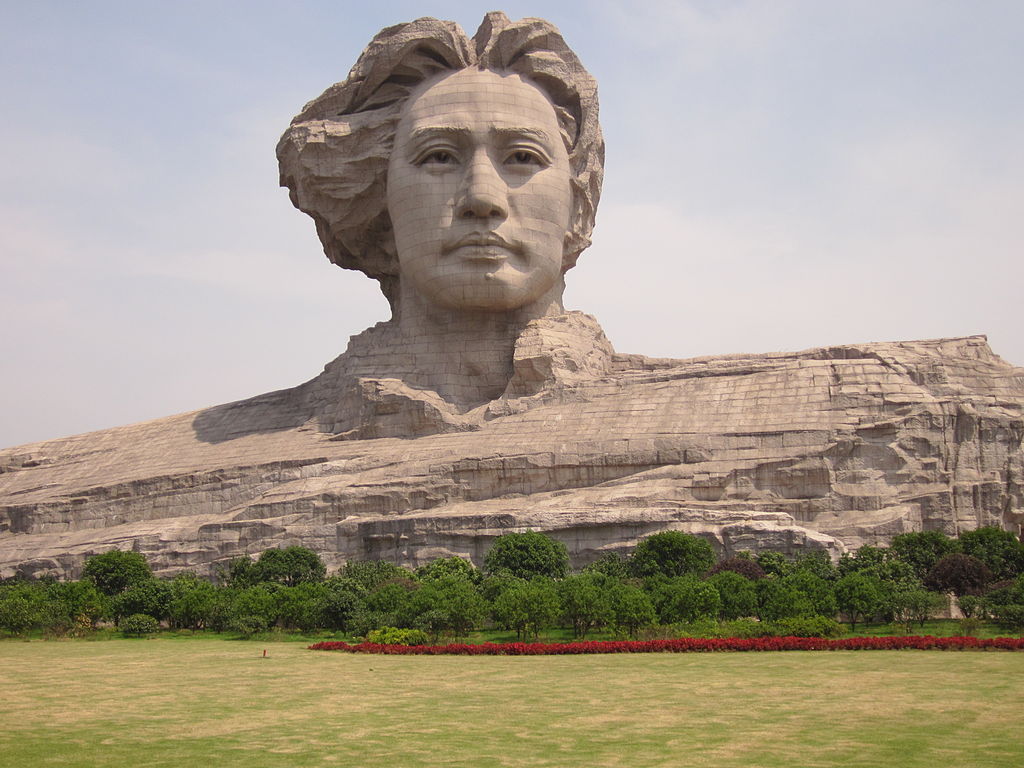
The world’s largest statue of Mao Zedong in Orange Isle, Changsha, Hunan, China. Wikimedia Commons
Fifty years ago, a remote Chinese region, Dao County, was caught in the violence of the Cultural Revolution. In some weeks, thousands were murdered. Most victims were bludgeoned to death, their bodies tossed in the rivers. On the other side of the world, a group of Asian-American street youth formed the Red Guard Party, demanded a dignified life for all, and declared, “We realize that only when the oppression of all people is ended can we all be really free.” When Black Panther Party leader Elaine Brown visited Beijing in 1970, she noted with surprise, “Old and young would spontaneously give emotional testimonies, like Baptist converts, to the glories of socialism.”
Julia Lovell’s new book, Maoism: A Global History, tries to explain the quixotic movement that captured the imagination of millions across the world. Despite its title, the volume is not really a “global history” — it is more of a series of vignettes on aspects of Maoism, most of them concentrating on certain regions or countries.
The somewhat disjointed structure results from how the book circumscribes its topic. The first chapter tries to define what Maoism is — a difficult job, given the contradictions in Mao and the movement he led. Consider their attitude toward women’s liberation: the young Mao decried the lack of rights of women and called for abolishing arranged marriages. One of the achievements of the Chinese revolution was the 1950 marriage law that enabled women to divorce their husbands and own land. In 1968, Mao declared that “women hold up half the sky.” Lovell points out that Mao’s presumed feminism helped popularize his ideas. Yet already in the twenties, “radical women had pushed for birth control to become a front-line,” but “their male counter-parts buried the question,” women remained a disadvantaged group in society, and Mao’s personal treatment of women was abusive.