
The Supreme Court Is a Threat to Democracy
Last week’s Supreme Court decision striking down the national eviction moratorium was a lawless power grab by an increasingly out-of-control institution.
Last week’s Supreme Court decision striking down the national eviction moratorium was a lawless power grab by an increasingly out-of-control institution.

The Bush administration was already planning to invade Iraq before 9/11, but the attacks supplied the necessary pretext. The catastrophic war that followed turned Iraq into an ungovernable wasteland.

China hawks love to fulminate about how Beijing’s military strength is growing and will challenge the United States in the coming decades. But China’s military is vastly more likely to be fighting climate change than American soldiers.

Australia’s Greens are poised to increase their vote in the next federal election. We talk to party leader Adam Bandt about challenging neoliberalism and confronting the climate crisis.

Corporate America wants to decouple the infrastructure bill from the climate and budget bill. The best chance to prevent that is for enough progressive lawmakers to pledge to vote against any infrastructure bill until the climate and budget bill passes.

With hawks thirsting for blood after last week’s ISIS attack, the Biden administration just slaughtered ten Afghans about to be resettled in the US. The tragic story is a miniature version of how the entire war has gone.

Last summer, left-wing French MP Danièle Obono was portrayed in a nationalist magazine as a slave in chains. She told Jacobin about how the far right is taking over French media — and how Emmanuel Macron’s supporters are adopting its reactionary agenda.

From fighting contract concessions to making common-good demands like postal banking and public broadband, Canadian postal workers’ fighting unionism should be an inspiration to USPS workers.

Central to the justification for the “war on terror” by right-wing and liberal administrations was the simple idea that the United States has the right to impose its will on the rest of the world. The results, unsurprisingly, were disastrous.

As the United States withdraws its troops from Afghanistan, Tony Blair has reemerged to lecture us all about how ending the war is wrong. Don't listen to him: Blair played a central role in dragging the UK into a bloody, pointless, disastrous war.

Despite their election rhetoric, Canadian politicians have been acting in the interests of corporations for decades. We need to confront corporate interests — and in order to do so, we have to recognize how intertwined they are with the Canadian state.
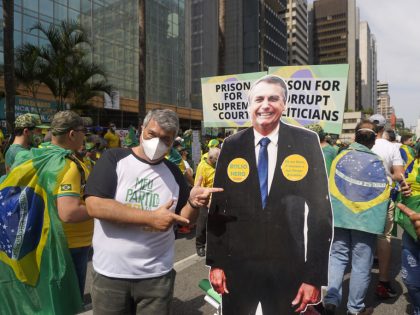
Far from being ascendant in Brazil, Jair Bolsonaro’s far-right politics look increasingly isolated, especially after a failed showing in the streets this week. But even with a small, reactionary minority of support, Bolsonaro can wreak serious undemocratic havoc.

Despite copious evidence of Saudi complicity in the September 11 attacks, the Bush administration and its successors have spent twenty years shielding the country’s elite from accountability while making war on an ever-growing list of other Middle East countries.

War hawks constantly cite women’s liberation in support of the US occupation of Afghanistan. That’s transparent hypocrisy: during the Cold War, the US supported patriarchal fundamentalists against a party dedicated to advancing the cause of Afghan women.

Two decades after 9/11, the US prison at Guantánamo Bay still holds detainees who have been charged with no crime. The crimes of Gitmo must end and the base must be returned to the Cuban republic.

The 9/11 era helped create a modern version of the Dark Ages. Today, we must finally move beyond it and forge a new sort of politics based on truth and collective emancipation.
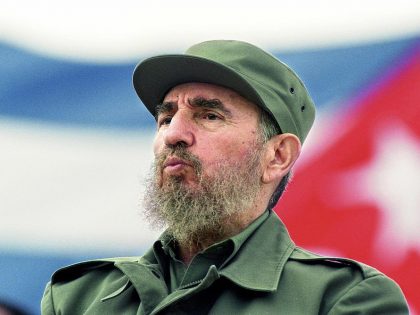
Cuba is facing a new set of challenges as a post-Castro leadership confronts the pandemic and its economic fallout. But Cuban socialism has repeatedly shown its capacity for survival and adaptation since the revolution of 1959.

Activists are fighting the construction of the Line 3 tar sands pipeline in Minnesota — a pipeline that would have devastating consequences for indigenous people in the state and for all of us around the planet.

Noam Chomsky talks to Jacobin about why the US withdrawal from Afghanistan won’t change US imperialism, the many war crimes of George W. Bush, and why he still believes in average people’s ability to push back against the war machine.

In theory, labor shortages should compel employers to improve jobs to attract workers. But they don’t have to, as long as there are workers without rights whom they can exploit instead.