After 9/11, the US Tried to Force Its Will on the Rest of the World. It Failed.
Central to the justification for the “war on terror” by right-wing and liberal administrations was the simple idea that the United States has the right to impose its will on the rest of the world. The results, unsurprisingly, were disastrous.
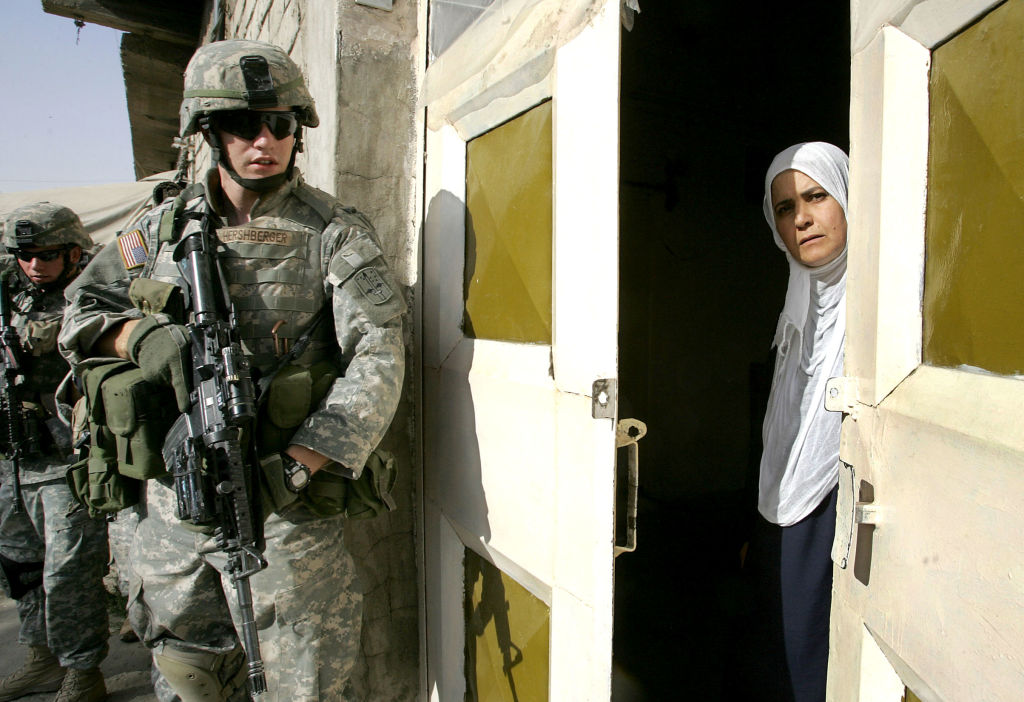
An Iraqi woman opens her door to US infantry as they conduct house-to-house raids north of Baghdad in October 2005. (CRIS BOURONCLE/AFP via Getty Images)
In September 2000, the neoconservative think tank Project for the New American Century released a document outlining its foreign-policy vision. It called for the United States to use overwhelming military force to take control of the Persian Gulf region, for “maintaining global US preeminence . . . and [for] shaping the international security order in line with American principles and interests.” This goal, the report went on to add, was going to take some time to be realized “absent some catastrophic event — like a new Pearl Harbor.”
On September 11, 2001, such an event did occur — at a time when the neoconservative wing of the foreign policy establishment held powerful positions in the administration of George W. Bush. The crisis of 9/11 positioned the neocons to realize their vision and to project US power on a global scale.
The attacks on that fateful day created unanimous agreement in the foreign-policy establishment that the war on terror would henceforth frame US foreign policy. Three days after the attacks, the Authorization for Use of Military Force Against Terrorists was passed, setting in motion an open-ended, perpetual, global war that has continued to this day.