The Fight Against the Line 3 Pipeline in Minnesota
Activists are fighting the construction of the Line 3 tar sands pipeline in Minnesota — a pipeline that would have devastating consequences for indigenous people in the state and for all of us around the planet.
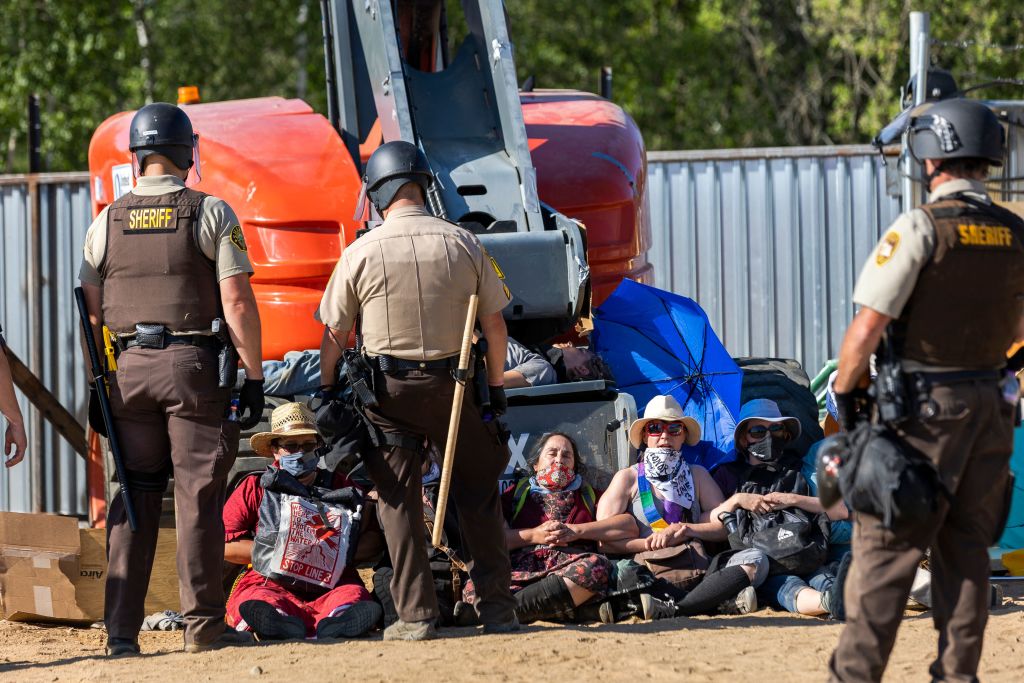
Police in riot gear arrest environmental activists at the Line 3 pipeline pumping station near the Itasca State Park, Minnesota, on June 7, 2021. (Kerem Yucel / AFP via Getty Images)
The Shell River, named for the clams and mussels lining its riverbed, was only a few inches deep where it abutted the Central Minnesota encampment where Dawn Kier and her colleagues were living. From Kier’s perch in a lawn chair near the water on a recent late-summer evening, the river looked calm as it flowed past swaying cattails and thin stands of wild rice nearly ripe enough for harvest. But Kier had a keen knowledge of the complexity beneath the surface.
“There’s this whole water system underneath the riverbed,” Kier explained, as dusk enveloped the canopy of pine trees overhead. “And there are cracks and fissions where the water comes up to the surface.” She worried about what else might be seeping through those cracks, thanks to the construction of the Line 3 pipeline through the region by a Canadian oil company called Enbridge.
“Enbridge drills so far under the water that they risk hitting the aquifers,” Kier said, referring to a spill of drilling fluids known as a frac-out. Such frac-outs have released thousands of gallons of drilling fluids in the region this summer, which can disrupt ecosystems, including by suffocating mussels and fish.