
There’s Still Power in a Strike
If workers refuse to work, the bosses can't produce anything. If soldiers refuse to fight, the generals can't wage wars. That's the power of a strike.
If workers refuse to work, the bosses can't produce anything. If soldiers refuse to fight, the generals can't wage wars. That's the power of a strike.

Hunger strikers in New York chalked up a win this week when Governor Andrew Cuomo rejected a gas pipeline off the coast of Long Island.

Amy Coney Barrett’s father helped lead the American Petroleum Institute for 20 years — the same lobbying group that is right now pushing Supreme Court justices to limit states’ power to stop fossil fuel projects.

We traveled to the Dominican Republic to talk to rural farmers and workers battling a Canadian mining company. “We had no concept of what the devil was until Barrick Gold came to our lands,” one person told us.

If we’re serious about stopping impending climate disaster, we have no choice but to radically rein in one of the world’s worst polluters: the US military.

The Civilian Conservation Corps, FDR’s original Green New Deal, cared for the environment and gave jobs to the unemployed. And though its record on racial equality was imperfect, it helped undermine key parts of Jim Crow.

Gambling companies are convincing states to legalize sports betting with promises of tax-revenue windfalls. The benefits are often less than promised — and they come at a severe human cost.

Joe Biden has long prized bipartisanship above all, and some of his early actions indicate he simply wants to restore the country to its pre-Trump form. That would be a disaster.
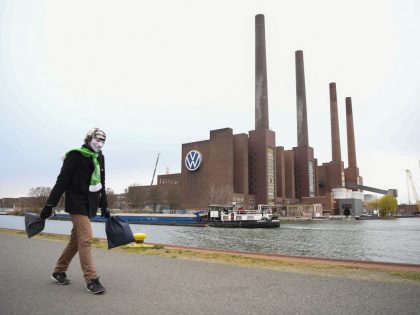
Faced with another global recession, many governments are responding with even stronger state interventions than they did in the 2008 financial crisis. But stimulus packages to prop up businesses must also pose the question of public control — not just bailing out corporations, but repurposing their operations to confront the disasters ahead of us.

While Suncor has failed to make basic improvements to a Commerce City, Colorado, refinery that is polluting the area, the company has massively increased payouts to shareholders — at the urging of one of the world’s largest hedge funds.

Utopian thinking gets a pretty bad name. But for author Kim Stanley Robinson, we should resist the idea we’re simply doomed to climate disaster — and insist that there is a world beyond capitalism.
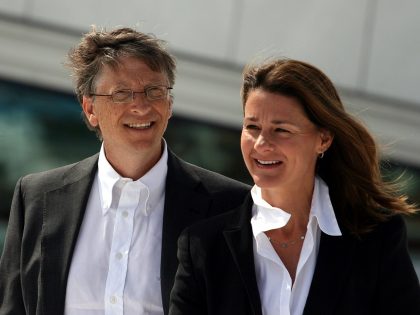
Bill Gates recently resigned from the board of Microsoft to focus full time on philanthropy. It’s a perfect time to remember: billionaire-funded philanthropy is a public-relations scam.

Amid mass unemployment and soaring inequality, voters in today’s South African election are getting sick of the ANC’s broken promises. But there’s no real alternative for them in sight.
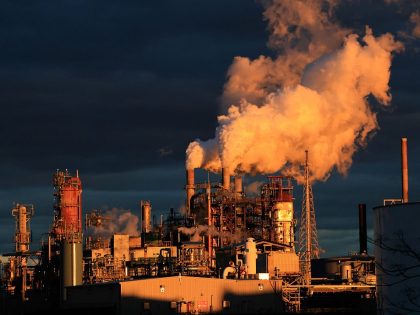
In an interview, investigative journalist and oil policy analyst Antonia Juhasz weighs in on what the fossil fuel industry really wants in Venezuela and how the current situation compares to past wars fought over oil.

Today Chile votes on a new constitution. Chileans have a chance to replace Pinochet’s document with one that guarantees social, economic, and environmental rights, and to bury the legacy of neoliberalism once and for all.

Jess Scarane is challenging incumbent Chris Coons for a Senate seat in Delaware. In an interview with Jacobin, the thirty-five-year-old candidate endorsed by the Democratic Socialists of America and her local Sunrise Movement hub talks about her vision of a better society, Coons’s use of “Republican talking points against the policies that we need,” and why a return to the status quo before the coronavirus is nowhere near good enough.

Labour Party MP Rebecca Long-Bailey argues that while the COVID-19 pandemic, a deep recession, and a worsening climate crisis are troubling clouds on the horizon, a Green New Deal for the United Kingdom offers a future worth fighting for.

A “clean power” group with ties to the fossil fuel industry is touting a new bill, backed by senators Chuck Schumer and Joe Manchin, that will accelerate oil and gas pipeline construction — and claiming it as a climate victory.

How might we imagine a transition to a socialist economy? There are clues in unlikely places: the management practices of some private corporations, which have been developing planned economies in miniature.

They’re grotesque symbols of plutocratic wealth and massive drivers of the climate crisis. We should ban private jets.