The Predatory Gambling Industry Is Misleading Voters
Gambling companies are convincing states to legalize sports betting with promises of tax-revenue windfalls. The benefits are often less than promised — and they come at a severe human cost.
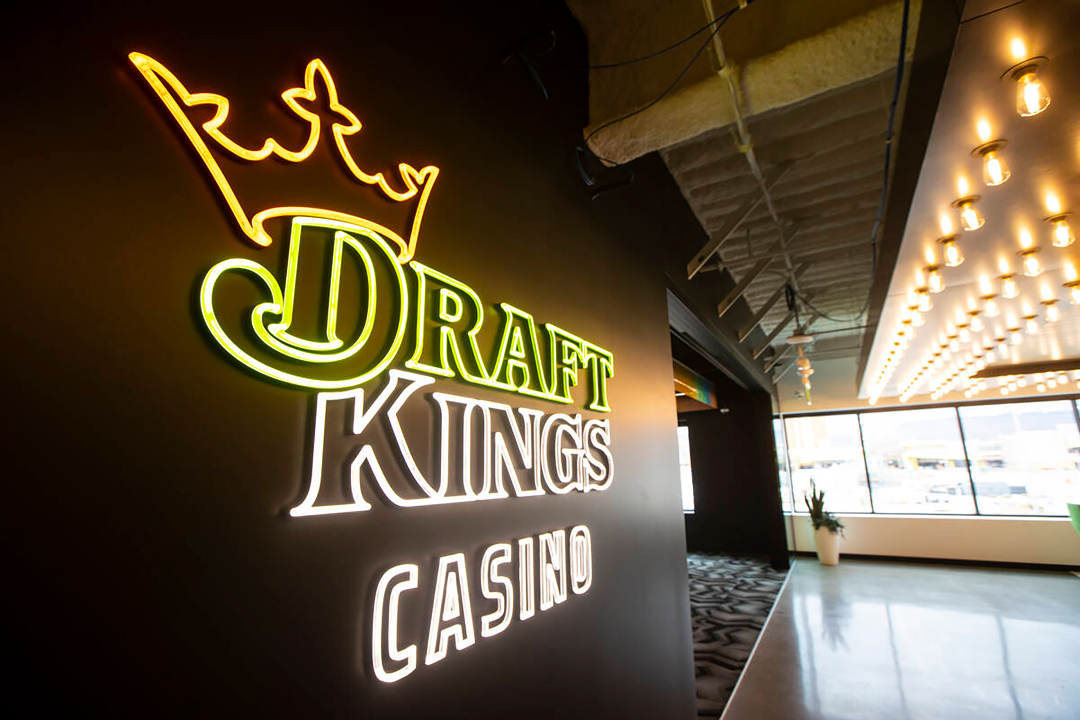
A casino area is pictured at DraftKings’ offices at UnCommons on March 21, 2023, in Las Vegas. (Chase Stevens / Las Vegas Review-Journal / Tribune News Service via Getty Images)
In early May, on a blue-sky day in Jefferson City, Missouri’s Secretary of State’s Office had a few unlikely visitors: Louie the blue bear, Fredbird the cardinal, and Sluggerrr the lion, some of the state’s furriest, most beloved mascots.
They were there to represent the professional sports teams in Missouri, all backers of Amendment 2, a ballot measure that would legalize sports gambling in Missouri and use corresponding tax revenue to fund education. After clowning around for news cameras and smashing high fives, the anthropomorphic animals used hand trucks to roll file boxes of signatures in support of Amendment 2 into the office themselves.
Direct democracy, mascots, money for kids: it all seemed wholesome. But critics of Amendment 2 say Sluggerrr and his friends had been weaponized that day by corporate gambling interests making false promises about school funding. “They frame it as ‘Let the people vote,’” said Les Bernal, the national director of the advocacy group Stop Predatory Gambling, “but there’s no grassroots movement. There is a very specific, very coordinated campaign to ram through hardcore versions of gambling.”