Rebecca Long-Bailey: Why the UK Needs a Green New Deal

Labour Party MP Rebecca Long-Bailey argues that while the COVID-19 pandemic, a deep recession, and a worsening climate crisis are troubling clouds on the horizon, a Green New Deal for the United Kingdom offers a future worth fighting for.
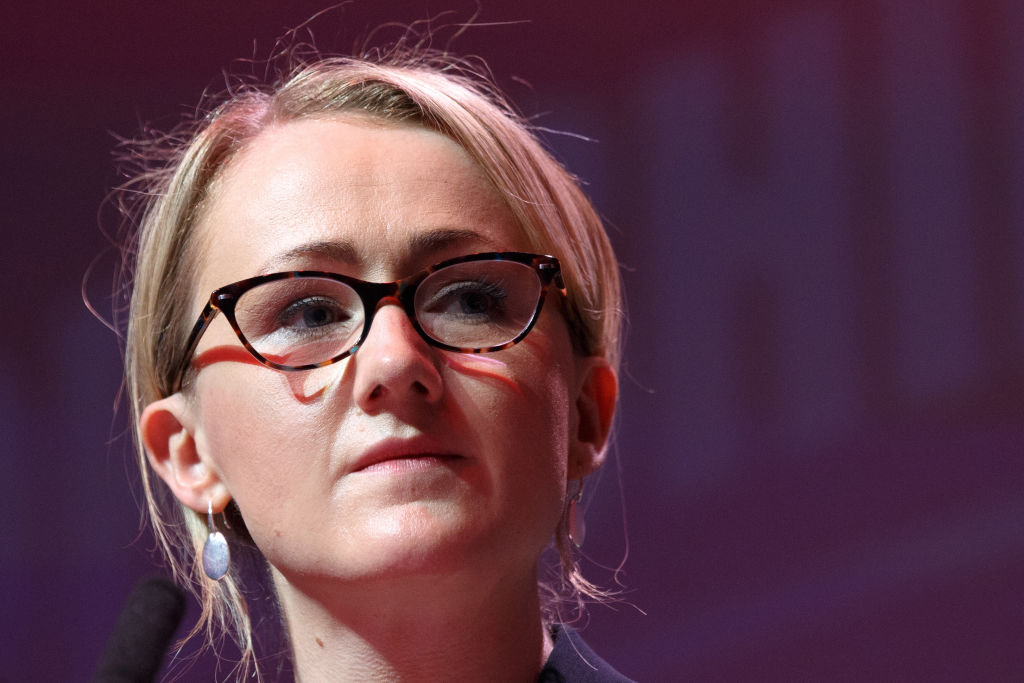
Labour Leadership Hustings Takes Place in Glasgow

Rebecca Long-Bailey in Glasgow in February. (Robert Perry / Getty Images)


The Case for a Green New Deal

Ensuring public safety during COVID-19 requires significant support for businesses and individuals from the government — in excess, in fact, of what was already committed. But instead of continued investment through the ongoing pandemic and recession, we’re already hearing rumblings from the Tories about the “tough choices” that are just around the corner.

There is an alternative to their preferred cutbacks or the return to disastrous austerity policies. A publicly led stimulus package could not only pull our economy out of this crisis, but restore the public purse as well. This stimulus package — whether you are a follower of Keynes or Friedman — is frankly morally unavoidable in any event and it begins with a Green New Deal.

Scientists have repeatedly told us, with almost complete unanimity, that we are in a climate crisis. Even optimistic forecasts now predict extreme weather and basic food and water insecurity. In 2018, the Environmental Audit Committee produced a report showing that the UK faces a trebling of heat deaths by 2050 as well as severe flooding if the government fails to act.

Earlier this year, almost all of the world’s countries (the UK included) missed the symbolic February 9 deadline to strengthen plans to fight climate change under the Paris Agreement — a staggering failure. On November 4, the United States formally withdrew from the agreement. COP26, one of our last chances to agree to world action on climate change has been postponed as a result of the pandemic.

Sadly, even if the conference had gone ahead, the UK wasn’t ready for it. Ed Matthew, COP26 director for the Climate Coalition, summed it up: “the UK government was not prepared to achieve the best possible outcome this year. It did not have the policies in place to be on track to net zero, and that would have undermined diplomatic momentum.”

It was hoped that the Green Recovery Plan recently announced by Rishi Sunak would address these concerns, but it proved to be a mere fraction of the amounts other European countries have set aside. To put it in context, Sunak’s plan committed £3 billion while Germany’s equivalent was worth €40 billion.

As Eleanor Salter pointed out in Tribune, even if the government’s green package reduced 0.5 million tonnes of CO2 as the chancellor claimed, that figure accounts for just 0.14 percent of the UK’s carbon emissions. That is nowhere near the scale of ambition necessary to address this crisis.

In fact, the government’s green recovery plans were so insufficient that climate campaigners Plan B have launched a formal legal challenge, claiming they are inadequate and “clearly unlawful” in light of the UK’s obligations to reduce emissions. The Tories’ procrastination in taking the necessary action makes no sense — unless, of course, the aim is to continue protecting the interests of big polluters.

What a Green New Deal Could Look Like