When the State Steps in to Save Profit
Faced with another global recession, many governments are responding with even stronger state interventions than they did in the 2008 financial crisis. But stimulus packages to prop up businesses must also pose the question of public control — not just bailing out corporations, but repurposing their operations to confront the disasters ahead of us.
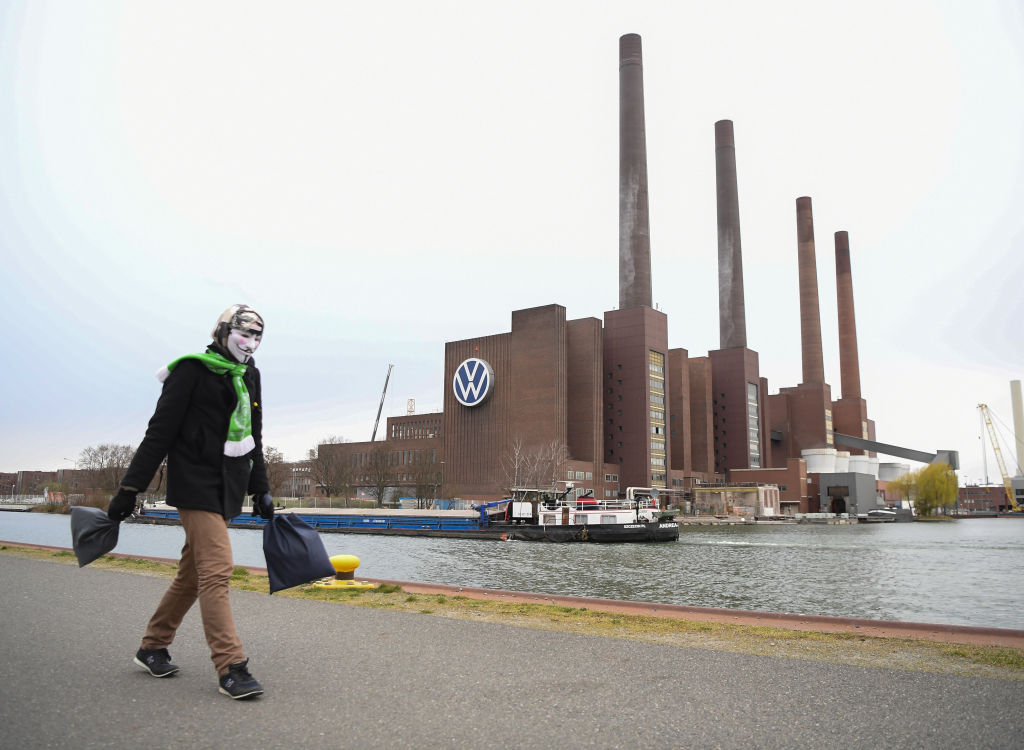
The Volkswagen factory stands on the first day following a temporary halt to car production there on March 20, 2020 in Wolfsburg, Germany. Stuart Franklin / Getty
The financial crisis of 2007–8, which escalated into a global meltdown, was supposed to be the big-bang crisis — a once-in-a-lifetime event. Yet here we are again. By last week, mainstream economists such as Harvard’s Kenneth Rogoff and Pankaj Mishra were convinced that the world had already entered a new global economic crisis.
Massively disrupting international supply chains, the globalization of COVID-19 has clearly accelerated a recession. Note the word “accelerated.” For already by late 2019, indicators from GDP growth to capital profitability and the volume of working hours indicated that recession was coming. In Germany, last year saw the lowest growth since 2009. Mass layoffs in the global auto industry were no longer merely results of computerization or the transition to e-mobility, but were connected to a wider slump in economic activity.
But the shutdown due to coronavirus has made the general public realize that the world is back in the kind of situation it faced in 2008. In the second week of March, stock markets plummeted: from March 4 to 18, the Dow Jones index dropped from 27,091 to 19,899 points, and the German DAX from 12,128 to 8,442. While pro-labor economists like Stephan Kaufmann called for a shutdown of stock exchanges in order to halt the volatility and panic-induced downward spiral (similar to the 1997 Asian crisis or the 9/11 crash of 2001), Wall Street soon demanded a “shock-and-awe stimulus” to halt the economic impact.