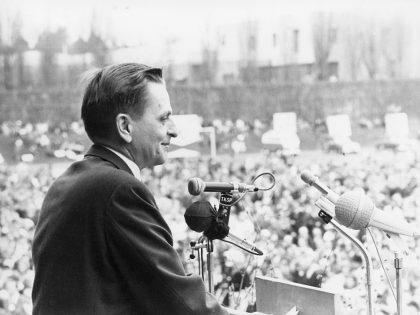
Today’s Social Democrats Should Be More Like Olof Palme
Swedish prime minister Olof Palme was assassinated on this day in 1986. He was an internationalist and the last social-democratic leader to really believe in a world beyond capitalism.
Swedish prime minister Olof Palme was assassinated on this day in 1986. He was an internationalist and the last social-democratic leader to really believe in a world beyond capitalism.
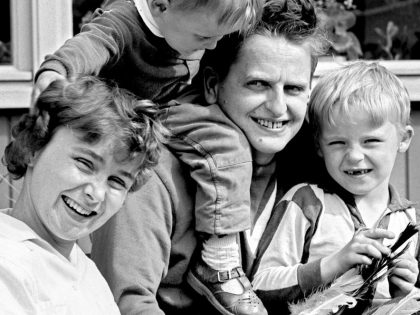
It’s been over three decades since Swedish prime minister Olof Palme was assassinated outside a Stockholm cinema, and Swedish police have still never found the killer. The vast array of theories explaining the killing are a reflection of Swedes’ ongoing fascination for Palme — but also highlights how many enemies he made as prime minister with his bold internationalism.

The borders of Ukraine are no more arbitrary than those of Italy or Germany. It’s been more than three decades since the Swedish prime minister Olof Palme was assassinated outside a Stockholm cinema, and police have never found the killer.

From South Africa’s ANC to Chilean socialists, in the 1970s, liberation movements around the world had few greater allies than Swedish prime minister Olof Palme. He used high office to speak out for the oppressed abroad — and to build an internationalist movement in his homeland.
Olof Palme's career illustrates the Swedish model's great successes — and crippling weaknesses.
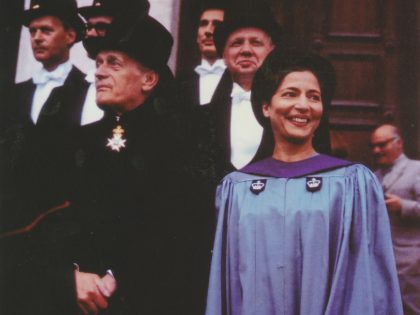
The seeds for Ruth Bader Ginsburg’s pioneering sex-discrimination Supreme Court briefs were planted in the early years of her legal career of the 1960s, from an unlikely source: Sweden, under the prime ministership of social democrat Olof Palme.
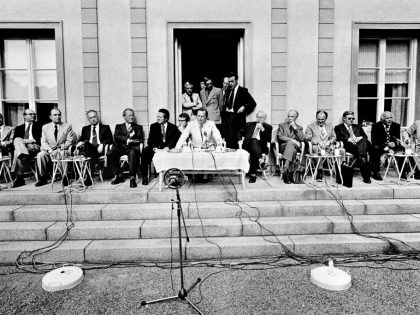
A CIA report from November 1967 reveals the agency’s deep fear of Swedish social democracy, and its rising star Olof Palme.
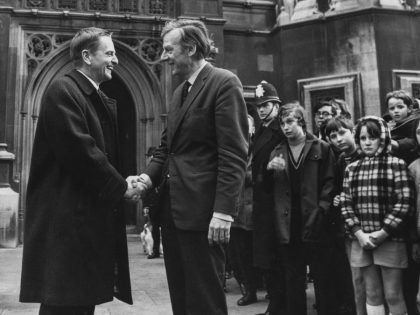
Sweden’s extraordinary wave of reforms in the 1970s, an era of explosive radicalism, reveal the achievements — and the limits — of social democracy.
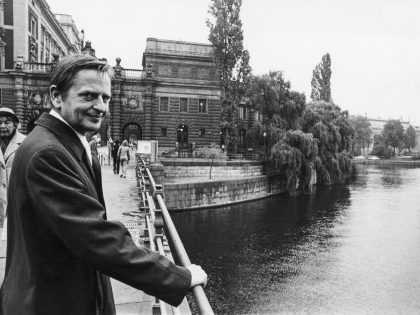
Over the last century, Sweden’s Social Democrats built a world-leading welfare state. But the party’s role in undoing some of its own past achievements also shows the contradictions in its project of democratizing capitalism.
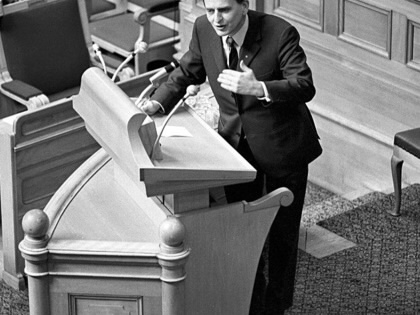
Social democracy transformed the 20th century, giving working people a share of wealth and power their grandparents could scarcely imagine. But the movement that set out to overcome capitalism ultimately struggled to defend what it had won within it.
History shows that the capitalist class will do whatever it can to undermine our reforms and oust the Left from power.
Tanzania's attempt to build socialism under Julius Nyerere failed. But it remains an animating force for egalitarian demands today.
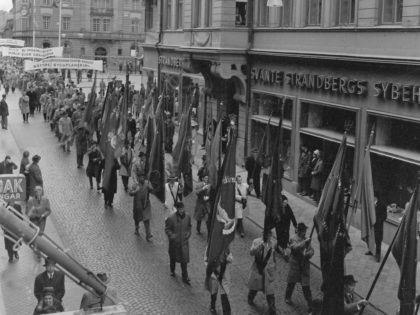
The overriding aim of democratic socialist strategy is to weaken the power of business, before breaking with capitalism entirely.
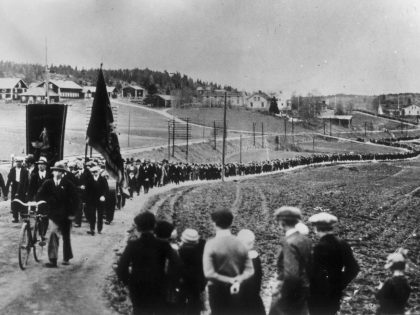
Mass workers’ movements transformed much of the world in the twentieth century, but they couldn’t overcome the power of capital. Today, we need a new democratic socialism to remake politics and revive working-class organizing.

Socialism cannot mean merely managing capitalism more fairly. It must point toward a society where survival is no longer contingent on the market — and where democracy extends into the economy itself.

Swedish labor economist Rudolf Meidner spent his career pushing radical reforms that would shift power from business to workers.
In this interview, the fate of European social democracy, among other topics, are discussed.
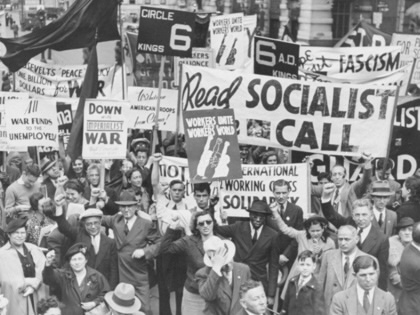
Bhaskar Sunkara reflects on the rise, defeat, and possible renewal of socialism — and on the generations of ordinary people who fought to build a world beyond class domination.
Why Nordic countries out-innovate the United States.
We should welcome Bernie Sanders' presidential run, while being aware of its limits.