What Ruth Bader Ginsburg Learned From Swedish Social Democracy
The seeds for Ruth Bader Ginsburg’s pioneering sex-discrimination Supreme Court briefs were planted in the early years of her legal career of the 1960s, from an unlikely source: Sweden, under the prime ministership of social democrat Olof Palme.
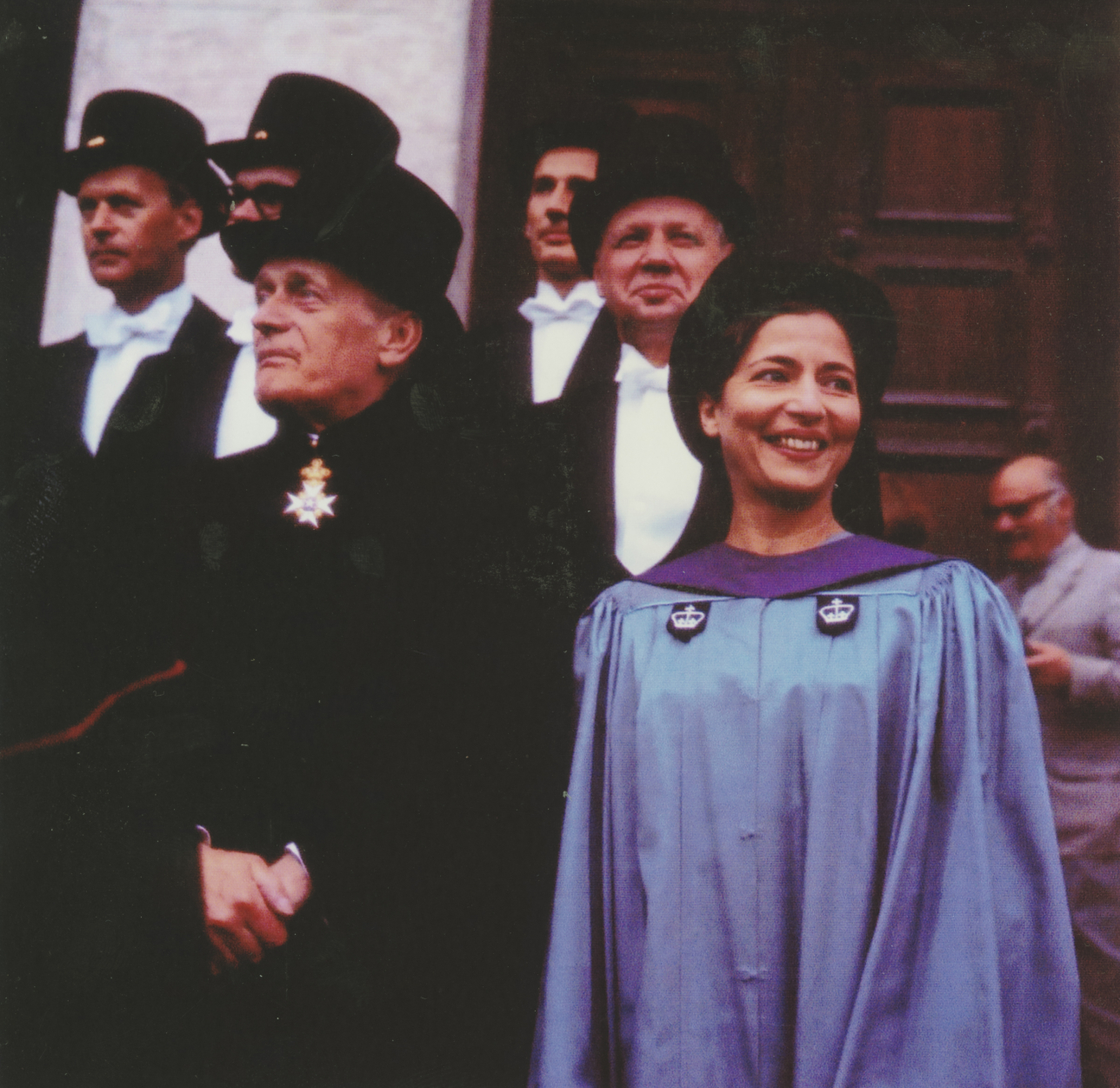
In 1969, the Faculty of Law in Lund conferred an honorary doctorate upon Ruth Bader Ginsburg. (Lund University)
The pioneering sex-discrimination law casebook that Ruth Bader Ginsburg published with two of her colleagues in 1974 closes, after nine-hundred and twenty-seven pages, with a brief chapter of “Comparative Side-Glances.” Ginsburg and her colleagues avowed a “modest purpose” for the pages that followed. They sought merely “to suggest the breadth of the movement toward equal rights for men and women” that went well beyond the borders of the United States. The side-glances, however, had a rather surprising focus: Sweden.
In text that must have been written by Ginsburg, the authors acknowledged the unexpectedness of their interest in the Scandinavian country. They admitted that it was “based on the experience of one of the authors of this text, who was awakened to the sex-role debate during visits to Sweden in the early 1960s.” Ginsburg had taken two extended visits to Sweden in 1962 and 1963 to work on a book about comparative legal procedure. While she was there, a set of high-profile debates about the unfairness of women carrying two jobs, going to work and caring for their families, when men only had one had unfolded in the Swedish press.
Ginsburg followed them avidly. The seed for arguments that reappeared later in her pioneering sex-discrimination Supreme Court briefs had been planted.