The Radical Reformist
Swedish labor economist Rudolf Meidner spent his career pushing radical reforms that would shift power from business to workers.
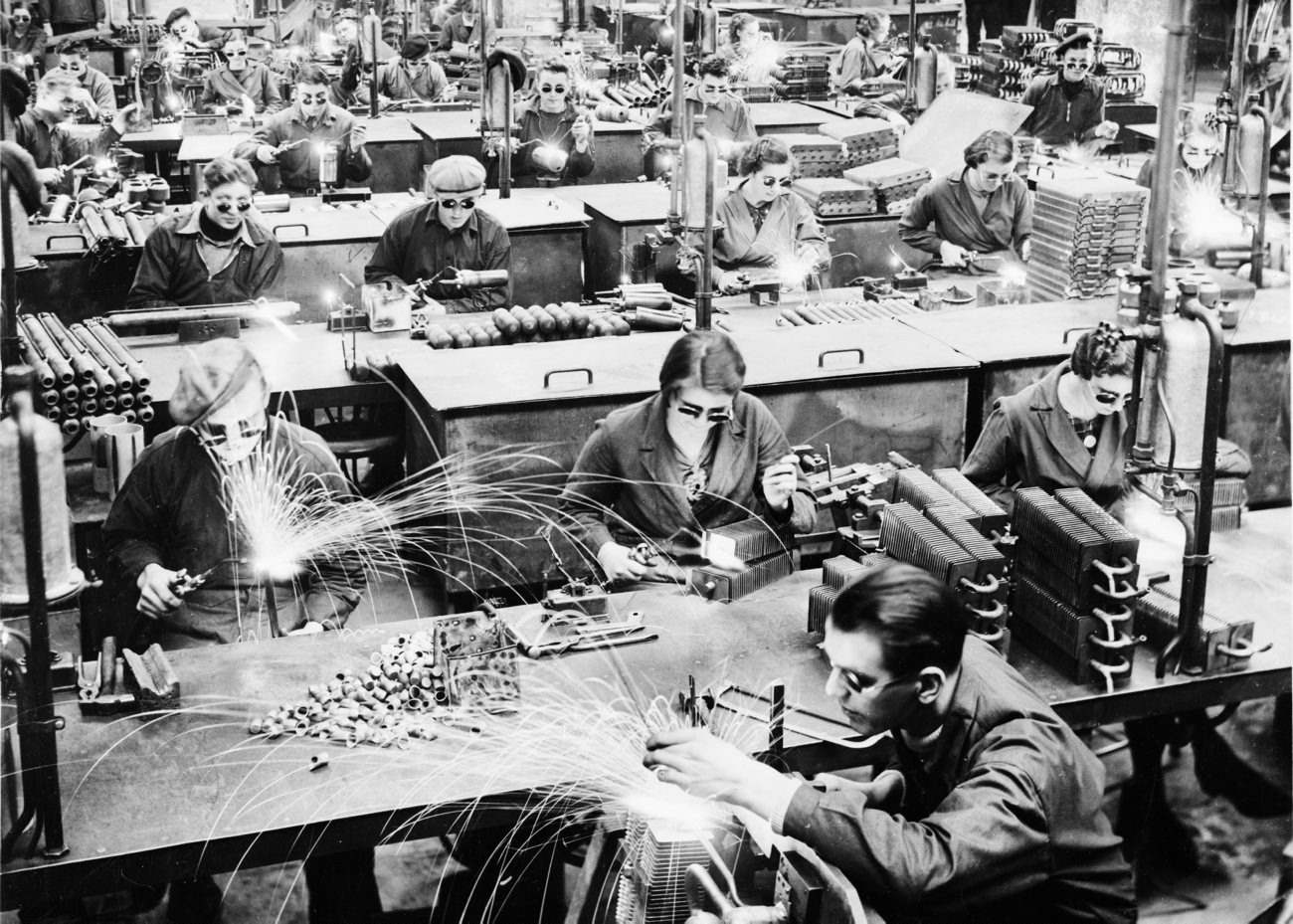
Workers assemble equipment at AB Electrolux in Motala, Sweden, 1947.Tekniska Museet / Wikimedia
Rudolf Meidner, one of the primary architects of Sweden’s famed social-democratic model, once described private ownership as “a gun pointed at the temple of the labor movement.” He spent his career as a union economist trying to resolve the standoff in labor’s favor.
Meidner’s economic model — given form by an exceptionally strong Social Democratic Party (SAP) and labor movement — delivered sustained material gains to workers in the decades after World War II (and, because of robust growth, private business). Swedish workers enjoyed the fruits of an expanding welfare state while exercising unprecedented influence and control over a developed economy.
It was not enough — the gun remained in place, and by the 1970s, Meidner had concluded, along with the Swedish labor movement, that an alternative model of ownership was needed. “We want to deprive the owners of capital of the power which they wield,” Meidner explained.