
There’s No Hope for a Party That Hates Its Own Base
Democratic Party leaders want the benefits of an engaged activist base like the one currently challenging Donald Trump without actually having to listen to or engage with it.
Democratic Party leaders want the benefits of an engaged activist base like the one currently challenging Donald Trump without actually having to listen to or engage with it.

Donald Trump’s speech last night sounded like a deranged remix of Ronald Reagan. Instead of slamming him where it hurts, Democrats responded by claiming Reagan’s poisonous legacy for themselves.

European countries are stepping up military aid and economic investment in Rwanda, said to be an ally in keeping order in the region. The reality: Rwanda’s authoritarian government is massively destabilizing eastern Congo by backing rebel forces.

Joe Rogan built his empire by presenting himself as an entertaining, independent commentator. He gave it up for the 2024 election.

The Christian left in the United States once wove solidarity into the fabric of social change, uniting diverse movements under a common cause. Drawing on this ethos could help anchor today’s struggles to bridge divisions and build collective power.

Inspired by a misreading of Antonio Gramsci, far-right activists have spent decades attempting to shape intellectual and cultural spaces. But their version of Gramsci’s ideas leaves out a crucial element: class struggle.

Donald Trump is using the idea of stopping “waste, fraud, and abuse” as an excuse for drastic austerity. The rhetorical strategy has a long history in the US — stretching back to Southern elites’ push to delegitimize Reconstruction as a cash grab.
Today no one on either side of the political spectrum would present themselves as an enemy of choice. The historian and author of The Age of Choice, Sophia Rosenfeld, spoke to Jacobin about the complex legacy of an idea that helped forge the modern world.
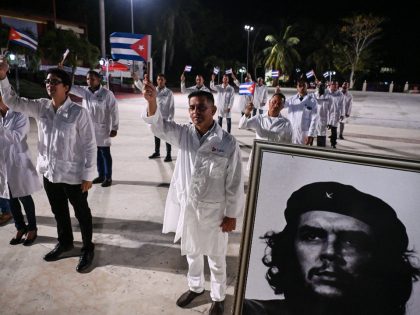
The United States calls Cuba’s medical internationalism "human trafficking" — but it’s really an internationalist lifeline for the Global South.
Voters are epically dissatisfied as we enter into the midterms. But our political economy and social world are not changing in response to that dissatisfaction.

Once mocked as unsophisticated, Donald Trump in his second term has put forward an ambitious vision to reshape America. Surrounding the president is a loose network of intellectuals who provide his policies with a philosophy.
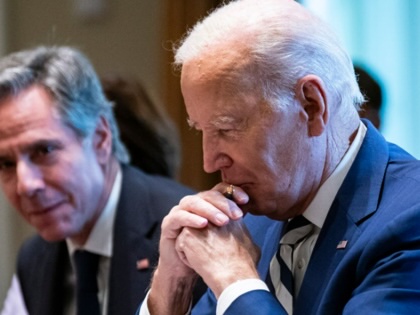
Biden administration officials like Antony Blinken and Brett McGurk have embarked on media tours trying to whitewash their records over Israel’s destruction of Gaza. Their excuses for enabling genocide are as flimsy and threadbare as their ethical codes.
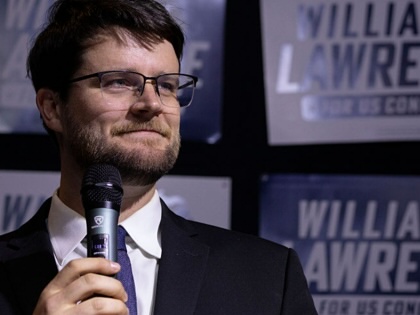
The election of left-wing environmental activist Will Lawrence to Congress from Michigan offers hope for American democracy. But in a conversation with Jacobin, the congressman-elect is sober about just how much our system can change.
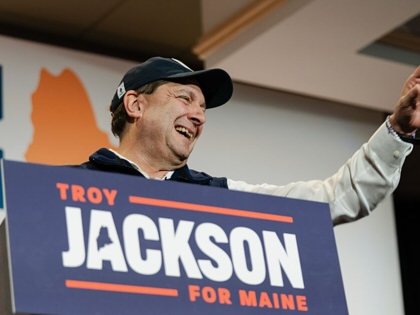
Democratic voters have long sided with socialists on policy but feared they were a liability in elections. Last night’s results finally proved that wrong.

The Supreme Court’s decision overturning the right to abortion is the latest in a long history of reactionary rulings. We shouldn’t have any illusions: the court is an antidemocratic body that has always been about protecting elites.
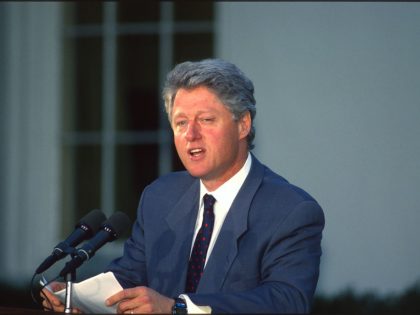
In 1992, Bill Clinton ran for president promising to “end welfare as we know it.” This rightward turn was part of a broader attempt by the Democrats to craft a “progressive neoliberalism” — whose “progressivism” included abandoning its working-class base.

The US Supreme Court is on the rampage, rolling back progressive gains from abortion rights to climate action. To stop conservative judges, we need to recognize that the law is a product of social struggle and shift the balance of forces outside the courts.

A startling poll shows how rapidly the Democrats are trading away their traditional multiracial, working-class base for white, highly educated voters. And the shift is causing a change to the party’s political priorities as a result.

Legendary socialist writer Mike Davis used to put a prompt to his students: If you had a B-52 with unlimited tonnage, what ugly, antisocial buildings would you bomb? We put the question to urbanist thinkers who have been inspired by Davis’s writing.