There’s No Hope for a Party That Hates Its Own Base
Democratic Party leaders want the benefits of an engaged activist base like the one currently challenging Donald Trump without actually having to listen to or engage with it.
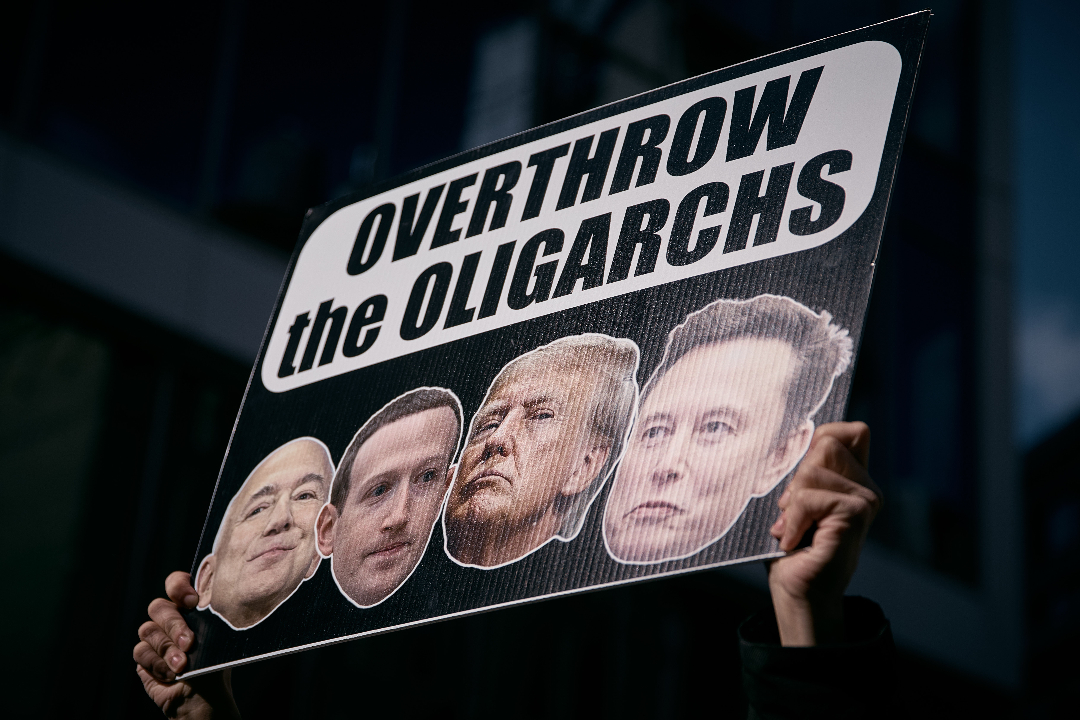
A protester carries a sign during a protest against President Donald Trump in Washington Square Park on February 17, 2025, in New York City. (Andres Kudacki / Getty Images)
Can a party mount a comeback by rejecting its own activist base? Democrats seem to want to use Donald Trump’s second term to test the idea.
This certainly is not what the Right has done. Republicans waged one of the more shockingly successful comebacks in US politics during the Barack Obama era. Only two years after Democrats took control of the presidency and both chambers of Congress, the GOP was mired in crisis, and there was widespread talk of a “permanent Democratic majority,” Republicans took back the House. Six years later, they had the Senate and the White House too.
How did they do it? One part of it was a campaign of aggressive and relentless opposition to almost anything and everything Obama did, deciding that “if you act like you’re the minority, you’re going to stay in the minority.” The other part: they hugged their activist base tightly, capitalizing on the oppositional energy in the right-wing grassroots that took form in the Tea Party protests, and working in concert with right-wing activist groups. The next two years saw Democrats hounded in angry town halls, rolling protests against health care reform and government spending, and targeted pressure campaigns against lawmakers — efforts that may not have completely halted Obama’s agenda, but that set the stage for his 2010 “shellacking.”