The US Electorate Is Permanently Mobilized and Unable to Move
Voters are epically dissatisfied as we enter into the midterms. But our political economy and social world are not changing in response to that dissatisfaction.
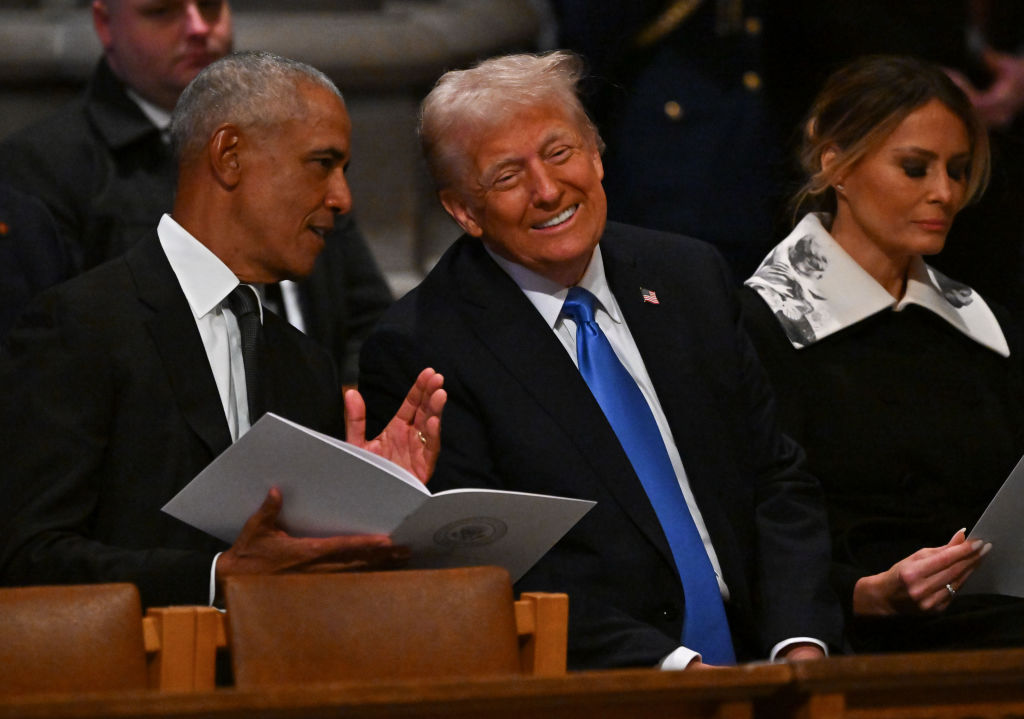
On the one hand, US voters are more incensed about the dysfunction of American politics and society than they have been in a century. On the other, nothing is changing in American life. (Ricky Carioti - Pool / Getty Images)
Six theses on the midterm elections:
Early voting tallies are through the roof. If the patterns continue, turnout is expected to match that of the midterm elections in 2018, which saw the highest turnout rate in a midterm election since 1914. This comes in the wake of turnout for the 2020 election, which was the highest since 1900. Turnout in the 2026 midterm election is supposed to be especially high among black, Latino, and independent voters.
Despite nearly a decade’s worth of record turnout, the electorate remains still roughly evenly divided, oscillating around the 50/50 mark. Even when one party manages to seize control of all the elected branches of the federal government, it doesn’t make a lasting dent in the divided nature of the electorate. Even when that party manages to push through major innovations in governance and legislation, it doesn’t fundamentally reshape the electorate. We’re as divided or polarized (take your pick) as we have been since the second term of Barack Obama.
Unable to fundamentally reshape the electorate, politicians and parties have also not been able to permanently reshape the government, at least not yet. Donald Trump has certainly done monumental damage to the American state, bringing levels of corruption and administrative malfeasance and downsizing that indicate a long-term hit to administrative capacity. Yet it won’t be until a successor from the opposition comes along that we’ll truly see what was done and what can be undone or remade. What we do know is that Trump 1 wasn’t able to stop the dramatic innovations of Joe Biden and that Biden’s innovations had virtually no effect on Trump 2.
Despite deep grumblings of an epically dissatisfied electorate, entire sectors of the political economy and social world remain on track to continue the path they’ve been on. Climate change is virtually off the table as a topic of policy and politics. Wealth inequality is worse today than it was ten years ago. Neither party has any kind of plan or even promise for artificial intelligence. The markets continue leading us to the precipice of irrational exuberance.
Despite the best efforts of one party to suppress the vote, and both parties to gerrymander the vote, the electorate refuses to be bowed or cowed by the state. All the traditional mechanisms of voter suppression, while unconstitutional and thus to be resisted at every step, and effective around the edges, don’t seem able to dislodge the electorate itself.
We have then a puzzle. On the one hand, an electorate that is more mobilized than it’s been in a century, and not just episodically mobilized but permanently mobilized. On the other hand, we have what I called, in an article about Max Weber for The New Yorker back in 2020, “the stuckness” of contemporary politics, in which “the particles of academic and political life have slowed to a halt” and “all that was air has become solid.” That’s where we are — permanently mobilized and unable to move — and like Weber, we long for eruptions and charismatic leaders to get us out of that stuckness. But whether the way out lies in electoral politics, non-reformist reforms, or more radical options, each of them will involve the long and patient creation of organizations that can sustain leftist politics over the long haul, not the episodic gestures and eruptions that Anton Jäger has so rightly marked as the emblems of our hyperpolitical age. Again, regardless of the path, from reform to radicalism and beyond, there’s still no alternative to that other Weberian metaphor, so beloved of centrists and liberals alike, yet so pertinent to the Left right now: the slow boring of hard boards. The good news is that there is a younger generation, perhaps two, that seems to get this, and is working toward the future, with no expectation of easy victories or quick solutions — and without the melancholy and grating pessimism, and the clichés, god, the clichés (pessimism of the intellect, optimism of the will, barf) of the older generations.