Who’s Afraid of Title IX?
The attacks on Title IX undermine the struggle against campus sexual assault.
The attacks on Title IX undermine the struggle against campus sexual assault.
Thanks to a corporate challenge to the National Labor Relations Board’s constitutionality, labor protections for tens of millions of workers have effectively been repealed until the Supreme Court can weigh in on the meaning of two words in the Constitution.
Everybody needs high-speed internet. But private corporations will never provide it. The solution: treat internet infrastructure as a public utility, funded by the public and built by union workers.

On the run from the Gestapo, Walter Benjamin committed suicide on the French-Spanish border in 1940. The place where he spent his last days now overlooks the most brutally policed border of the EU.
Until last month, almost all unpaid internships were technically illegal. Now it’s open season for employers who want free labor.
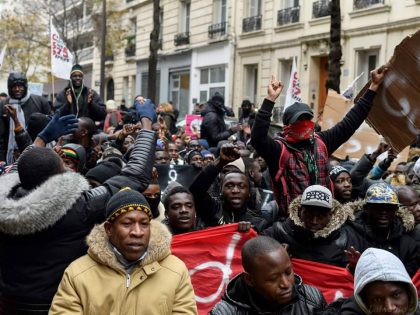
Paris’s tourist economy relies on a hidden army of undocumented migrants. But these workers are no longer happy to remain in the shadows — and their protests for regular status are drawing inspiration from the gilets jaunes.
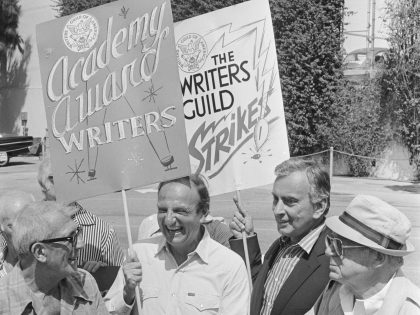
The Hollywood screenwriters' strike has deep historical roots: stretching back to Hollywood’s Golden Age, writers and many others in the industry have insisted that filmmaking is a form of labor — and fought for their rights as workers.
In supporting marriage equality, Ireland rejected the conservative structures that have shaped the country for centuries.
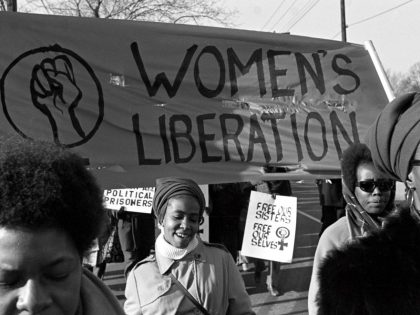
Socialist feminists have long argued that gender inequality isn’t a universal rule of human societies. There’s now a mountain of historical evidence to back up that view, showing us that we can abolish social hierarchies if we recognize their man-made origins.
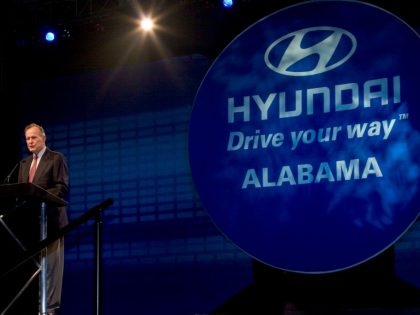
For decades, foreign-owned auto companies have flocked to the US South to exploit cheap, nonunion labor. It’s been a disaster for autoworkers and organized labor.

In the United States, one of the twentieth century’s most prolific butchers died as he lived — beloved by the rich and powerful, regardless of their partisan affiliation.
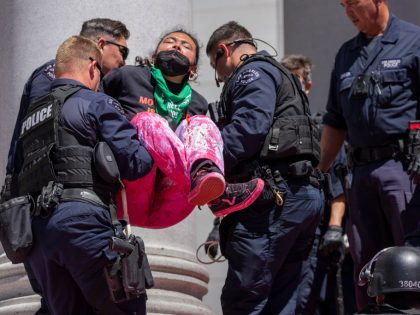
The Supreme Court’s attack on abortion rights will strengthen employers seeking to maintain their unilateral power over workers within and outside the workplace. Luckily, the labor movement knows that abortion rights are workers’ rights.

What’s sitting on the nightstand of the legendary Greek economist?
Jacobin contributor Paul Heideman’s reading list on municipal socialism explores how workers’ movements, from Milwaukee to Liverpool, built power at the local level — and how they were defeated.

A new book examines the self-sustaining dynamic of extreme wealth and its political influence. Is it time to switch our focus from the problem of poverty to the problem posed by the rich?
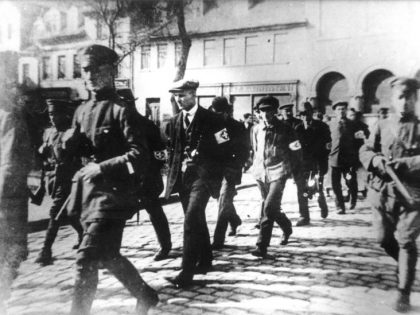
A hundred years ago today, the German Communists tried to spark a revolution, but their would-be uprising ended in disaster. In this extract from a recently discovered memoir, Rosa Luxemburg’s biographer Paul Frölich describes the failure of the 1921 March Action and its impact.
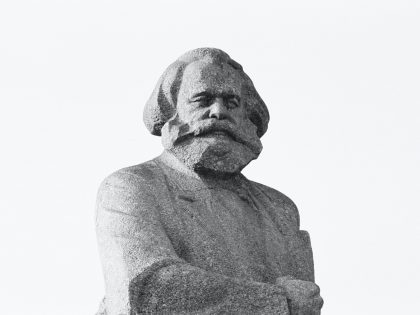
Karl Marx celebrated liberalism’s achievements, such as freedom of the press, while excoriating its fidelity to private property rights. We can hold the same tension in our minds — fiercely opposing capitalism while fighting to make liberal rights real through socialist transformation.
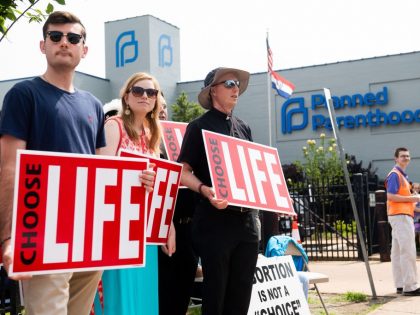
News coverage of the antiabortion movement tends to omit its history of violence. So we're here to remind you: the antiabortion right has a violent track record, from attacking clinics and patients to assassinating abortion providers.
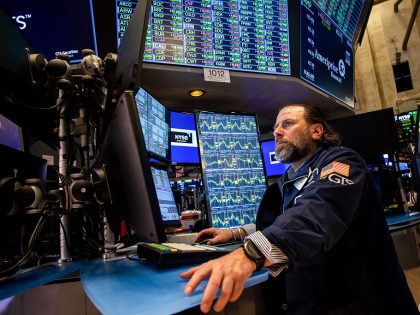
British sociologist Simon Clarke was one of the most sophisticated analysts of how and why capitalist systems descend into crisis. Clarke’s work on the contradictions of capitalism is a valuable guide as we face a new era of global economic turmoil.
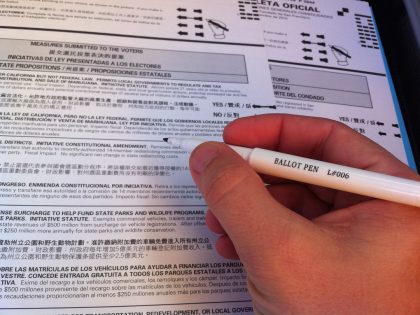
Want to find out if “progressives” are winning their fight against “establishment” Democrats? Good luck figuring out who’s who — you’ll have to take the candidates at their word.