Public Broadband Internet Isn’t a Luxury — It’s a Necessity
Everybody needs high-speed internet. But private corporations will never provide it. The solution: treat internet infrastructure as a public utility, funded by the public and built by union workers.
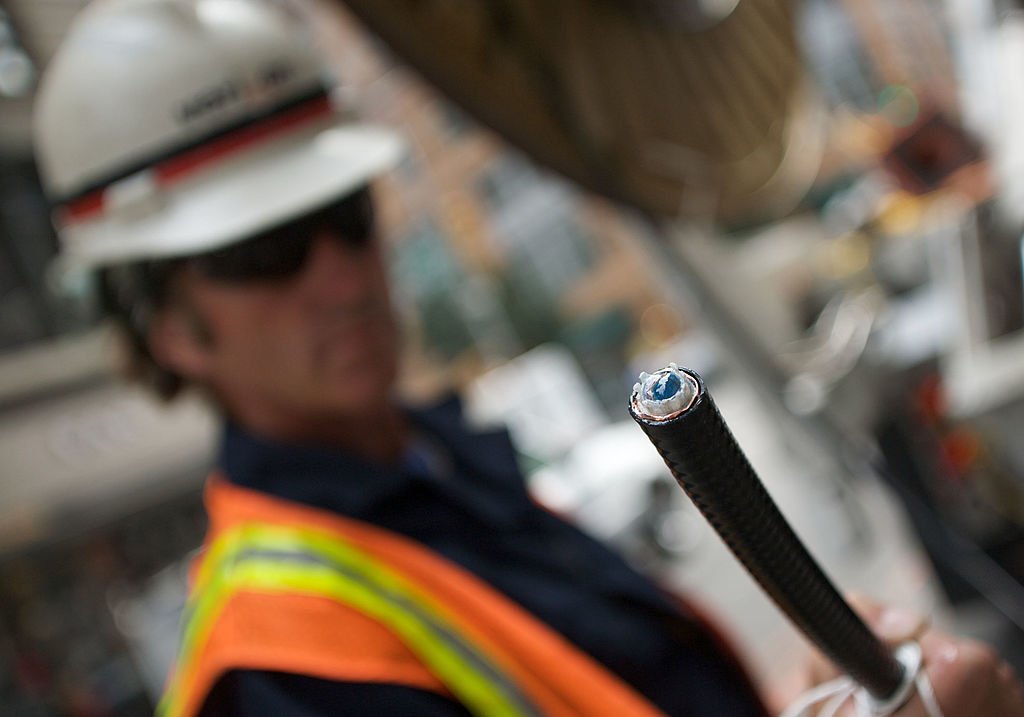
Without access to broadband, our ability to participate fully in society is significantly curtailed. (Jin Lee / Bloomberg via Getty Images)
As schools went virtual and employees worked from home during the COVID-19 pandemic, our reliance on digital technological infrastructure was never more apparent. In this area, as in so many others, the pandemic has also revealed stark inequalities. The digital divide in this country was already well known and documented, but its implications are now unignorable. Without access to broadband and a stable internet connection, our ability to participate fully in society is significantly curtailed. The student trying to learn through Zoom, the senior citizen trying to connect with a faraway loved one, the unemployed person applying for jobs, and the UPS driver calculating their route all need high-speed broadband.
Currently in the United States, 44 million households do not have a standard broadband connection due to lack of access or affordability. The arrival of the Omicron variant threatens more lockdowns and stay-at-home orders — and with that, an increased reliance on digital infrastructure in our daily lives.
Broadband should be treated as an essential utility with universal public access. But it is unprofitable for major internet providers to build broadband infrastructure in rural and low-income communities. Market competition won’t give us the broadband infrastructure we need; state and federal governments need to step in to make high-speed internet truly universal.