The March Action and the Tragedy of German Communism
A hundred years ago today, the German Communists tried to spark a revolution, but their would-be uprising ended in disaster. In this extract from a recently discovered memoir, Rosa Luxemburg’s biographer Paul Frölich describes the failure of the 1921 March Action and its impact.
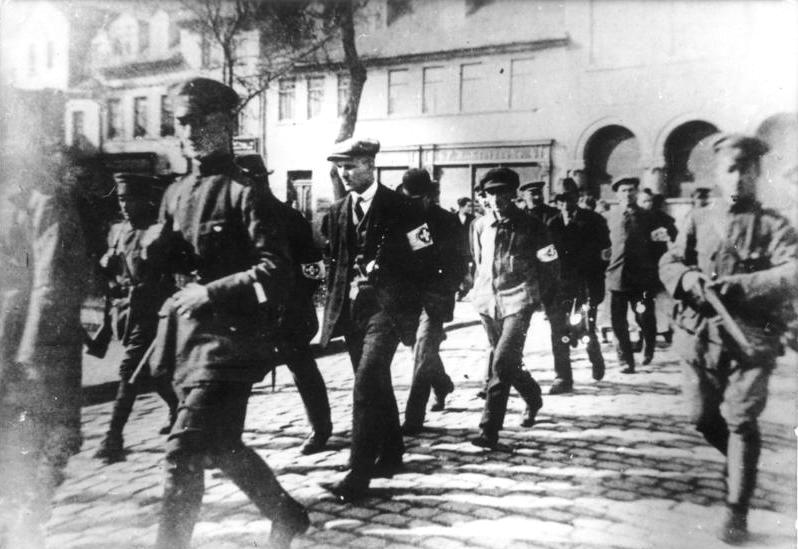
The Communist Party of Germany (KPD) launched an uprising on March 17, 1921 that became known as the March Action. (German Federal Archives / Wikimedia Commons)
It was both objective political events and psychological preconditions that led to the so-called March Action, both in the KPD and in the Executive Committee of the Communist International (ECCI). There was a general will in the party for a more energetic policy, and the unification with the left USPD also seemed to have created the preconditions for a stronger activity. We all overestimated at this time the growth of the party.
But we made a further error of judgement. During the Kapp putsch we had been able to note almost everywhere in the provinces that a weak party such as ours could nonetheless exert a very great influence on the movement, so that large masses followed the party in action. Now we simply extended the party’s radius of action by the organizational growth that the merger with the left USPD had brought.
This, however, was wrong. The party cadre was substantially strengthened, and in many districts, it was only now that a party was really formed. But the direct influence on the masses did not for a long while follow in the expected degree. Besides, it needed really major circumstances, immediately understood clearly by the masses, to bring them into a general movement.