The Glory Days Are Over
Trump’s victory signals a deep crisis of neoliberalism.
Trump’s victory signals a deep crisis of neoliberalism.
Trump’s victory signals a deep crisis of neoliberalism.

Donald Trump’s failure to enlist international support for his war on the Chinese company Huawei shows the weakening of US hegemony. Coercion won’t be enough for Washington to get its way.

South Korea’s right-wing president, Yoon Suk-yeol, has finally been arrested after his attempt to stage a coup. But Yoon’s supporters are still mobilizing aggressively, hoping that Donald Trump will take their side over false claims of electoral fraud.
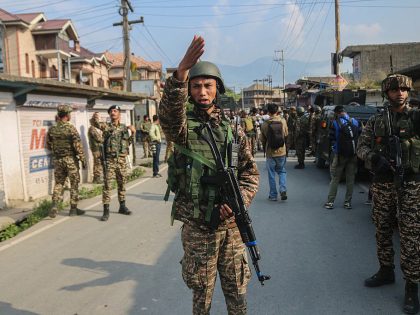
Many Hindu nationalists termed the recent Pahalgam terror attack “our October 7” and now call for Pakistan to be “reduced to rubble.” Even under a tenuous cease-fire, nationalist saber-rattling is colliding with the collapse of international law.

Amazon, Meta, and OpenAI wield tremendous influence over our politics, but does this mean we are entering an era of technofeudalism? In a wide-ranging discussion, Evgeny Morozov and Cedric Durand ask how we ought to understand contemporary capitalism.

Although it ended in tragic defeat, the Communist International was one of the most ambitious exercises in transnational political activism ever conceived. Its rise and fall gives us a crucial window into the history of the 20th century.
Thanks to its stances on issues ranging from deportations to trade policy, the Trump administration is undermining US influence across Latin America, increasing political polarization in the region, and strengthening the hand of progressive forces there.

The US-Israel war with Iran has made energy prices soar across the globe. In a world increasingly dominated by imperial war and great-power conflicts, inflation will become an ordinary feature of politics.
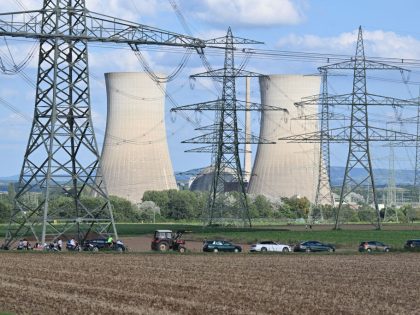
A new book opposing nuclear energy unintentionally highlights how 1970s opposition was a dead end for the Left. By examining contemporary arguments, it becomes clear that this historic stance has hindered climate progress and energy reliability.
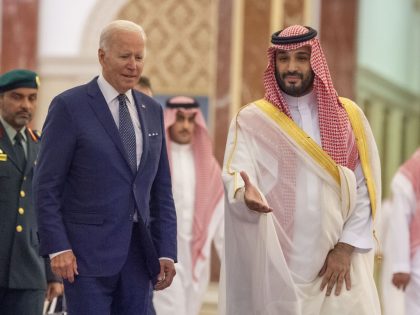
As the US loses its grip on the Middle East, it is fostering new alliances between Israel and the Arab states to shore up its hegemony. Those alliances, looking to form a “Middle Eastern NATO,” could provoke Iran and spark new conflict in the region.

Rich in resources that it exports to the West, Nigeria today is blighted by shocking rates of inequality. With an elite working in the service of foreign capital, Nigerian workers and raw materials are a key site of exploitation for global capitalists.
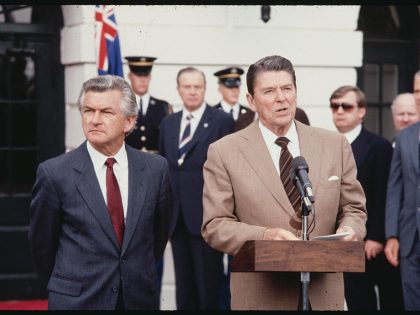
The foreign affairs establishment describes Australia as a “middle power” in the “rules-based global order.” They’re wrong — Australia should be understood as a subordinate beneficiary of US imperialism.

How bad has the military-industrial complex gotten? The arms industry donates tens of millions of dollars every election cycle, and the average taxpayer spends $1,087 per year on weapons contractors compared to just $270 for K-12 education.
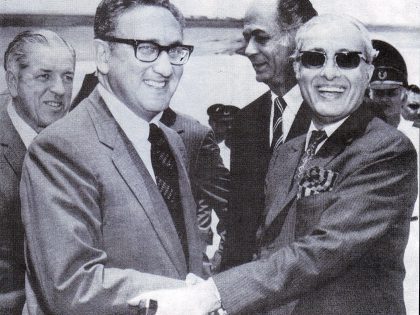
When war erupted in South Asia in 1971, Henry Kissinger called Indians “bastards,” and Richard Nixon said they needed “a mass famine.” For both men, US interests were worth killing hundreds of thousands of Bangladeshis and displacing millions more.

Italian Marxist Rossana Rossanda was born 100 years ago today. Her country’s Communist Party sought a gradualist “Italian road to socialism” — but she insisted that the class struggle in Italy was tied to the fate of the world revolution.

Though Bill Clinton ran for president on promises of empowering workers, in office he gutted welfare and passed NAFTA, undermining organized labor and driving working-class voters away from the Democratic Party. We’re still living with the consequences.
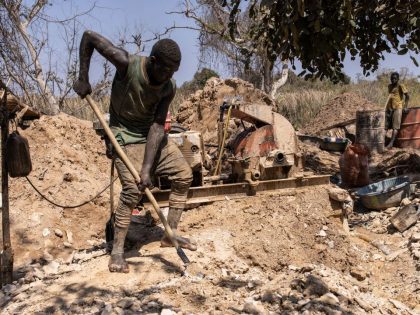
The US-dominated economic order constructed after Bretton Woods did not take the Global South into consideration. A new, just system will have to change that.
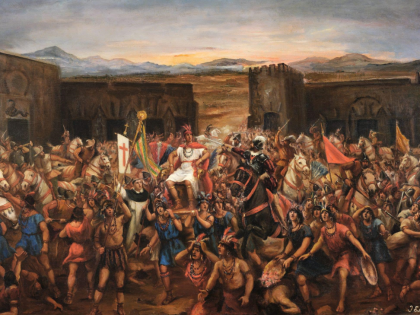
Cloaked in an impenetrable jargon, “decoloniality” dehistoricizes and culturalizes colonialism. It’s a political and intellectual dead end for socialists.
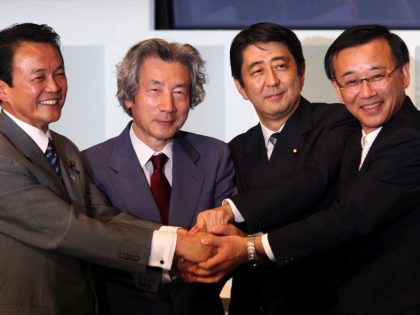
The major capitalist economies of Europe and North America have been experiencing low rates of economic growth and population increase. Japan has been in that position since the 1990s, and its experience offers some important clues about what the future holds.