Reading Karl Marx in Beijing
100 years ago today, Chinese students launched the May Fourth Movement. While Chinese officials invoke the movement to reinforce the status quo, a new generation is rediscovering its insurgent roots.
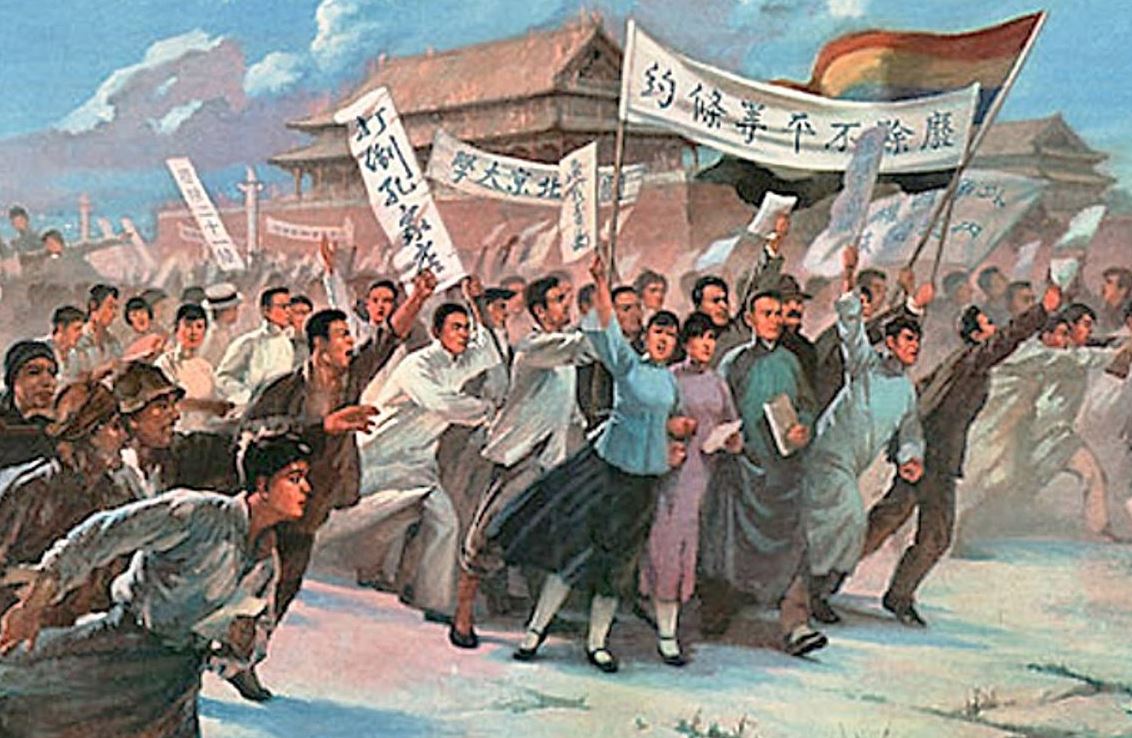
A 1976 poster of the May Fourth Movement. Wikimedia Commons
In March, graduate students at Peking University (Beida) were administered a survey on “the conditions of the development of university students.” One of the questions addressed the one-hundredth anniversary of the first student demonstration in Chinese history, when students marched in the streets of Beijing to protest the terms of the Versailles Treaty.
“In 2019 we celebrate the centennial of May Fourth. The May Fourth Movement established patriotism, democracy, the May Fourth scientific spirit. Your position with regards to the following statements is . . . (choose from: Very strongly support, strongly support, not sure, strongly disagree, very strongly disagree).” These are the sentences on which the students were asked to express their judgment:
Patriotism, progress, democracy, science are fundamental values which we must uphold and practice.
The May Fourth Spirit embodies the Chinese people and the Chinese nation’s pursuit of advanced values.
The ideals, enthusiasm, and struggle of the youth is the source of China’s spirit and vitality.
Youth should release its passion in their struggle to search for youthful ideals.
Patriotism cannot be a mere slogan.
The most important thing about becoming an adult is knowing how to love the nation.