
Which Way Forward, Socialist?
We spoke to some of the Democratic Socialists of America members deciding the future of the country’s largest socialist organization this weekend.
We spoke to some of the Democratic Socialists of America members deciding the future of the country’s largest socialist organization this weekend.

As Washington scales down its US defense commitment to Europe, many of the continent’s leaders are talking of making the EU a military superpower. It’s an unrealistic prospect, but it risks becoming the key focus of EU spending.

Denmark’s grand coalition government has potentially misled parliament to push through a deal to purchase billions in arms from Israel. The deal marks a high point in Danish-Israeli relations and is a sign that the Left has been marginalized on foreign policy.

The “populist” ruling party and the “liberal” opposition aren’t the only choices in Poland’s election this Sunday. Polling in third place, the Lewica coalition offers a left-wing alternative that could prove decisive in forming the next government.
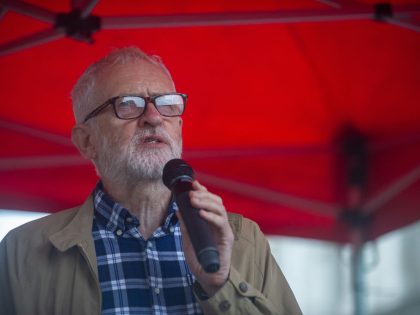
From autoworkers in the US to railworkers in the UK, organized labor is enjoying a new lease on life. In an interview, former Labour leader Jeremy Corbyn explains why he thinks militant organizing represents the trade unions’ future.

The head of the British Army and Germany’s defense minister have each recently called for their countries to prepare to be on a war footing. Their call for mass mobilization is deeply unpopular — and at odds with the realities of modern warfare.
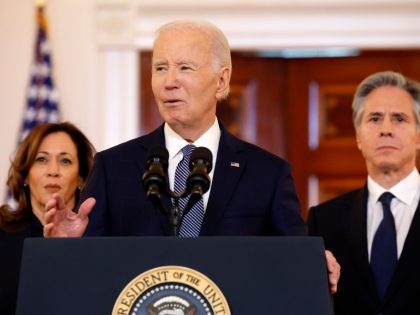
There is no ambiguity about President Joe Biden’s foreign policy record: it was bloody, and it was disastrous.

As US military spending balloons to record levels, new data show that the number of US adults who don’t have enough to eat has jumped for the fourth straight month. The massive military budget is quite literally taking food out of people’s mouths.
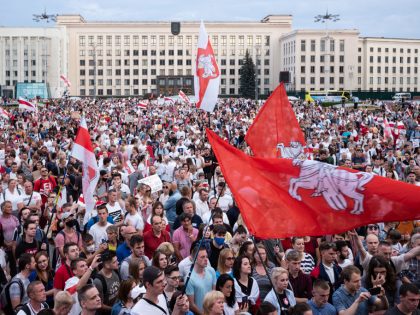
Since Belarus’s disputed election, both President Alexander Lukashenko and the liberal opposition have recognized the importance of strike actions in deciding what happens next. But while there have been protests across Belarus’s major workplaces, a long-shackled labor movement faces an uphill struggle to advance a political agenda of its own.

Moscow-based socialist Mikhail Lobanov is a leading left-wing critic of Vladimir Putin. His jailing this Thursday reflects authorities’ determination to silence critics of the war, the disastrous effects of which are playing havoc on Russian society.

The Department of Homeland Security is helping to coordinate tech company censorship efforts according to recent reporting. The line between tech firms and the national security state is only getting blurrier.

Over the past week, PayPal canceled without explanation the accounts of two prominent independent news outlets. It escaped notice by the mainstream press, which spent the weekend congratulating itself over the freedom to criticize the powerful.
In the heated propaganda war between Russia and the “West,” rationality is in short supply.

The European Union’s pivot away from Russian fossil fuels is being sold as part of the green energy transition. Yet the plan’s reliance on imports from Morocco and occupied Western Sahara shows how it is driving a new kind of green colonialism.

Most have never heard of Aleksandr Dugin or his obscure Traditionalist philosophy. But both have quietly become important influences on Russian politics over the past few decades.
Noam Chomsky on Russia, the US media, and the stories told to justify American militarism.

In the Vietnam War era, radical psychiatrists and antiwar veterans developed a concept of trauma stemming from perpetrating acts of violence. Over the next decade, the idea of soldier trauma was depoliticized and put at odds with antiwar critique.

Many of the Russian superrich who have had their assets frozen in recent weeks have deep connections to the art world. As the curtain is pulled back on these holdings, art’s role in creating and sustaining the 1 percent has once again been revealed.

In the 1962 US-Soviet nuclear showdown over Cuba, there was no shortage of voices calling for escalation or decrying “appeasement.” But there was always broad support for the kind of talks that ended up saving the world — something frighteningly absent today.

Credit Suisse, the bank whose donors gave over $100,000 to Joe Biden’s campaign, has ties to Russian oligarchs and has been repeatedly found guilty of serious financial crimes. Yet Biden’s administration is considering waiving any punishment for the bank.