In Belarus, Labor Is Struggling to Find Its Voice
Since Belarus’s disputed election, both President Alexander Lukashenko and the liberal opposition have recognized the importance of strike actions in deciding what happens next. But while there have been protests across Belarus’s major workplaces, a long-shackled labor movement faces an uphill struggle to advance a political agenda of its own.
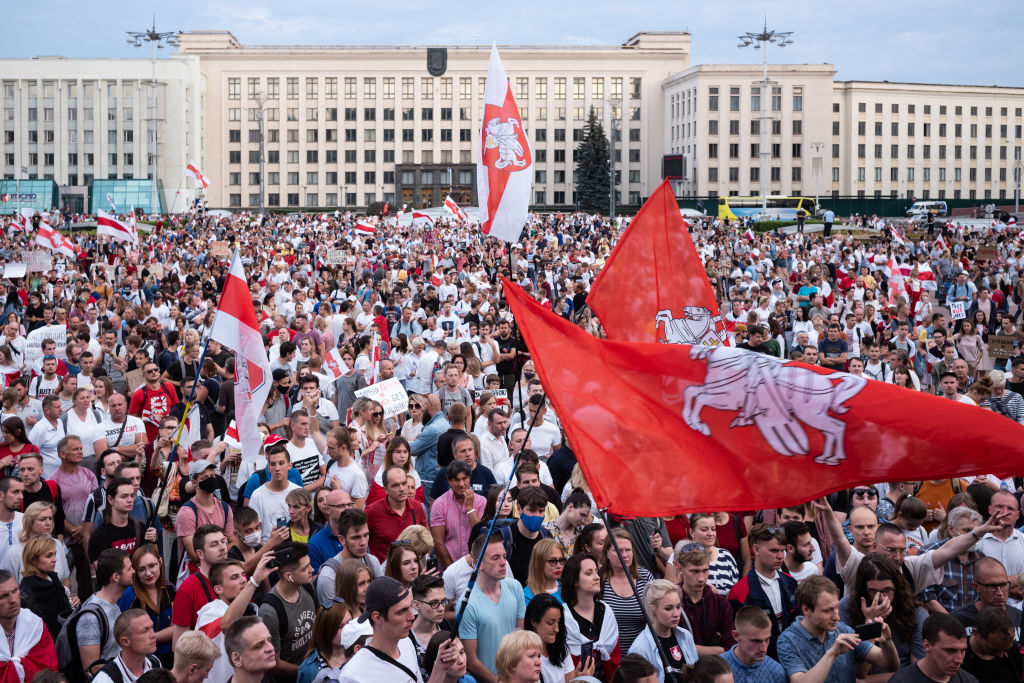
Protesters participate in an anti-Lukashenko rally on August 18, 2020, in Minsk, Belarus. (Misha Friedman / Getty)
Since Belarus’s disputed election on August 9, protest actions by industrial workers have played a crucial role in the rallies against the reelection of longtime president Alexander Lukashenko. Walking out in their thousands, employees at industrial behemoths such as BelAZ (Belarus Automobile Plant), MTZ (Minsk Tractor Works), Grodno Azot, and Belaruskali carried signs saying, “We’re Not Serfs — We’re Workers!” with some even calling for a general strike.
This represented an impressive act of solidarity between workers and the liberal, urban upper-middle class that voted for opposition candidate Svetlana Tikhanovskaya. In particular, their walkouts dealt a heavy reputational blow to the regime of a country that prides itself on a vibrant industrial sector, dominated by state-owned heavy industry.
These actions have not yet reached anything like the scale of a general strike, and are in some cases comparatively limited — worker protests, more than “strikes,” per se. But the keen attention that the main actors in the conflict have devoted to them are vivid demonstrations of their importance for future developments.