Europe Is Replacing Energy Dependence on Russia With Reliance on North African Dictatorships
The European Union’s pivot away from Russian fossil fuels is being sold as part of the green energy transition. Yet the plan’s reliance on imports from Morocco and occupied Western Sahara shows how it is driving a new kind of green colonialism.
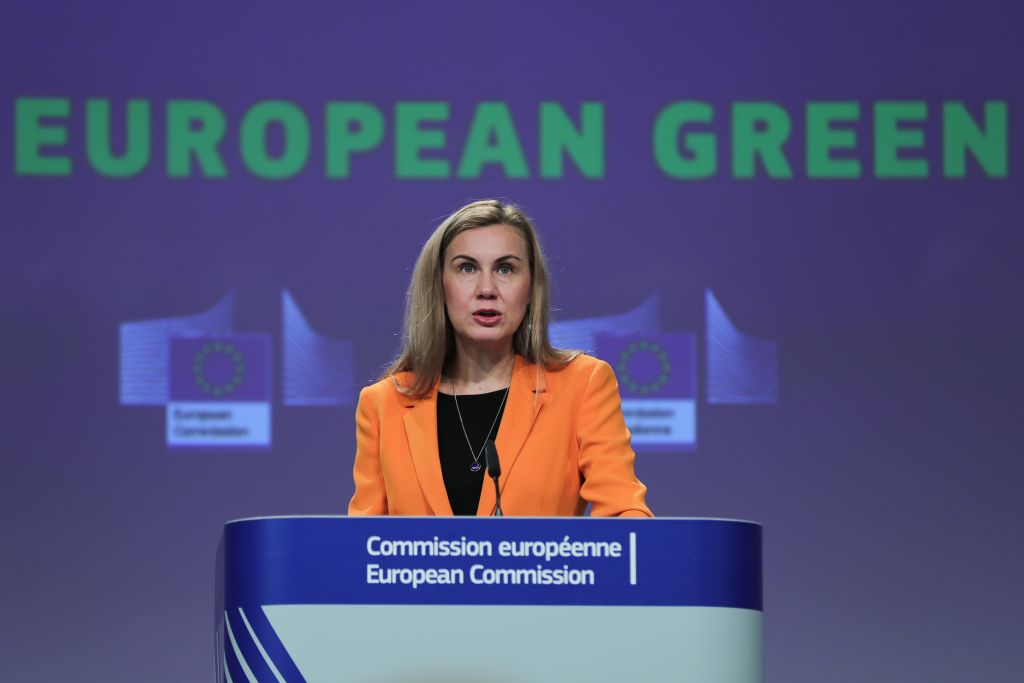
European energy commissioner Kadri Simson speaks at a press conference in Brussels on December 15, 2021. (Zheng Huansong / Xinhua via Getty Images)
In the wake of Russia’s invasion of Ukraine, this month the European Union unveiled plans to slash Russian gas imports by two-thirds over the next year and to cease all fossil fuel imports from the country “well before” 2030. Officials acknowledged that to meet such ambitious targets, the EU will initially depend largely on imports of the more carbon-intensive liquified natural gas and domestic coal power production — leading the Financial Times to ask, “Will the Ukraine war derail the green energy transition?”
EU leaders pushed back against such a conclusion, promising to regain ground across the next decade. They called for a rollout of renewable energy production at a faster pace than previously projected. “In the shorter term, we need to further diversify our gas supplies away from Russia,” European energy commissioner Kadri Simson told reporters. “But, ultimately, the best and the only lasting solution is the [EU’s] Green Deal — boosting renewables and energy efficiency as fast as technically possible. I cannot emphasize enough how important it is in the current situation to put our collective power behind policies that are on the right side of history.”
Yet having published its revised energy roadmap, the bloc’s leadership has so far ruled out the prospect of a new supranational joint stimulus fund to finance and deliver on its targets. Even faced with a generational geopolitical upheaval, it seems the EU still cannot kick its austerian reflexes. As researcher Mujtaba Rahman notes: “Germany’s plan is literally — every country for itself. To deal with the short and medium term consequences of the Russian war in Ukraine, member states are going to have to rely on their own domestic budgets.”