What Comes After Globalization?
The world as we know it is a product of globalization — and this era of globalization might be coming to a close.

The world as we know it is a product of globalization — and this era of globalization might be coming to a close.

As president, Donald Trump launched broadsides against the liberal international order. Will Joe Biden be able to put America “back at the head of the table” once in office?

Donald Trump speaks of an expanded Monroe Doctrine that asserts US domination across the Americas. Chilean ex-diplomat Jorge Heine told Jacobin about the need for a new nonaligned movement that can resist imperialist claims.

India’s prime minister, Narendra Modi, tried to divert attention from domestic problems by promoting the image of India as a rising power with a strong leader. But Modi’s failure to stand up to Trump’s destructive agenda has exposed this as hollow posturing.
The United States claims it benevolently promotes democracy over authoritarianism through its international technology policies. In reality, America forces poor countries to let US-based Big Tech companies steal their data.

Tariffs and other forms of protectionism often hurt workers — and trade can help produce good paying, sustainable jobs. But we need to build a trade policy that benefits both US workers and workers in developing countries.
What have we learned from the Pink Tide’s years in power?

Russia’s invasion of Ukraine has resulted in a proxy war between the Korean states as they supply arms for both sides. Now that Kim Jong-un has sent troops to take a direct role in the fighting, South Korea could respond by escalating its own involvement.

Canadian news media is in a panic about alleged Chinese influence in Canadian politics. Their coverage is promoting anti-Chinese sentiment and creating farcical levels of paranoia about foreign interference.

US lawmakers say the alliance’s movement into Asia is “inevitable.” It’s actually a completely avoidable, completely bad idea.

Vladimir Putin’s invasion was meant to last just a few days. But Ukrainian resistance turned it into yet another imperial quagmire — showing that the great powers aren’t as able to reshape the modern world as they think.

COVID-19 has caused unprecedented disruption to the world economy, shining a harsh light on the frailties of global capitalism. But there won’t be a progressive paradigm shift coming out of the crisis without a dramatic upsurge of collective action.

As Donald Trump tramples over the norms of the postwar liberal order, centrist political leaders are only too keen to accommodate him. Global liberalism is collapsing, while the battle over what replaces it is just beginning.

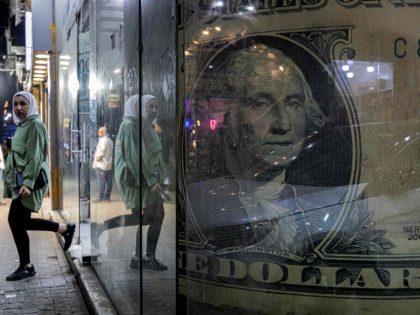
Behind the seeming chaos of Trump’s tariff policy, there’s a coherent plan to reboot what Peter Gowan dubbed the “Dollar–Wall Street Regime.” The goal is to strengthen US power around high-tech digital oligarchs, and it might yet succeed on its own terms.

The coronavirus shock has shaken the world’s stock markets, imposing the need for massive state bailouts. But the measures to deal with the crisis risk spurring an authoritarian controlled capitalism — one that protects corporate interests while offloading the costs onto the rest of us.

The fact that the United States is recusing itself from pretty much all global cooperation in the search for a coronavirus vaccine does not bode well for equitable distribution of a cure.

When it comes to foreign policy, Joe Biden represents a continuation of the imperialist status quo. We need a leftist alternative that weakens US empire and prizes democracy, rather than one that assumes the US is right to dominate the world.

For decades, the rules of the global economy — and the economics discipline — seemed fixed. But now, with Donald Trump’s help, the edifice is collapsing. We talked to heterodox economist Ha-Joon Chang to understand dying dogmas and emerging alternatives.

Economist Branko Milanovic is one of the sharpest critics of global inequality. He spoke to Jacobin about how the decline of neoliberal globalization is harshening its most destructive tendencies.

Donald Trump says Greenland should be part of the US, while Denmark insists it won’t happen. But Greenlanders have dreams of their own: economic independence and freedom from foreign control.