The New Canada-EU Deal Is More of the Devil We Know
Instead of fostering a more democratic path to development, Canada and the EU are strengthening alignment through fossil fuels, weapons production, and customary geopolitical maneuvering.
Gerard Di Trolio is a PhD student in labor studies at McMaster University in Hamilton, Ontario.

Instead of fostering a more democratic path to development, Canada and the EU are strengthening alignment through fossil fuels, weapons production, and customary geopolitical maneuvering.

Economist Daron Acemoglu wants liberal democracy to connect with working people’s material interests and political power. His case for institutional renewal should be taken seriously, but it needs a fuller account of class, war, and worker organization.

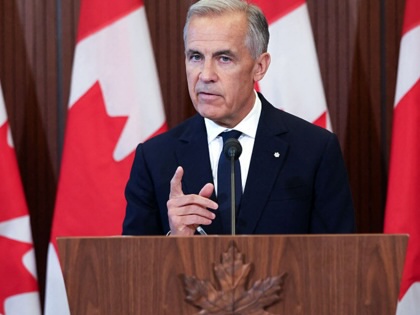
Canadian Prime Minister Mark Carney touts a new era of industrial policy and state-led development. But instead of rebuilding public capacity, he is turning the state into a guarantor of private capital while asking workers to trust in trickle-down prosperity.

Avi Lewis will lead an NDP in dire straits — but also one with a strategic opening to the left of the Liberals, whose posture against Donald Trump has reshaped the political terrain.

Canadian prime minister Mark Carney is touting a trade deal with the UAE. Behind the talk of investment and partnership lies a trade agenda that weakens rights protections, boosts natural gas, and reinforces one of the world’s most repressive states.

Canadian unions are forming alliances with industry to fight Donald Trump’s tariffs — at a time when they should be prioritizing deeper problems facing workers like austerity, increasing automation, and wage suppression.

As trade tensions rise and industrial policies are reshaped, labor faces critical decisions in a world plagued by economic nationalism and climate change.

Against orders from Justin Trudeau’s government, WestJet mechanics went on strike. Their actions secured substantial wage gains and a resounding victory for workers’ rights.

British Columbia is touting a bill that will protect gig workers from the worst depredations of the sector. However, in a familiar trend of industries outsmarting employment standards in the country, the bill is poised to fall short of its lofty promises.

The green logistics firm GoBolt says that “protecting the planet is built into our DNA,” but that progressive sentiment doesn’t extend to its workers. After a group of delivery drivers in Ontario successfully unionized, the company abruptly fired them all.

In Canada, a business class brain trust is launching a new centrist party for the upcoming election. With workers suffering multiple crises in housing and household debt, Canada needs a new centrist party like it needs a hole in the head.

Canadian news media is in a panic about alleged Chinese influence in Canadian politics. Their coverage is promoting anti-Chinese sentiment and creating farcical levels of paranoia about foreign interference.

Inflation is hurting workers, but bosses are doing just fine. In Canada, average CEO pay in 2021 was 243 times the average workers’ wage, up from the pre-COVID record set in 2017.

Canadian unions are often weakened by their reliance on the goodwill of the New Democratic Party. The only way to ensure that the New Democrats will advocate for pro-worker policy is for labor to push the party — not the other way around.

Just like American workers, Canadian workers have carried out a recent labor upsurge of their own. As the economy slows, unions might be tempted to make concessions. They shouldn't.

Donald Trump’s trade war with China was never about helping American workers. The US labor movement needs to reject trade tariffs and stand up for international solidarity among workers everywhere.

Ontario’s political parties are all courting labor for the upcoming election. But nothing currently on offer will result in serious change for the Canadian labor movement.

Uber’s recent deal with UFCW Canada, granting legal representation to the 100,000 workers employed by the ride-sharing app, is not as good as it seems. The agreement will allow Uber to circumvent trade union democracy and attack workers’ benefits.

Founded by Canada’s most powerful business lobbyists, bankers, and oil companies, the Coalition for a Better Future is crafting a plan to attack workers and reorganize the post-pandemic economy in the interests of the rich.

Lush prides itself on a progressive image, but the company’s union-busting in Toronto tells another story.