Repressing Radicalism
The Espionage Act was passed today in 1917. It helped destroy the Socialist Party of America and quashes free speech to this day.
The Espionage Act was passed today in 1917. It helped destroy the Socialist Party of America and quashes free speech to this day.

Far from a novel form of populism, J. D. Vance’s appeals are indistinguishable from the economic vision of the 1970s John Birch Society.

The leadership race in Canada’s New Democratic Party has exposed fractures between workers and professionals and between leader-driven branding and party democracy. Its survival as a serious left-wing force depends on successfully navigating these divides.

The new era of financial capitalism, with its explosion of household debt and its dependence on complex derivatives, has caused fundamental changes in the way capital exploits labor.
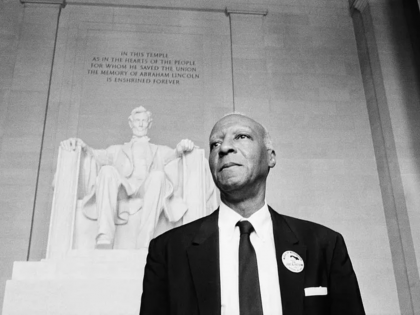
As the Left attempts to chart a new course in the wake of the Bernie Sanders campaign, there’s no better time to learn from America’s most underrated socialist, labor leader, and civil rights legend, A. Philip Randolph.

The Democratic Party establishment, backed by the rich, hit back hard against democratic socialists in New York on Tuesday. But the Democratic Socialists of America beat back the attacks on incumbents and successfully expanded its bench in Albany.

Mass protests kicked off in Iran last month over an increase in fuel prices, resulting in a government crackdown in which over 7,000 protesters were arrested and 200 killed. An Iranian trade unionist explains what these protests have looked like on the ground and why leftists should support them.
Scotland wants to remain in the European Union — and that might make a left-wing break from the United Kingdom impossible.
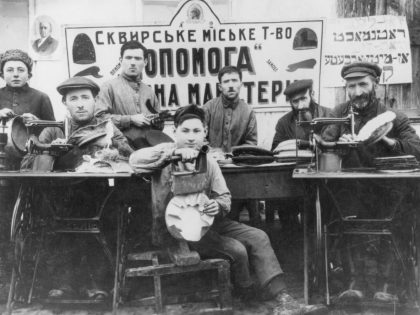
Prior to Israel’s founding, the majority of European Jews rejected the idea of an ethnically Jewish nation. Instead they fought antisemitism by building solidarity.

Vivek Chibber on why Trump II signals the end of an era — but not capital’s unchecked rule over our society.

Without transparency in politics and in the institutions that govern our daily lives, we can’t build socialism.

Republicans captured the South through racist “dog-whistle” appeals and by exploiting the deindustrialization that ravaged the region after NAFTA. But we can't write off the South as hopelessly reactionary — there’s a base for progressive politics that speaks to workers of all races.
The domestic workers who asserted their rights in the 1970s provide a model for organizing workers today.

Globalization is a project of class war whose destructive effects have driven many US workers into the Trumpian right. The Left needs a real response to the problems raised by global capital mobility — and that should start with capital controls.
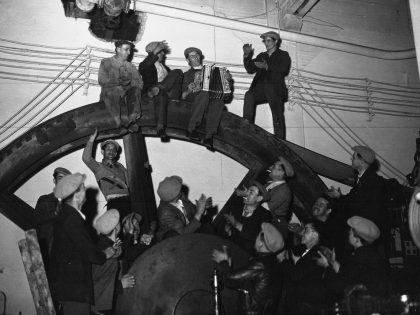
In interwar Europe, the rise of Hitler and Mussolini forced leftists into pragmatic alliances. The popular fronts they built were a defense against fascism, but also pointed to how to win broad-based social reform.
Today's repression of social movements in Brazil has roots in the Workers Party's time in power.

In the 1920s and ’30s, a summer school for industrial working women built an economics curriculum around the perspective of labor rather than capital. It offers a visionary example of worker education that emphasizes class struggle and worker empowerment.
Merle Haggard provided the soundtrack of American reaction for five decades.
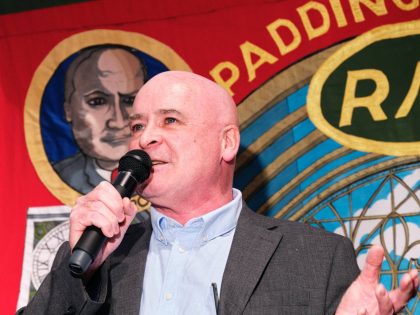
The British rail union leader Mick Lynch has recently gone viral for his media appearances defending his union's strike. In an interview, Lynch discusses that strike, the media firestorm he's helped spark, and how workers can defeat Britain's superrich.

Recent elections in Chile offer hope that the country’s neoliberal consensus will soon shatter.