The Promise and Tragedy of the Popular Front
In interwar Europe, the rise of Hitler and Mussolini forced leftists into pragmatic alliances. The popular fronts they built were a defense against fascism, but also pointed to how to win broad-based social reform.
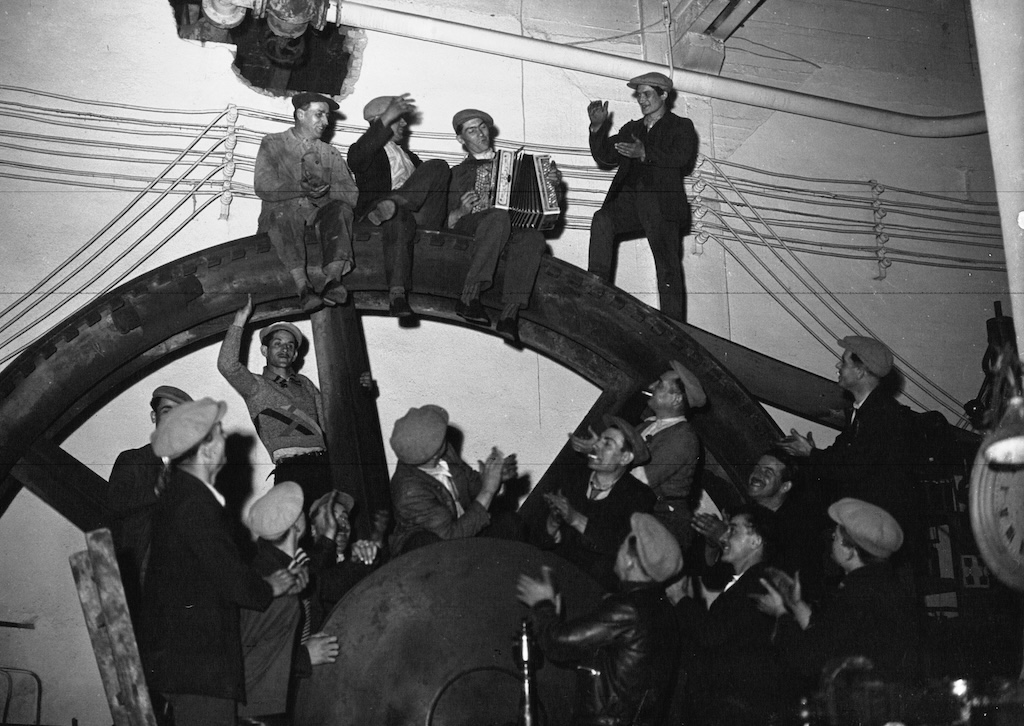
French laundry workers participate in the unprecedented wave of strikes and occupations that took place during the first Popular Front government in June 1936. (Bibliothèque nationale de France)
A wave of revolutionary optimism swept across Europe after World War I, as Communists and the independent revolutionary left forged a new radical political identity by separating themselves from social democracy. Yet in the years that followed, this initial revolutionary enthusiasm was replaced by a series of devastating defeats and retreats. The deep and seemingly permanent divisions of the international left persisted, leaving it weak and fragmented when fascism came to power in Italy in 1922 and in Germany in 1933.
A widespread longing for left-wing unity soon began to emerge among both Communists and social democrats. Yet, it was only in the mid-1930s that a new vision and strategy of such unity was officially introduced: the so-called Popular Front, inaugurated by the Communist International (Comintern), and most famously practiced in France, Spain, and Chile. The Popular Front proved crucial in establishing bulwarks against fascism’s further rise. However, its left-wing components failed to advance their long-term goal of socialism.
But with the far right again on the rise, what can the contemporary left learn from the Popular Front’s ambivalent legacy?