J. D. Vance Is Summoning the John Birch Society
Far from a novel form of populism, J. D. Vance’s appeals are indistinguishable from the economic vision of the 1970s John Birch Society.
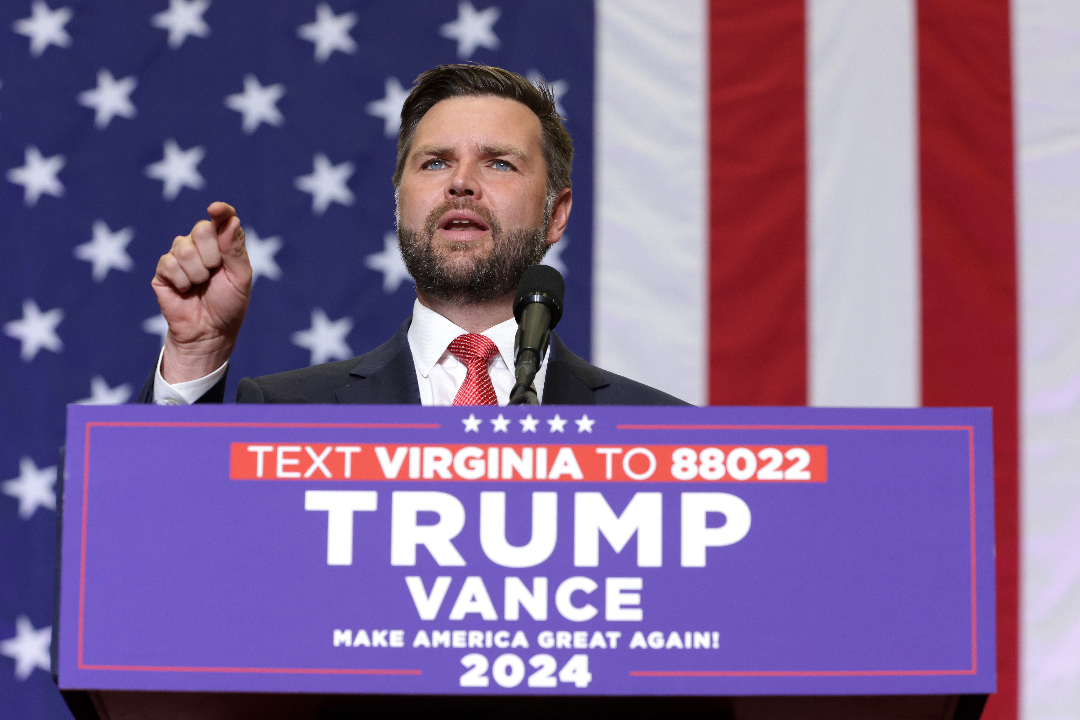
Republican vice-presidential nominee J. D. Vance speaks at a campaign rally at Radford University on July 22, 2024, in Radford, Virginia. (Alex Wong / Getty Images)
“The American left,” as the historian Matthew Karp wrote in Harper’s recently, “has failed to develop a politics capable of winning over the American public.” From economic inequality and workplace democracy to Gaza, the Left has become politically impotent and, in an age of class dealignment, confined to outposts of highly educated urban areas, “from Brooklyn to Minneapolis to Denver,” with “little relationship with the vast country beyond.”
Enter J. D. Vance. The Ohio senator-cum-nominee for vice president’s speech at the Republican National Convention in Milwaukee this month raised eyebrows. Vance gave a fiery, quintessentially right-wing populist speech, condemning NAFTA (and the Iraq War) and blaming out-of-touch elites in Washington for pushing policies that destroyed the jobs of autoworkers in Michigan, factory workers in Wisconsin, and energy workers in Pennsylvania. He castigated Wall Street barons for the Great Recession and Democrats with opening the borders to drive down wages. “We will build factories again, put people to work making real products for American families, made with the hands of American workers.”
In many respects, Vance’s speech was simply recycling rhetoric that Donald Trump has used for years. As many commentators have pointed out, not only were Trump’s economic policies during his first term largely bog-standard Republicanism (the occasional flare-up over tariffs aside), but there is now a bipartisan consensus around national industrial policy driven largely by geopolitical concerns. And yet the Financial Times wrote that Vance’s selection as Trump’s running mate “cements the Republican party’s shift from the free-market conservatism of the Reagan and Bush eras to the economic populism of the Make America Great Again movement.” Trump-Vance 2024 is pro-tariff and more autarkic and favors targeted regulations of certain industries, especially banking and Big Tech. The Economist wrote that Vance’s views include “some lefty policies that would thrill Bernie Sanders,” including some state protections for blue-collar workers and a minimum-wage hike. Commentator Matt Stoller called Vance “THE leader of the post-financial crisis Republican generation,” who represents a clear post-2008 break with GOP orthodoxy.