The Bryn Mawr Summer School Prepared Workers for the Class Struggle
In the 1920s and ’30s, a summer school for industrial working women built an economics curriculum around the perspective of labor rather than capital. It offers a visionary example of worker education that emphasizes class struggle and worker empowerment.
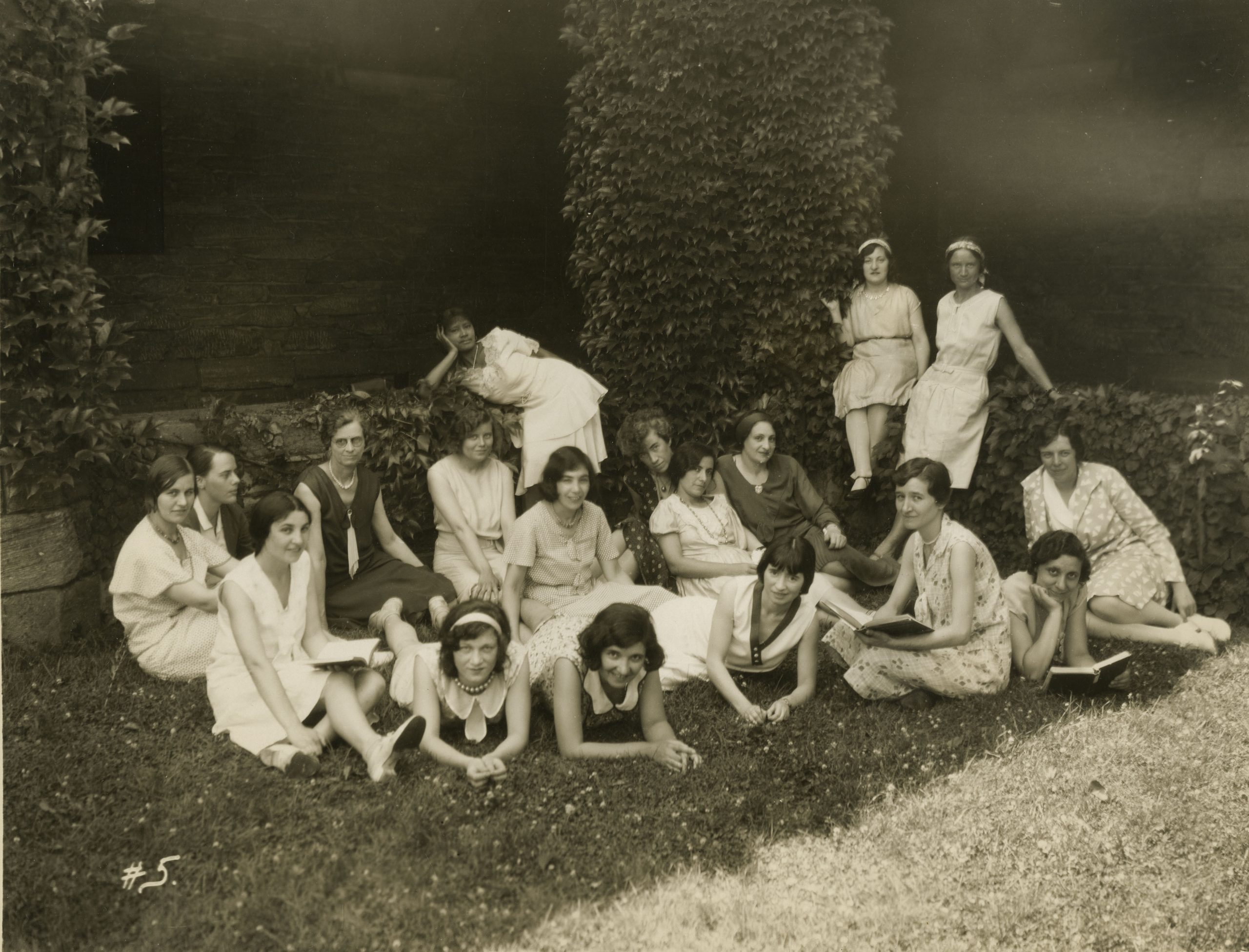
Bryn Mawr Summer School for Women Workers in Industry, 1930s. (Courtesy Bryn Mawr College Special Collections)
In the summer of 1921, the Bryn Mawr Summer School for Women Workers in Industry welcomed its first cohort of students to participate in a radical educational experiment: an immersive, eight-week program for industrial working women to study economics at a liberal arts institution. Participants came from all over the United States and from countries as far away as Italy, Poland, and Russia. They worked in factories that ran the gamut of twentieth-century industry: garment, millinery, printing, tobacco, soap (the list went on — the summer program’s director, Hilda Worthington Smith, catalogued nearly fifty trades in her 1929 account of the school).
Though many students did not have a high school education, at Bryn Mawr, they wrote poetry and studied history and science, performed in plays and took swimming lessons. They were treated to guest lectures by well-known figures, including W. E. B. Du Bois and Eleanor Roosevelt. They learned astronomy, using the college’s telescopes to marvel at the stars that urban pollution typically obscured from view.
Emerging from the workers’ education movement and created following the passage of the 19th Amendment, Bryn Mawr was the first in a wave of summer schools designed to train effective labor advocates. The goal was to engage workers in the study of capital, labor, and power — and enrich their lives beyond the workplace. A century later, the Bryn Mawr Summer School still offers a model for democratic worker education that can build the capacities of working-class people.