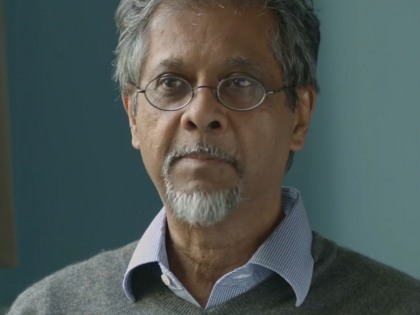
Anwar Shaikh (1945–2026)
Anwar Shaikh was the most brilliant Marxist economist of his generation. He leaves behind a legacy that has the potential to drive political economy forward for years to come.
Vivek Chibber is a professor of sociology at New York University. He is the editor of Catalyst: A Journal of Theory and Strategy.
Anwar Shaikh was the most brilliant Marxist economist of his generation. He leaves behind a legacy that has the potential to drive political economy forward for years to come.
Marxism is a social theory about how the world works, and how to change it. Anyone committed to understanding and changing the world should be a Marxist.
Bourgeois economics treats capitalism as simply a market economy. Vivek Chibber traces how markets and private ownership worked under feudalism and under capitalism, and argues that socialism could use markets without restoring class society.
Vivek Chibber recommends five books that explain how empires work, how capitalism divides the world, and how Marxists have argued about imperialism.
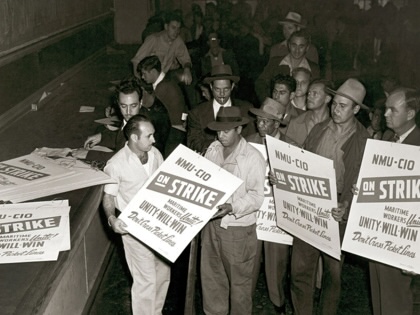
Organized labor provides the essential mass base for a revived Left, while socialist politics provides the anti-capitalist horizon necessary to challenge capital. Vivek Chibber describes why the fate of the two are intertwined.
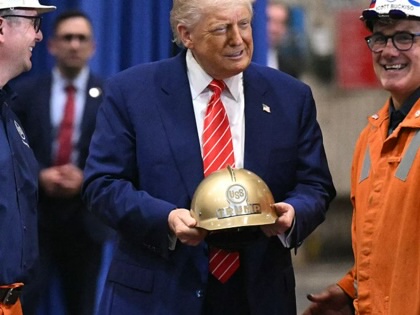
Industrial policy is back in vogue in recent years — but without the working-class power to discipline capital, it’s just public money flowing to private profit.
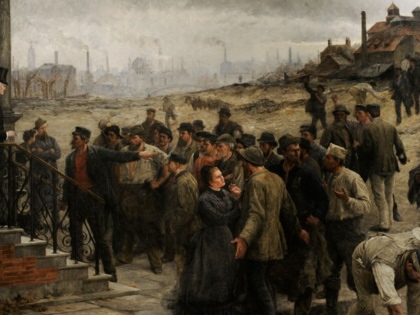
Milton Friedman argued that capitalism was democracy’s natural home. He couldn’t have been more wrong.

The storming of the Bastille was the opening act in a century-long upheaval that broke with the premodern world and finally put ordinary people in charge of their nation’s destiny. That’s the legacy of the French Revolution.

The surge at the border under Joe Biden was a political failure, and one that MAGA weaponized with brutal efficiency. The Left has to offer its own solutions.

For most of the 20th century, class predicted voting behavior better than anything else. The recent process of class dealignment has proved disastrous for left politics — and to reverse it, we must have clarity on who counts as working-class.

Capitalism’s recurring crises have long fueled predictions of its inevitable demise. Vivek Chibber explains why breakdown isn’t guaranteed — and why political agency, not historical laws, will determine whether we get socialism or barbarism.

Central planners had a rational vision: replace the anarchy of the market with conscious coordination. Vivek Chibber explains why calculation and incentive problems undermined that vision, but a different sort of socialism can still flourish.

A socialism with a role for markets but not capitalists can deliver human flourishing without the pitfalls of fully planned economies.
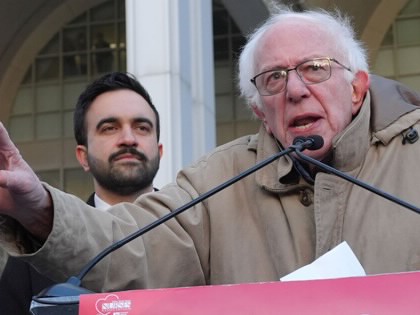
Krystal Ball, Vivek Chibber, and Matt Karp discuss how class politics stalled after the Bernie Sanders campaigns — and why a new political opening is finally emerging.
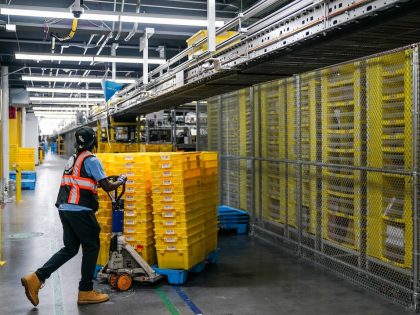
With its vast logistics empire deploying robotics, surveillance, and AI to block worker power at every turn, Amazon now sits atop the throne of American capitalism. Organizing it will define the future of the labor movement.

Both the White House and Israel wanted swift regime change in Iran. Instead they’ve triggered a spiraling conflict with no plausible endgame.

Under capitalism, technological “progress” like AI systematically deskills workers, deepens managerial control, and turns the labor process into a site of conflict rather than liberation. This is by design.

Artificial intelligence is unlikely to produce permanent mass unemployment, Vivek Chibber argues. But without class struggle from below and state action, automation will deepen inequality and leave workers to bear its costs.

Iranians have been trying to complete their democratic revolution for over a century. Every time the US gets involved, it sets that project back by decades.

In Europe, labor unions and socialist parties marched together and won massive reforms. In the United States, they were divided. Vivek Chibber explains how that split still shapes US politics today.