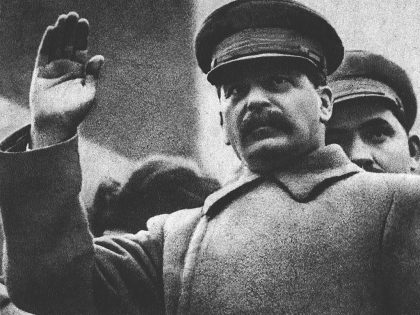
The New Economic Policy Was the Alternative to Stalinism
Generations of left-wing thinkers have fundamentally misunderstood the young Soviet Union’s New Economic Policy.
Generations of left-wing thinkers have fundamentally misunderstood the young Soviet Union’s New Economic Policy.

In an interview, Rep. Alexandria Ocasio-Cortez discusses her call for Clarence Thomas’s impeachment, Joe Biden’s reelection prospects, and the need to dismantle the filibuster.

Uber and Lyft want you to believe they’re suffering an unfair assault by the state of California’s government to end drivers’ independent contractor status. The reality: Uber and Lyft are very wealthy and very powerful, and they’re using that wealth and power to threaten a capital strike, a withdrawing of investment in a way that would hurt drivers and riders, to get what they want.

A wage hike is desperately needed for the American working class, but higher wages can’t pay the bills if you want full-time hours and can’t get them. Legislation mandating a right to full-time work could fix this.

The popularity of Berlin’s campaign to expropriate corporate landlords shows just how few people trust capitalism to provide them with affordable, good-quality homes.
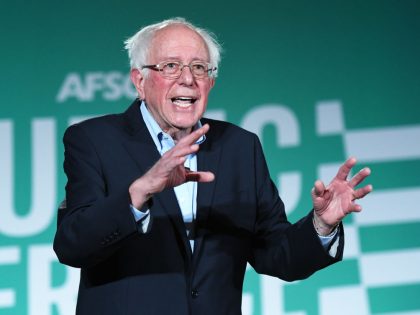
If Bernie Sanders wins the presidency, he’ll confront numerous obstacles to his agenda. To overcome those obstacles, we need a strategy to take on capital, especially Wall Street — and we need to start thinking about that strategy right now.

Poorer Americans work long hours to afford basic necessities. Richer Americans work long hours in pursuit of “the good life” that’s perpetually just beyond their grasp. All of this tedious work is a waste of our precious time and resources.
The American pension crisis helps corporations maintain a precarious, easily exploitable workforce.

Centrists claim free college is a giveaway to the rich. That’s just a smokescreen for their opposition to universal social programs.

Liberal democracy gives us essential rights like free speech and civil liberties. But without challenging the domination of capital, liberal rights will always be curtailed by the power of the rich.

The California Faculty Association is calling for a weeklong strike at the largest public university system in the United States to fight against cuts and preserve a vital public good.

For decades, America’s “flexible” labor markets have been celebrated by economists and favorably compared to Europe’s “sclerotic” labor institutions — the products of a century of militant worker struggle. Now, thanks to that very flexibility, the US stands on the brink of an economic disaster.
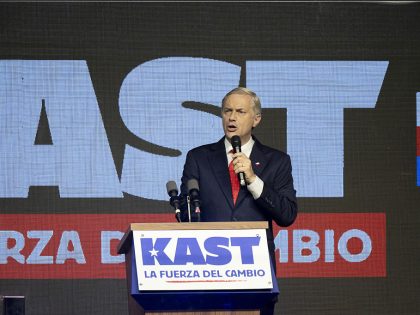
The first round of voting in Chile’s general election in November saw the shocking rise of the far right and the collapse of the country’s new left. It’s a crushing but not total defeat for the movement helmed by President Gabriel Boric.

More and more economists agree with Robert Brenner that mature capitalist economies have begun to stagnate. We should not deny this reality but rather think clearly about how it affects our political outlook.

Even under right-wing governments, local leftist leaders can have a massive impact. Daniel Jadue describes the “people’s pharmacy,” cheap eye-care and glasses, public housing, left approaches to community safety, and much more instituted during his time as the Communist mayor of Recoleta, one of the thirty-seven municipalities that make up Greater Santiago, Chile.
The state has been used to discipline capital before. With climate change upon us, it'll have to do so again.

For the first century of its existence, the organized left mobilized around the “labor question”: who determines the what and how of production. For years, though, the Left has abandoned this question for a concern with inequality — at its own peril.

From Charter rulings to back-to-work laws, tools once used to manage Canadian labor disputes are now deployed more aggressively — and more often. Quebec’s Bill 89 is pushing this trend forward, making striking harder, riskier, and easier to repress.

Amid the radical upheavals of the early 1900s, the Austro-Marxists tried to marry revolutionary aims with reform-minded practice.
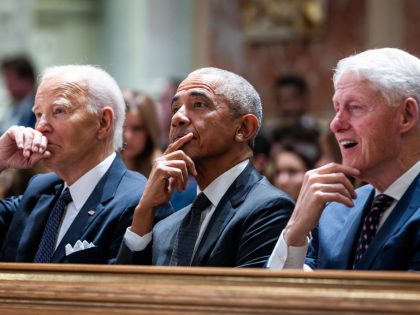
The neoliberal economic program embraced by the Clinton-era Democratic Party alienated many working-class voters. Democrats responded by reorienting their electoral strategy toward professional-class voters, accelerating workers’ departure from the party.