We Want a Society Without Landlords
- Adam Baltner
The popularity of Berlin’s campaign to expropriate corporate landlords shows just how few people trust capitalism to provide them with affordable, good-quality homes.
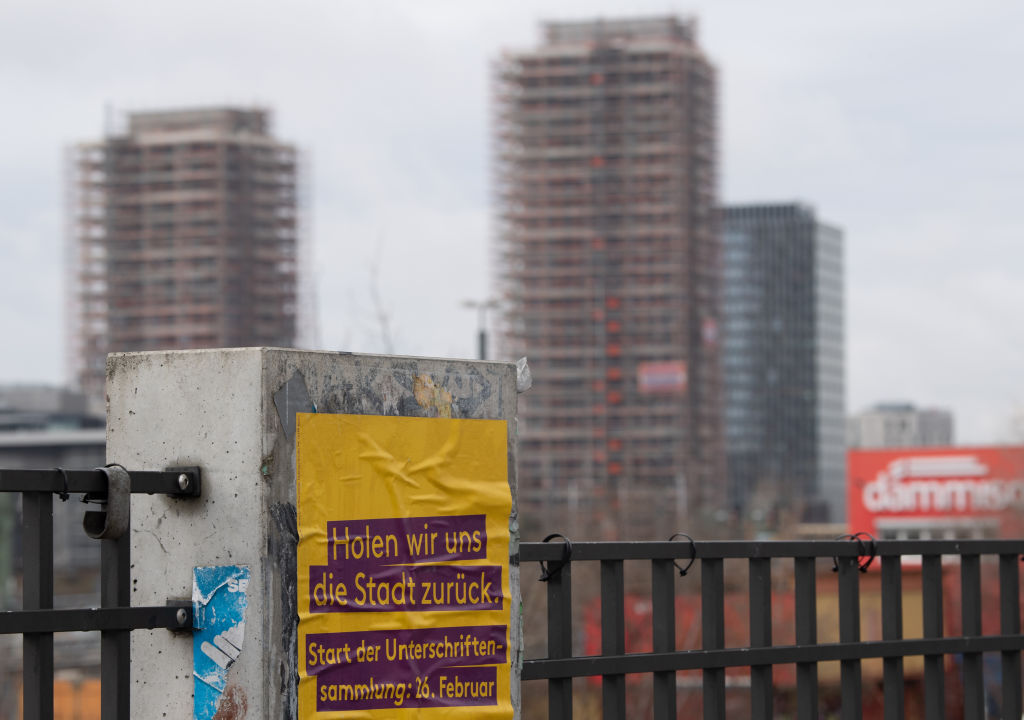
“Let’s take the city back” reads a poster of the Expropriate Deutsche Wohnen & Co. housing movement in Berlin, Germany. (Paul Zinken / Picture Alliance via Getty Images)
The bright yellow signs of Berlin’s Deutsche Wohnen & Co. Enteignen housing movement are visible everywhere across Berlin — and their impact is felt far beyond the capital. Business, political, and media circles throughout the German-speaking countries have begun to fear that a successful initiative to “expropriate Deutsche Wohnen” — one of the city’s biggest housing companies — along with other major landlords will usher in a new era of socialism in Berlin.
The real estate sector’s fears are not entirely unfounded. Indeed, for over a century, German socialists have sought to grant all human beings a dignified existence by democratically administrating and distributing housing and residential property. The push for a political intervention in Berlin’s housing market is part of a long history of movements that help us think about what a socialist response to the housing question might look like today.
How Expropriation Changed the Conversation
This February marked the beginning of the second stage of a referendum on whether Berlin’s major housing companies should be expropriated. For this referendum to take place, 170,000 signatures must be collected by the end of June. If this goal is met, residents will then vote on whether the Berlin government should “initiate all necessary measures for the transfer of real estate and land into public ownership for the purpose of socialization in accordance with Article 15 of the Basic Law” — the part of the German constitution that permits expropriations in certain circumstances. This would mean socializing 240,000 units of housing currently controlled by large real estate corporations.