Between Reform and Revolution
Amid the radical upheavals of the early 1900s, the Austro-Marxists tried to marry revolutionary aims with reform-minded practice.
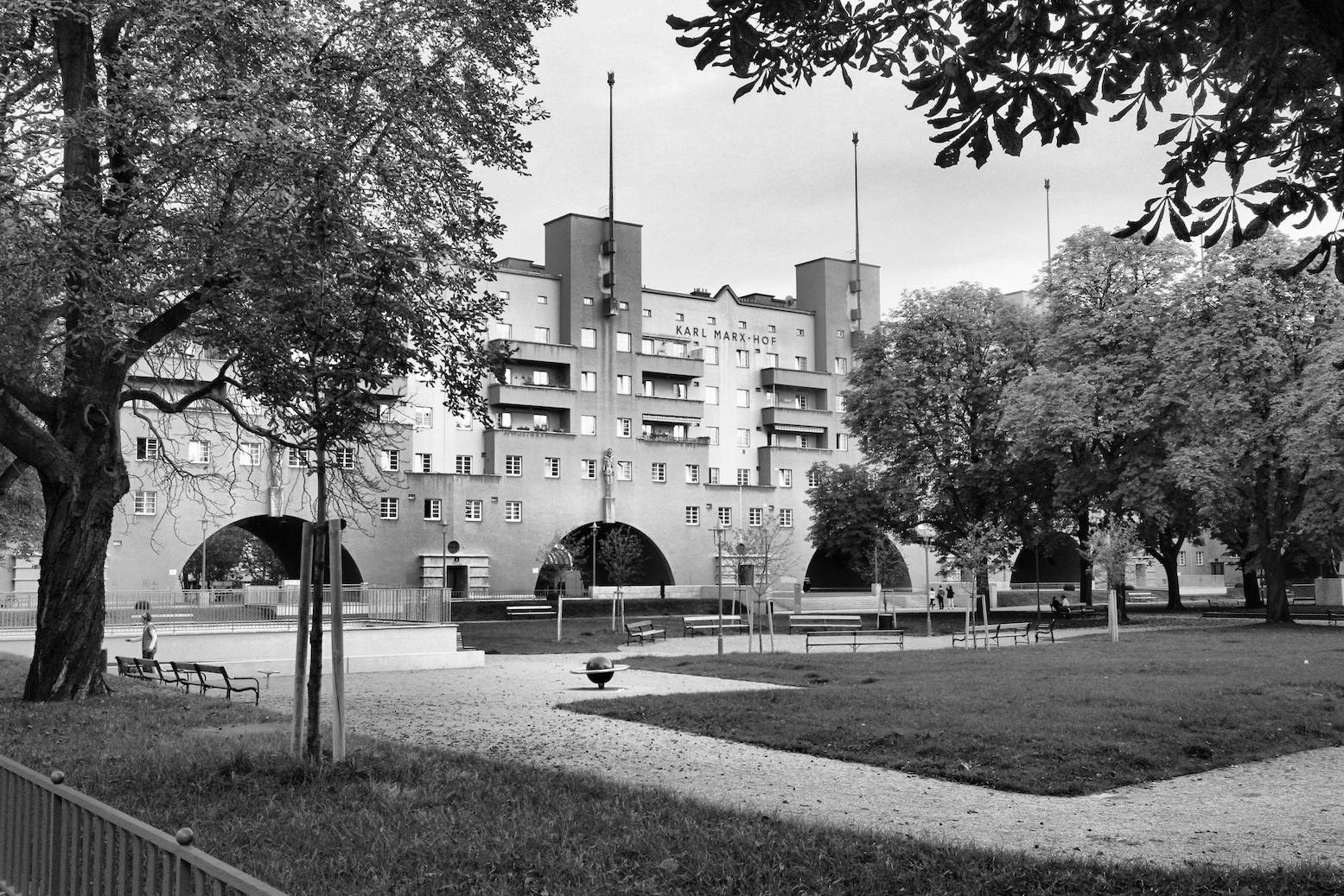
Karl Marx Hof, one of the public housing buildings the Austro-Marxist-led government constructed in Vienna, as shown in 2012. Georg Mittenecker / Wikimedia Commons
On May 1, 1893, tens of thousands of people marched through the streets of Vienna to mark International Workers’ Day. Proclaimed in 1889 by the newly formed Socialist International, the annual May Day demonstrations reminded the world of the labor movement’s growing strength and raised social, economic, and political demands ranging from the eight-hour day to universal suffrage. In Vienna, the Austrian Social Democratic Workers’ Party (SDAP) took up the call and rallied in the capital.
Three Viennese students — Karl Renner (aged twenty-three), Rudolf Hilferding (sixteen), and Max Adler (twenty), all members of a local socialist student group — enthusiastically joined their ranks. Thrilled to be part of a mass movement that aimed to transform the world, they were not deterred when the police, after hearing calls for a “red republic,” broke up the rally, arrested participants, and put them under surveillance. The three young men continued to meet to discuss the ideas of Immanuel Kant, Karl Marx, and others.
In 1895, the trio set up a group called The Free Association of Socialist Students and Academics. Although it had no official connection to the party, SDAP leaders, such as party founder Victor Adler, promoted its formation, and for the next thirty years it would serve as a pipeline into the party’s leadership. In 1899 Hilferding succeeded Adler as chair, and a year later Otto Bauer joined the group.