We Shouldn’t Have to Work This Hard
Poorer Americans work long hours to afford basic necessities. Richer Americans work long hours in pursuit of “the good life” that’s perpetually just beyond their grasp. All of this tedious work is a waste of our precious time and resources.
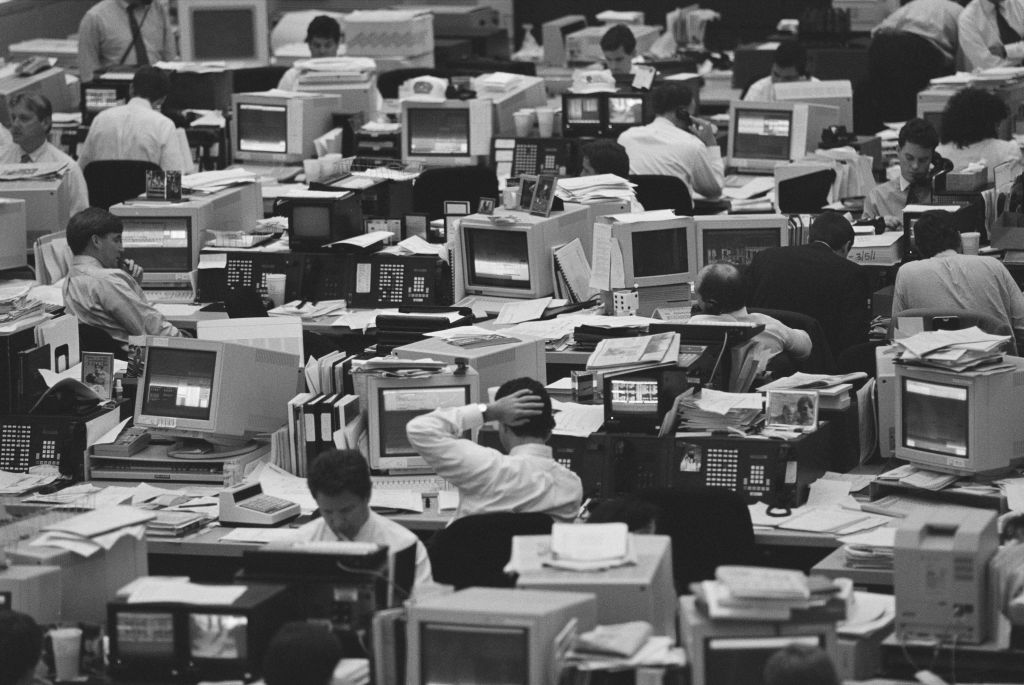
After 1980, Americans started working longer hours despite surging productivity, nearly erasing two decades of postwar leisure gains. (Michael Brennan / Getty Images)
In 1930, economist John Maynard Keynes famously predicted that technological progress and economic growth would solve the problem of material scarcity. In one hundred years, Keynes anticipated in his essay “Economic Possibilities for Our Grandchildren,” humanity was on track to develop the productive capacity to meet its needs with minimal effort, replacing lives of labor with lives of leisure.
The system would require each worker to contribute just fifteen hours of labor per week, freeing people to focus on living “wisely and agreeably and well.” The love of money would finally be recognized as a “disgusting morbidity,” even a mental illness requiring the intervention of specialists. People would devote their time to stimulating, diverting, and fulfilling pursuits. Days wasted on trivial labor would be an ugly memory, provoking a collective shudder before becoming increasingly hard for subsequent generations to fathom.
That was ninety-five years ago. Unless a major upset occurs in the next five years, Keynes’s rosy prediction was a bust.