Greece: Phase Two
Greek MP Costas Lapavitsas on the economic barriers ahead for Syriza and the challenges of eurozone exit.
Greek MP Costas Lapavitsas on the economic barriers ahead for Syriza and the challenges of eurozone exit.

Agriculture policy in the original New Deal sprang from a heady mix of class struggle and uneasy alliances. The Green New Deal will have to stitch together a different coalition that can challenge the dominant mode of agriculture and create a more just food system.

Even under right-wing governments, local leftist leaders can have a massive impact. Daniel Jadue describes the “people’s pharmacy,” cheap eye-care and glasses, public housing, left approaches to community safety, and much more instituted during his time as the Communist mayor of Recoleta, one of the thirty-seven municipalities that make up Greater Santiago, Chile.

Last week, Google workers announced the formation of the Alphabet Workers Union, a groundbreaking step in organizing tech workers at one of the world’s largest tech giants. We spoke to two of the union’s rank-and-file members about the organizing effort, how unions can fight for democracy on the job, and why blue- and white-collar workers need to organize together.
The post-crisis class interests of small business sit comfortably next to the xenophobia of the alt-right.

In 1997, the central slogan of the Teamsters’ UPS strike was “Part-Time America Won’t Work.” Today, as the Teamsters weigh another UPS strike, part-time workers at the company say their pay and working conditions are still unbearable.

Plato developed his philosophy in ancient Greece during an early experiment in democratic government that threatened the power of his class. He responded with an argument for rule by aristocratic elites that has appealed to conservatives ever since.

France’s once mighty Socialist Party is polling at just 1 percent for today’s presidential election. With middle-class progressivism in a tailspin, only France Insoumise’s firm break with neoliberalism offers a path to recovery for the French left.
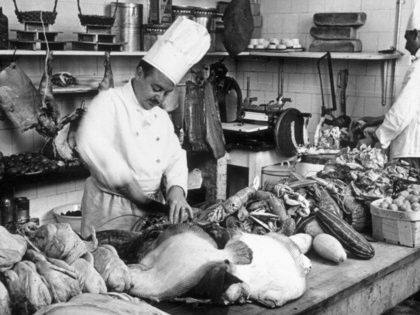
Political organizer and chef Lewis Bassett’s The Full English offers a firsthand account of how English food has been shaped by industrialization, empire, and class from the vantage point of restaurants across the country.

The War on Christmas isn’t fully a figment of Fox News’s imagination. But the villains are today’s capitalist Scrooges, relentlessly exploiting their workers with long hours and low wages through the holidays.

Today’s union-busters owe much to the bosses of the Progressive Era, who refused to recognize unions and fired labor organizers. Employers have never been “enlightened,” instead fighting tooth and nail to maintain their dictatorial powers.

Donald Trump styled himself as a populist, antiestablishment president. But look at what he has actually done in office, and you see he’s a status quo politician with nothing to offer working Americans.

Ezra Klein’s new book Why We’re Polarized identifies much of what’s wrong in the gridlocked US political system. But he dismisses the role of class in cohering the movements that can finally democratize it.
Populist symbolism can be powerful — but we can’t drop the old language of class.

An interview with the actor, playwright, and socialist Wallace Shawn.

Writer Kim Stanley Robinson talks to Jacobin about Ministry of the Future and his other books, climate change, and why he thinks the Left should reclaim science as a tool of socialist progress.

Die Linke’s Stefan Liebich recently met with members of Québec solidaire to talk politics. Bringing together vantage points from both sides of the Atlantic, the discussion covered political strategy, regional differences, and tactics for future left victories.
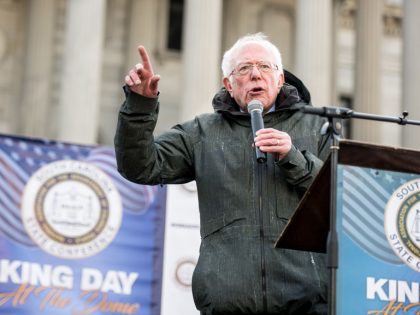
When Bernie Sanders compared wage labor to slavery in the 1970s, he wasn't equating the two. He was drawing on an emancipatory tradition, encompassing everyone from Frederick Douglass to Eugene Debs, that sees wage labor as shot through with subjugation — and insists on the need to democratize the workplace.

A new book explores how the radical right has reshaped political conflict, challenging the Left’s anemic response. The book’s provocations urge the Left to reconsider its strategic approach in the face of an increasingly successful global movement.

A socialism with a role for markets but not capitalists can deliver human flourishing without the pitfalls of fully planned economies.