
Comrade Thomas Piketty, Welcome to the Socialist Movement
For years, Thomas Piketty has articulated a cogent critique of 21st-century capitalism. He now appears to be moving beyond just critique to call for a 21st-century socialism.
For years, Thomas Piketty has articulated a cogent critique of 21st-century capitalism. He now appears to be moving beyond just critique to call for a 21st-century socialism.

All people should have the right to effective legal representation when they’re facing criminal charges. But the Supreme Court has just issued a ruling that severely curtails that basic right.

In 1973, Arab-American workers in Detroit auto plants walked off the job in protest of the UAW’s investment in bonds from the state of Israel. The incident is little-remembered today, but it shows how workers can organize against racism and colonialism — including against the labor movement’s investment in the Israeli occupation of Palestine today.

In response to Mayor Bill de Blasio pushing a public schools reopening despite the serious dangers it would pose, New York City’s United Federation of Teachers is considering their first strike in almost half a century. We talked to union activist and Brooklyn teacher Jia Lee about why a school reopening isn’t safe and what teachers are willing to do to stop it.

Expanded, free public transit, funded by taxes on the rich, can be at the heart of a just transition to a green economy.

Elena Ferrante’s Neapolitan series refuses to simplify the systems of capitalist and patriarchal domination it describes.

In his new biography of Karl Marx, Bruno Leipold puts his subject in historical context. Marx, he tells Jacobin, was engaged in a political struggle against utopian communists and republicans unable to recognize the incompatibility of freedom and capitalism.

At the City University of New York, academic workers have been fighting for a new union contract for over a year. They are resisting austerity and further corporatization of the university, pushed by politicians and university administrators alike.
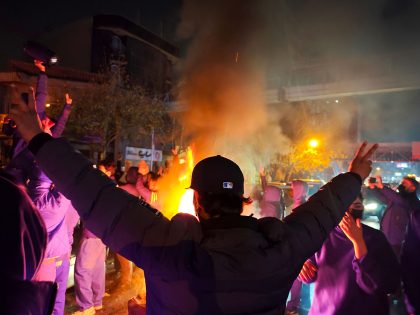
Discontent over dire economic conditions lay behind the protest wave that rocked Iran earlier this month. A US attack will make things even worse for the Iranian people, whether or not it results in the regime change Donald Trump would like to see.
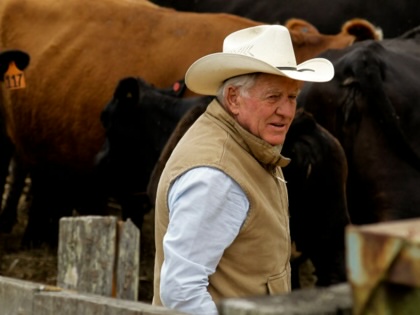
Beef has long symbolized the promise of American material abundance. The midterms illustrated the political consequences of failing to deliver it.

The ghostly emptiness of capitalist realism obscures the potential for collective joy and abundance. Mark Fisher’s writing offers a glimpse of the possibilities that lie beyond the seeming inevitability of the present.
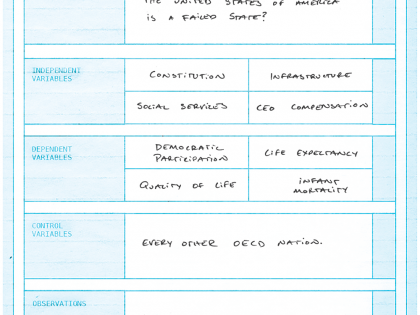
Haunted by the specter of democracy, the Constitution’s framers blundered into a historic miscalculation. We’re still living with the consequences.

Spain’s deputy premier Yolanda Díaz has enacted landmark reforms to strengthen workers’ rights. In an interview, she tells Jacobin that “there’s no more powerful force than the workers of the world.”

Economist Clara Mattei explains how her profession has provided elites with a justification for austerity and exploitation.

Pundits have lauded the Biden administration for replacing the free-market consensus with supply-side liberalism. But it is geopolitical tensions with China and labor’s weakness that have made elites feel comfortable with a milquetoast industrial policy.

Red Lobster’s bankruptcy isn’t a story about the recklessness of having endless shrimp on offer — it’s a story of how private equity firms bled a restaurant chain dry, leaving workers and diners adrift.

Darializa Avila Chevalier has spent years as a grassroots organizer fighting mass incarceration, opposing ICE detention, organizing for Palestine, and knocking doors for Zohran Mamdani. Now the democratic socialist is running for Congress.

The UAW’s defeat at a Mercedes plant in Alabama was crushing. It’s also the cost of waging risky, potentially transformative fights. If labor wants to win big, it can’t be afraid to lose big.

Iran’s rulers have managed to contain a wave of protest for now. But the nature of the unrest and the state’s lethal response make this an unprecedented moment since the 1979 revolution, with the threat of a US attack still hanging over the country.